




Cytokine Panel: A Core Tool for Immune Status Assessment and Th1/Th2 Balance Research
Author: Senior Product Manager of UA Views:14 


This article focuses on the molecular characteristics and biological functions of cytokines, systematically elaborating their core role as low-molecular-weight soluble proteins in the regulation of innate and adaptive immunity, deeply analyzing the key role of Th1/Th2 cytokine balance in pregnancy maintenance and recurrent miscarriage, and exploring the application value of 15-cytokine combined detection in immune status assessment and clinical treatment guidance.
- Recent Advances
- Product Information
Recent Advances
Cytokine Panels: Core Tools for Immune Status Assessment and Th1/Th2 Balance Research
Summary: This article focuses on the molecular characteristics and biological functions of cytokines, systematically elaborating their central role as low-molecular-weight soluble proteins in the regulation of innate and adaptive immunity, deeply analyzing the key role of Th1/Th2 cytokine balance in pregnancy maintenance and recurrent miscarriage, and exploring the application value of 15-cytokine combined detection in immune status assessment and clinical treatment guidance.
I. Molecular Characteristics and Functional Classification of Cytokines.
Cytokines are low-molecular-weight soluble proteins produced by various cells induced by immunogens, mitogens, or other stimulants, and possess multiple functions such as regulating innate and adaptive immunity, hematopoiesis, cell growth, and repair of damaged tissues. Cytokines can be divided into multiple categories including interleukins, interferons, tumor necrosis factors, colony-stimulating factors, chemokines, and growth factors. In the etiology of recurrent miscarriage, cytokines are closely related to pathological processes such as inflammation, endometriosis, coagulation abnormalities, and immune dysregulation, ultimately affecting the Th1/Th2 immune balance at the maternal-fetal interface and consequently leading to miscarriage. The functions of cytokines possess pleiotropy, redundancy, synergy, antagonism, and multiphasic network effects, which makes their role in immune regulation extremely complex and refined.
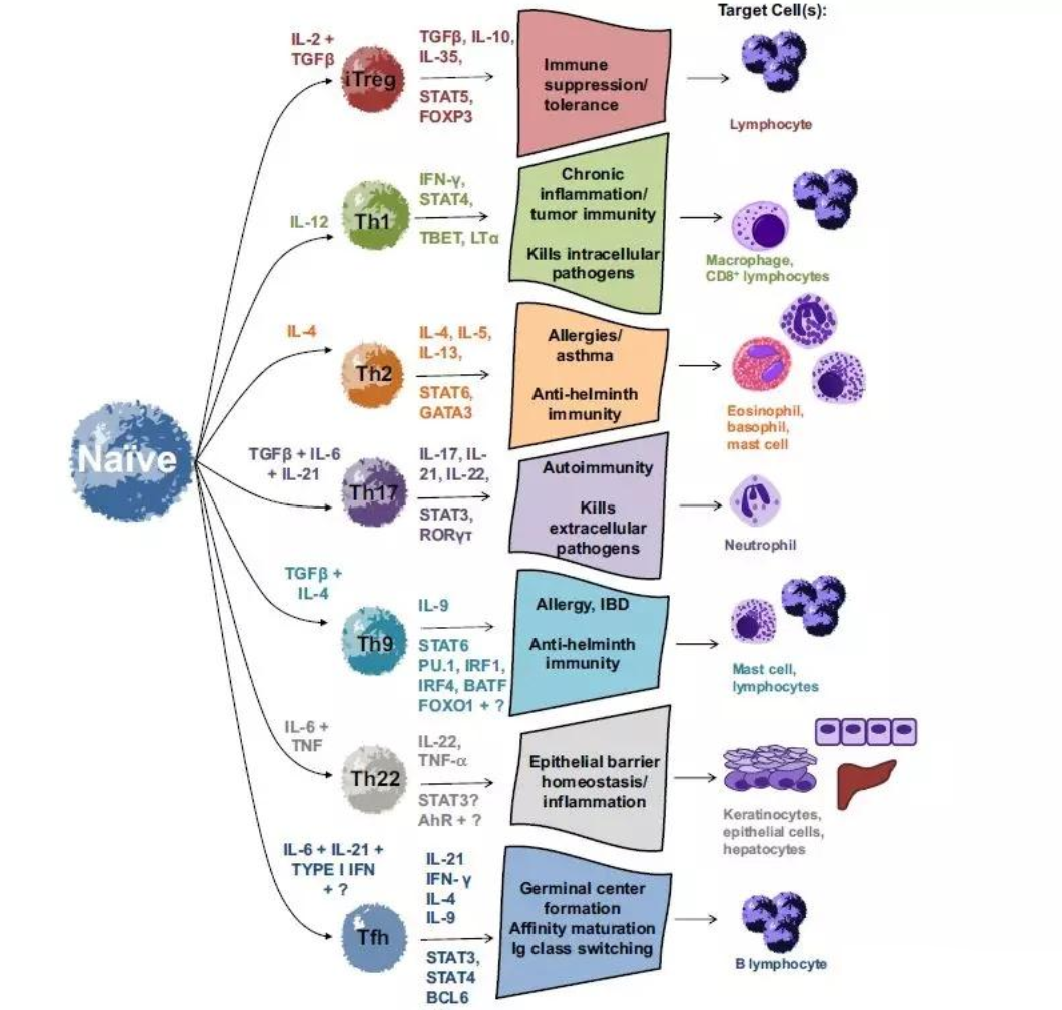
II. Th1/Th2 Cytokine Balance and Pregnancy Maintenance.
Th1 cytokines include interleukin-2, interleukin-12, tumor necrosis factor-α, tumor necrosis factor-β, and interferon-γ, among others. These cytokines can promote T cell-mediated immune responses, namely cellular immunity, and are cytokines that release inflammatory effects, manifesting as immune killing. They can mediate cellular immunity, inflammatory responses, and delayed-type hypersensitivity, and have adverse effects on implantation, trophoblast growth, embryonic development, and fetal survival. Th2 cytokines mainly secrete interleukin-4 and interleukin-10, among others, and are related to B cell proliferation, maturation, and antibody production. Their main function is to mediate immune tolerance to allogeneic rejection responses, namely humoral immune responses, suppress Th1 responses, manifest as immune protection, prevent secondary damage to trophoblasts and the fetus, and enable pregnancy to proceed successfully.
During normal pregnancy, the maternal-fetal interface exhibits a Th2-type immune advantage to ensure that the fetus is not rejected by the maternal immune system. If the Th1/Th2 cytokine balance at the maternal-fetal interface is disrupted during pregnancy, when Th1-type cytokines predominate, placental trophoblasts and the fetus may be damaged, leading to miscarriage; when Th2-type cytokines predominate, Th1-type cellular responses can be effectively suppressed, promoting embryonic growth and development. Once the balance between Th1 and Th2 is broken, recurrent miscarriage may occur.
III. Clinical Significance of 15 Cytokines.
In clinical testing, the combined monitoring of 15 cytokines can comprehensively reflect the body's immune status. IL-1β is the earliest pro-inflammatory factor in the body, participating in acute-phase inflammatory responses, and can be used to assess inflammatory damage in inflammatory diseases. IL-2 can enhance T cell activation and proliferation, enhance the tumor-killing activity of CTLs and NK cells, and has adverse effects on implantation, trophoblast growth, embryonic development, and fetal survival. IL-5 can promote eosinophil differentiation, maturation, chemotaxis, and activation, and can be used to assess atopic dermatitis and graft-versus-host disease. IL-8 is an important neutrophil chemokine that rises rapidly after infection and can more comprehensively participate in the inflammatory assessment of diseases. IFN-α is a pro-inflammatory cytokine that participates in non-specific immune responses and can reflect the occurrence and development of systemic lupus erythematosus. IL-4 is an anti-inflammatory cytokine that can synergize with IL-5 to promote humoral immune responses and promote IgE class switching of antibodies. IL-6 is an important pro-inflammatory cytokine that rises rapidly after infection; IL-6 greater than 1000 pg/mL indicates poor disease prognosis and is of great significance in infectious diseases, and it participates in the occurrence of hypertensive disorders of pregnancy. IL-10 is an important anti-inflammatory factor with immunosuppressive effects that reduces the body's immune response, prevents secondary damage to trophoblasts and the fetus, and enables pregnancy to proceed successfully. IL-12p70 is the strongest stimulatory factor for NK cell effector function, can enhance the tumor-killing effects of NK cells, macrophages, and CTL cells, exerts anti-tumor angiogenesis effects through indirect actions, and enhances the body's anti-tumor immune response.
IL-17 is an important pro-inflammatory factor that participates in the progression of various autoimmune diseases, and higher levels indicate more severe autoimmune disease conditions. IFN-γ is an important pro-inflammatory cytokine that can promote the conversion of Th0 cells to Th1 cells, is also a virus infection-specific cytokine, and can enhance the killing effects of NK cells and CD8+ T cells, leading to pregnancy failure. TNF-α is an important pro-inflammatory factor, and its increased production can also cause oxidative stress and participate in the occurrence of hypertensive disorders of pregnancy. Granulocyte colony-stimulating factor is related to the activation of the body's immune system, especially cell activation. Granulocyte-macrophage colony-stimulating factor is a key hematopoietic growth factor that can stimulate the proliferation and differentiation of various hematopoietic cells, such as stimulating the functional activities of granulocytes and macrophages, eosinophils, and basophils. TNF-β is derived from T lymphocytes, causes hemorrhage, necrosis, and killing effects on tumor tissues, causes anti-infective inflammatory response effects, and has regulatory and inducing effects on immune cells.
IV. Clinical Value of Combined Cytokine Detection.
Due to individual differences among patients, the types of elevated cytokines may vary. Therefore, detecting 15 cytokines rather than monitoring 6 cytokines can more comprehensively identify cytokine storms and promptly guide clinical treatment. At the same time, it can comprehensively analyze non-specific and specific immune responses, more comprehensively assess immune status, and formulate targeted treatment plans. Moreover, it can provide precise and objective assessment of the body before and after treatment. Like other immune molecules, cytokines are also a “double-edged sword.” Because of their pleiotropy, redundancy, synergy, antagonism, and multiphasic network effects, monitoring 15 cytokines can more objectively reflect the body's immune status and guide targeted immunotherapy.
In the clinical management of recurrent miscarriage, immunotherapeutic strategies targeting cytokine abnormalities include immunosuppressants, human immunoglobulin, TNF-α inhibitors, and other biological agents. These therapeutic approaches aim to regulate Th1/Th2 balance and improve pregnancy outcomes. Cytokine detection plays an important guiding role in the efficacy evaluation and regimen adjustment of these treatment plans.
V. Conclusion.
In basic research and clinical testing related to cytokines, high-quality detection kits are key to ensuring data reliability and experimental reproducibility. To meet the demand for quantitative cytokine detection, Univ provides the Human TNF-α OneStep ELISA Kit. This product adopts a one-step enzyme-linked immunosorbent assay system and is suitable for quantitative detection of TNF-α concentration in samples such as human serum, plasma, and cell culture supernatants. It features simple operation, high sensitivity, and good specificity, and is suitable for application scenarios such as mechanistic research on inflammatory diseases, immune status assessment, Th1/Th2 balance analysis, and drug efficacy evaluation.
As core mediators in the immune regulatory network, cytokines play an irreplaceable role in innate and adaptive immune responses through their complex network effects of pleiotropy, redundancy, synergy, and antagonism. The maintenance of Th1/Th2 cytokine balance is crucial for successful pregnancy, and its imbalance is closely related to the occurrence of recurrent miscarriage. The combined detection of 15 cytokines provides an important technical means for comprehensively assessing the body's immune status and guiding individualized immunotherapy. The Human TNF-α OneStep ELISA Kit provides reliable tool support for quantitative cytokine detection and immune status assessment, and will continue to promote in-depth exploration in the fields of immunological research and clinical diagnosis and treatment.
This article is reviewed and published by the technical expert team of UA
Disclaimer: This article partially utilizes artificial intelligence assistance in its creation. If any content involves copyright or intellectual property issues, please let us know and we promise to verify and remove it as soon as possible.
Purchase recombinant protein, choose 
UA protein focuses on providing various protein reagents, raw materials, and services required for drug research and development, cell therapy, gene therapy, and basic scientific research, including drug target proteins, immune checkpoint proteins, cytokines, tool enzymes, customized protein expression, and full-length transmembrane protein development. Nanjing Univ is committed to providing customers with high-quality products and professional services, and building a High-tech Biological Enterprise with International Competitiveness.
Target proteins | membrane proteins | cytokines | enzymes | viral antigens | protein customization
Nanjing UNIV Biotechnology Co., Ltd. Email:order@ua-bio.com Phone:+86-25-56221161

Product Information

Link:





©2021-2026 all rights reserved UNIV Biotechnology Co.,Ltd.
Privacy Policy
网站备案号 苏ICP备2025207586号-2 浙公网安备33010202004867号
 Business license (three certificates in one)
 Tel:+86-25-56221161
E-mail:order@ua-bio.com
All products sold on this website shall not be used for clinical diagnosis or treatment of humans or animals, and shall only be used for non-medical purposes such as industrial or scientific research.


