




Cytokine Detection: A Core Tool for Mechanistic Analysis and Diagnostic Evaluation of Autoimmune Diseases
Author: Senior Product Manager of UA Views:14 


This article focuses on the core regulatory role of cytokines in autoimmune diseases, systematically elaborating the key position of the imbalance between pro-inflammatory and anti-inflammatory cytokines in the pathogenesis of AID, analyzing the differential manifestations of Th1/Th2 cytokine imbalance in rheumatoid arthritis, Sjögren's syndrome, multiple sclerosis, systemic lupus erythematosus, and other diseases, and exploring the application value of cytokine detection in the diagnosis, disease monitoring, and biologic treatment evaluation of AID.
- Recent Advances
- Product Information
Recent Advances
Cytokine Detection: A Core Tool for Mechanistic Analysis and Diagnostic Evaluation of Autoimmune Diseases
Summary: This article focuses on the core regulatory role of cytokines in autoimmune diseases (AIDs), systematically elaborating the key position of the imbalance between pro-inflammatory and anti-inflammatory cytokines in the pathogenesis of AIDs, analyzing the differential manifestations of Th1/Th2 cytokine imbalance in diseases such as rheumatoid arthritis, Sjögren's syndrome, multiple sclerosis, and systemic lupus erythematosus, and discussing the application value of cytokine detection in the diagnosis, disease monitoring, and biologic therapy evaluation of AIDs.
I. Immunological Basis of Autoimmune Diseases and Cytokine Regulation.
Autoimmune diseases are a large category of diseases in which the body's immune system, for various reasons, mounts an immune response against self-antigens, forming autoantibodies or autosensitized lymphocytes. These autoantibodies or autosensitized lymphocytes, when immune abnormalities occur, attack the tissues or organs bearing the target antigens, causing damage to the body's own tissues. The main mechanism involves abnormalities in immune response and immune regulation. Cytokines are small-molecule polypeptides or glycoproteins secreted by various cells that play an extremely important role in the development, differentiation, and functional regulation of immune cells. The self-regulatory network of the body's immune function system depends on the balance between pro-inflammatory and anti-inflammatory cytokines. When this balance is disrupted, autoimmune phenomena and AIDs can arise. Therefore, in recent years, cytokines have attracted increasing attention in the study of autoimmune disease mechanisms.
II. Core Cytokines Closely Associated with Autoimmune Diseases.
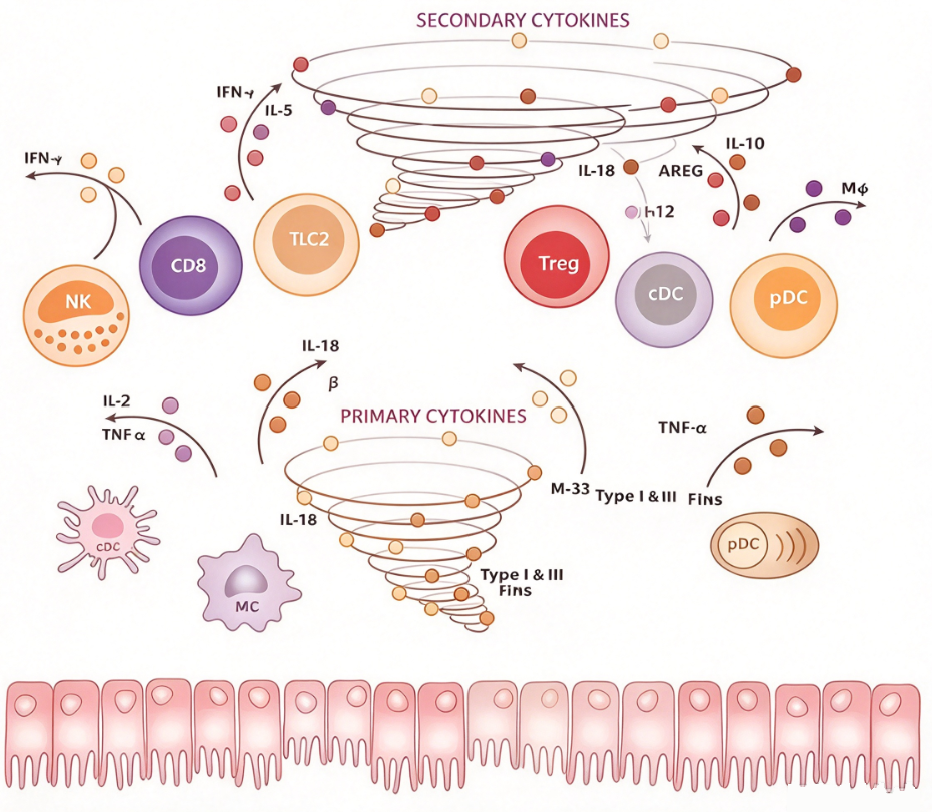
During the occurrence and development of AIDs, multiple cytokines play key regulatory roles. TNF-α is the most important inflammatory mediator and has broad clinical application significance, including inhibiting the killing of tumor cells, enhancing neutrophil phagocytic capacity, and fighting infection; it also promotes immune cell proliferation and differentiation, induces endothelial cells to express adhesion molecules, promotes bone destruction and bone resorption as well as fibroblast proliferation, and inhibits collagen synthesis. IL-1β is a defense factor against infection and injury; in small amounts it triggers the acute-phase response, while in large amounts it causes fever and promotes the activation, assimilation, secretion of cytokines and other acute-phase proteins, and bone resorption. IL-6 is produced by activated monocytes and is a pleiotropic cytokine. It is an important inflammatory mediator produced in the immune response and functions in AIDs to induce and sustain immune inflammatory responses. IL-8 belongs to the chemokine family and can chemoattract and activate neutrophils, promoting their degranulation, producing a respiratory burst, and releasing superoxides and lysosomal enzymes; it is related to the pathogenesis of inflammatory diseases. IL-10 is an anti-inflammatory cytokine with immunoregulatory functions and important inhibitory effects in the occurrence and development of inflammation.
During the occurrence and development of AIDs, Th1-type cytokines that secrete IL-2, IFN-γ, TNF-α, and TNF-β have the effect of enhancing the cytotoxicity of killer cells, mediating cellular immunity, activation of cytotoxic T cells and macrophages, and delayed-type hypersensitivity; while Th2-type cytokines that secrete IL-4, IL-5, IL-6, IL-10, and IL-13 have anti-inflammatory effects, mediating humoral immunity, activation of B cells and eosinophils, and IgE production. In AIDs, Th1 can induce disease onset and accelerate disease progression; Th2 can prevent disease onset and alleviate the condition. Under normal circumstances, the expression and secretion of cytokines are strictly regulated by the body, whereas in AIDs, cytokines exhibit abnormal expression. Therefore, detecting cytokines is crucial for the diagnosis and treatment of AIDs.
III. Manifestations of Th1/Th2 Imbalance in Different Autoimmune Diseases.
Cytokine imbalance exists in many AIDs. In rheumatoid arthritis, Lyme disease, multiple sclerosis, insulin-dependent diabetes mellitus, and chronic thyroiditis, Th1 and its cytokines are dominant, and these diseases can be classified as Th1 states. In contrast, in allergic diseases, asthma, scleroderma, systemic lupus erythematosus, and HIV infection, Th2 and its cytokines are dominant, placing them in Th2 states.
Rheumatoid arthritis is a common chronic systemic AID characterized primarily by erosive, symmetric polyarthritis, in which cytokines play an important role in the pathogenesis. The synovial cells in RA produce large amounts of inflammatory cytokines dominated by TNF-α, such as TNF-α, IL-1, and IL-17. T cells and macrophages also enter the synovial fluid and produce various cytokines such as TNF-1, IL-1, and IL-6, stimulating inflammation and degradation of bone and cartilage, gradually leading to joint damage, deformity, and ultimately disability.
Sjögren's syndrome is a systemic, progressive autoimmune disease that predominantly affects middle-aged women and impacts exocrine glands. Its incidence among rheumatic immune diseases ranks second only to rheumatoid arthritis. Studies have found that Th1 and Th2 cytokine levels are in a dynamic balance during the onset of SS. In the early stage with low-level lymphocyte infiltration, Th2-type cytokines are dominant; however, as the condition and infiltration worsen in SS patients, Th1-type cytokines gradually become dominant, indicating that the Th1/Th2 immune balance is disrupted during the disease progression of SS patients.
Multiple sclerosis is an AID that primarily occurs in the central nervous system, mainly manifesting as demyelinating lesions and extensive neurological symptoms. During the active phase of MS, the expression or secretion of IL-1, IL-2, and IFN-γ is significantly increased, while during the remission phase, the expression or secretion of IL-4, IL-10, and TGF-β is increased, and Th1-type cytokine expression decreases. Therefore, by detecting changes in cytokine expression, the progression of the disease can be assessed.
Systemic lupus erythematosus is a systemic AID involving multiple factors, with extremely complex pathogenesis and clinical manifestations. Studies have shown that the occurrence and development of SLE are related to abnormal expression levels of multiple cytokines or imbalance among cytokines, particularly the systemic or local overexpression of pro-inflammatory cytokines such as TNF-α, IL-6, IL-8, and IFN-γ, which play important roles in the inflammatory damage of SLE tissues.
Crohn's disease and ulcerative colitis are collectively known as inflammatory bowel disease, a chronic non-specific inflammation whose etiology and pathogenesis are not yet fully understood. In CD patients, as disease activity increases, the expression levels of TNF-α and IL-6 are gradually upregulated. Serum levels of IFN-γ, TNF-α, and IL-6 in patients with active CD are significantly higher than those in remission and healthy populations. This may be because TNF-α synergizes with IFN-γ to alter the barrier function and morphological structure of intestinal epithelial cells, increasing the permeability of the intestinal mucosa and blood vessel walls and enhancing the transport of macromolecules, thereby weakening the intestinal mucosal barrier function and causing ulcers.
Psoriasis is an immune-mediated chronic inflammatory skin disease. TNF-α is both a regulatory factor and an effector factor in the immune inflammation of psoriasis, playing an important role in the initiation and amplification of inflammation. IL-6 is a pleiotropic pro-inflammatory cytokine and is key to influencing the conversion of naive T lymphocytes into Th17 cells. IL-6 is associated with the activation of monocytes and neutrophils in the early inflammatory phase of psoriasis and plays a regulatory role in the initiation of psoriatic immune inflammation.
IV. Clinical Application Value of Cytokine Detection in the Diagnosis and Treatment of AIDs.
Biologics and immunomodulators are important drugs for effectively inducing and maintaining remission in AIDs. Appropriate drug concentrations are of great clinical significance for improving efficacy and reducing adverse reactions. The most common TNF-α antagonists have achieved remarkable and satisfactory efficacy in clinical practice, and IL-6 receptor antagonists are gradually gaining recognition. Monitoring IL-6 can be used to evaluate the biological treatment response to TNF-α antagonists and IL-6 receptor antagonists. By detecting changes in cytokine expression, clinicians can determine disease activity, evaluate treatment efficacy, and guide adjustments to treatment regimens.
As the number of patients with autoimmune diseases in China gradually increases, cytokine detection can play an important role in the occurrence, development, diagnosis, and treatment of diseases, providing patients with the best diagnostic and therapeutic outcomes. In basic research and drug development related to cytokines, high-quality recombinant cytokine proteins are core tools for elucidating their signal transduction mechanisms and evaluating their biological functions.
V. Conclusion.
In response to the needs of cytokine function research and AID mechanism exploration, UniAI provides IL-4 Protein, Rat. This product is suitable for application scenarios such as mechanistic research on the rat IL-4/IL-4R signaling pathway, research on Th2-type immune response regulation, functional studies of IL-4 in autoimmune disease models, and the establishment and validation of IL-4 immunoassay methods.
Cytokine detection, as a core tool for mechanistic research and clinical diagnostic evaluation of autoimmune diseases, plays an irreplaceable role in the diagnosis, disease monitoring, and biologic therapy evaluation of AIDs by virtue of its accurate reflection of the balance between pro-inflammatory and anti-inflammatory cytokines. From the differential manifestations of Th1/Th2 imbalance in diseases such as rheumatoid arthritis, Sjögren's syndrome, multiple sclerosis, and systemic lupus erythematosus, to the clinical application of key cytokines such as TNF-α and IL-6 in disease activity assessment, cytokine detection continues to drive the development of precision diagnosis and treatment in the field of autoimmune diseases. IL-4 Protein, Rat provides reliable tool support for mechanistic research on cytokine signaling networks and the development of AID therapeutic strategies, and will continue to facilitate innovative exploration in immunological research and clinical translation.
This article is reviewed and published by the technical expert team of UA
Disclaimer: This article partially utilizes artificial intelligence assistance in its creation. If any content involves copyright or intellectual property issues, please let us know and we promise to verify and remove it as soon as possible.
Purchase recombinant protein, choose 
UA protein focuses on providing various protein reagents, raw materials, and services required for drug research and development, cell therapy, gene therapy, and basic scientific research, including drug target proteins, immune checkpoint proteins, cytokines, tool enzymes, customized protein expression, and full-length transmembrane protein development. Nanjing Univ is committed to providing customers with high-quality products and professional services, and building a High-tech Biological Enterprise with International Competitiveness.
Target proteins | membrane proteins | cytokines | enzymes | viral antigens | protein customization
Nanjing UNIV Biotechnology Co., Ltd. Email:order@ua-bio.com Phone:+86-25-56221161

Product Information

Link:





©2021-2026 all rights reserved UNIV Biotechnology Co.,Ltd.
Privacy Policy
网站备案号 苏ICP备2025207586号-2 浙公网安备33010202004867号
 Business license (three certificates in one)
 Tel:+86-25-56221161
E-mail:order@ua-bio.com
All products sold on this website shall not be used for clinical diagnosis or treatment of humans or animals, and shall only be used for non-medical purposes such as industrial or scientific research.


