




IL-13 Detection Kit: A Core Tool for Quantitative Analysis of Type 2 Immune Responses and Disease Mechanism Research
Author: Senior Product Manager of UA Views:13 


This article focuses on the molecular characteristics and biological functions of interleukin-13 (IL-13), systematically elaborating its molecular mechanism as a core member of the Th2 cytokine family in activating the JAK-STAT6 signaling pathway through the type II receptor complex, analyzing the pathological driving roles of IL-13 in allergic airway diseases, fibrotic diseases, and tumor immunity, and exploring the application value of IL-13 detection in disease mechanism research, efficacy evaluation, and biomarker development.
- Recent Advances
- Product Information
Recent Advances
IL-13 Detection Kits: Core Tools for Quantitative Analysis of Type 2 Immune Responses and Disease Mechanism Research
Brief Introduction: This article focuses on the molecular characteristics and biological functions of interleukin-13 (IL-13), systematically elaborating its molecular mechanism as a core member of the Th2-type cytokine family that activates the JAK-STAT6 signaling pathway through the type II receptor complex, analyzing the pathological driving role of IL-13 in allergic airway diseases, fibrotic diseases, and tumor immunity, and discussing the application value of IL-13 detection in disease mechanism research, efficacy evaluation, and biomarker development.
I. Molecular Characteristics and Cellular Sources of IL-13.
IL-13 is a core member of the T helper 2-type cytokine family, primarily produced by Th2 cells, ILC2s, eosinophils, and mast cells. Human interleukin-13 is a type I cytokine secreted by activated Th2 cells, with a molecular weight of approximately 12 kDa, and is an important member of the Th2-type cytokine family. IL-13 exerts multiple biological functions in immune regulation, particularly playing a key role in B cell maturation, differentiation, and immunoglobulin class switching. It can upregulate the expression of CD23 and MHC class II molecules on the surface of B cells, and promote class switching of B cells toward IgE production, thereby playing a central role in allergic immune responses.
II. IL-13 Receptor System and Signal Transduction Mechanism.
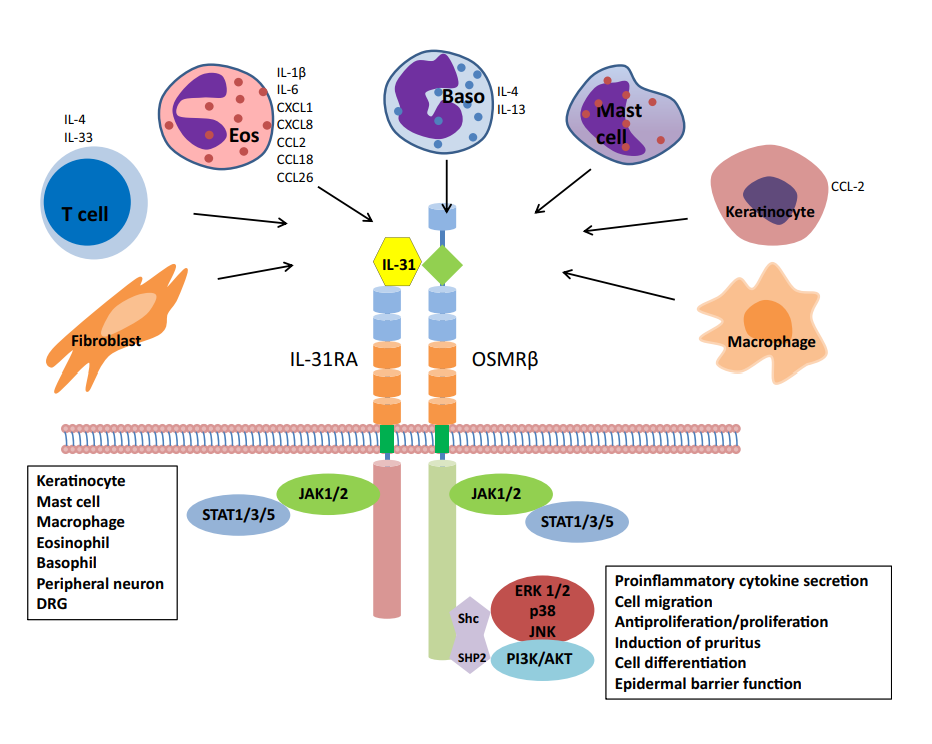
After IL-13 binds to its receptor complex, it activates Janus family kinases, mainly JAK1 and JAK3 or JAK1 and TYK2, which subsequently phosphorylate signal transducer and activator of transcription 6, driving the typical type 2 immune response. IL-13 can only bind to the type II receptor. The type II receptor is composed of IL-4Rα and IL-13Rα1, and is a receptor shared by IL-4 and IL-13, mainly expressed on non-hematopoietic cells such as epithelial cells, fibroblasts, and smooth muscle cells. Through this complex, it activates the JAK-STAT signaling pathway, mainly the STAT6 pathway, inducing mucus secretion, mucosal barrier inflammation, tissue remodeling, and eosinophil recruitment.
Under normal conditions, IL-13 receptor subunits are expressed at low levels under dynamic equilibrium conditions. As a key cytokine for inducing and maintaining type 2 inflammatory responses, IL-13 is closely associated with various atopic diseases, such as atopic dermatitis, asthma, and chronic rhinosinusitis with nasal polyps. Currently, biologics targeting IL-4Rα have been successfully applied to the treatment of these diseases, validating the clinical value of the IL-13 signaling pathway as a therapeutic target.
III. Pathological Driving Role of IL-13 in Allergic Airway Diseases.
In the lungs, IL-13 is one of the key mediators inducing allergic airway diseases, capable of inducing airway hyperresponsiveness, goblet cell metaplasia, and excessive mucus secretion. These pathological changes collectively lead to airway obstruction and decline in lung function, and are important pathophysiological bases of allergic airway diseases such as asthma. In asthma patients, IL-13 acts on airway epithelial cells and airway smooth muscle cells, promoting the amplification of inflammatory cascades and the occurrence of airway remodeling. In addition, IL-13 has a significant negative regulatory effect on the monocyte-macrophage system, inhibiting the production of pro-inflammatory cytokines and chemokines, thereby participating in the regulation of inflammatory responses.
IV. Environmental Dependence of IL-13 Function and Tumor Association.
It is worth noting that cytokine functions are environment-dependent. In rheumatoid arthritis, an autoimmune disease mainly driven by Th1/Th17, IL-4 exhibits significant anti-inflammatory properties, inhibiting synovial cells from producing pro-inflammatory factors such as IL-1, IL-6, IL-8, and TNF-α. Furthermore, in cancer research, it has been found that various tumor cells such as glioblastoma, breast cancer, and lymphoma have upregulated surface expression of IL-4Rα and IL-13Rα1, which is not only associated with tumor progression but also serves as a potential immunotherapeutic target. The binding of IL-13 to its receptor on tumor cells can activate signaling pathways such as JAK-STAT6 and PI3K-AKT, promoting tumor cell proliferation, survival, and metastasis.
V. Clinical Applications and Research Value of IL-13 Detection.
Given the important role of IL-13 in allergic diseases, fibrotic diseases, and certain tumor immunity, it has attracted considerable attention in disease mechanism research, efficacy evaluation, and biomarker development. Researchers often assess immune response status, inflammation severity, and drug intervention effects by detecting IL-13 expression levels. In allergic disease research, IL-13 levels can serve as a biomarker for evaluating type 2 inflammation activity. In drug development, IL-13 detection can be used to evaluate the efficacy of anti-IL-13 antibodies or IL-4Rα blockers. In tumor immunology research, IL-13 level detection helps assess the immune status of the tumor microenvironment.
IL-13 detection kits provide sensitive, specific, and efficient tools for in vitro quantitative detection of IL-13 concentration in samples such as cell culture supernatants, serum, and plasma. In terms of experimental design, the following key factors need attention. Sample collection and processing need to be standardized to ensure the reliability of detection results. The preparation of the standard curve needs to use the same buffer system as the samples. During detection operations, it is necessary to ensure that reagents and samples are equilibrated to room temperature to avoid the impact of temperature differences on reaction kinetics. In addition, it is recommended to set at least three replicate wells to improve the statistical reliability of the data.
VI. Conclusion.
In IL-13-related basic research and drug development, high-quality detection kits are key to ensuring data reliability and experimental reproducibility. To meet the demand for IL-13 quantitative detection, UniA provides Human IL-13 Kit (HICA). This product is suitable for quantitative detection of IL-13 concentration in samples such as human cell culture supernatants, serum, and plasma, featuring high sensitivity and excellent specificity, and is suitable for application scenarios such as allergic disease mechanism research, anti-IL-13 antibody drug efficacy evaluation, tumor immune microenvironment analysis, and biomarker development.
As a core effector molecule of Th2-type immune responses, IL-13, by virtue of its precise mechanism of activating the JAK-STAT6 signaling pathway through the type II receptor complex, plays an irreplaceable key role in the pathological processes of type 2 inflammatory diseases such as atopic dermatitis, asthma, and chronic rhinosinusitis with nasal polyps. Its upregulated expression in the tumor microenvironment further expands the application prospects of IL-13 as an immunotherapeutic target. Human IL-13 Kit (HICA) provides reliable tool support for the quantitative detection and functional research of IL-13, and will continue to promote in-depth exploration in the fields of type 2 inflammation and tumor immunology.
This article is reviewed and published by the technical expert team of UA
Disclaimer: This article partially utilizes artificial intelligence assistance in its creation. If any content involves copyright or intellectual property issues, please let us know and we promise to verify and remove it as soon as possible.
Purchase recombinant protein, choose 
UA protein focuses on providing various protein reagents, raw materials, and services required for drug research and development, cell therapy, gene therapy, and basic scientific research, including drug target proteins, immune checkpoint proteins, cytokines, tool enzymes, customized protein expression, and full-length transmembrane protein development. Nanjing Univ is committed to providing customers with high-quality products and professional services, and building a High-tech Biological Enterprise with International Competitiveness.
Target proteins | membrane proteins | cytokines | enzymes | viral antigens | protein customization
Nanjing UNIV Biotechnology Co., Ltd. Email:order@ua-bio.com Phone:+86-25-56221161

Product Information

Link:





©2021-2026 all rights reserved UNIV Biotechnology Co.,Ltd.
Privacy Policy
网站备案号 苏ICP备2025207586号-2 浙公网安备33010202004867号
 Business license (three certificates in one)
 Tel:+86-25-56221161
E-mail:order@ua-bio.com
All products sold on this website shall not be used for clinical diagnosis or treatment of humans or animals, and shall only be used for non-medical purposes such as industrial or scientific research.


