




M-CSF: The Core Factor in Macrophage Differentiation and Tumor Microenvironment Regulation
Author: Senior Product Manager of UA Views:4 


This article focuses on the molecular characteristics and biological functions of macrophage colony-stimulating factor (M-CSF), systematically elaborating its core regulatory role in the differentiation of monocyte-macrophage lineage and the maintenance of tissue-resident macrophages through the M-CSF receptor signaling pathway. It further analyzes its critical position in the polarization and functional regulation of tumor-associated macrophages and explores the impact of M-CSF signaling blockade on tumor angiogenesis, metastasis, and treatment resistance.
- Recent Advances
- Product Information
Recent Advances
M-CSF: The Core Factor in Macrophage Differentiation and Tumor Microenvironment Regulation
Overview
This article systematically elaborates on the molecular characteristics and biological functions of Macrophage Colony-Stimulating Factor (M-CSF), focusing on its central regulatory role in monocyte-macrophage lineage differentiation and tissue-resident macrophage maintenance through the M-CSF receptor signaling pathway. It provides an in-depth analysis of its critical position in the polarization and functional regulation of tumor-associated macrophages (TAMs) and explores the impact of M-CSF signaling blockade on tumor angiogenesis, metastasis, and treatment resistance.
This article systematically elaborates on the molecular characteristics and biological functions of Macrophage Colony-Stimulating Factor (M-CSF), focusing on its central regulatory role in monocyte-macrophage lineage differentiation and tissue-resident macrophage maintenance through the M-CSF receptor signaling pathway. It provides an in-depth analysis of its critical position in the polarization and functional regulation of tumor-associated macrophages (TAMs) and explores the impact of M-CSF signaling blockade on tumor angiogenesis, metastasis, and treatment resistance.
I. Molecular Characteristics and Receptor System of M-CSF
Macrophage Colony-Stimulating Factor (M-CSF, also known as CSF-1) is a crucial hematopoietic growth factor and a core member of the colony-stimulating factor family. The human M-CSF gene is located on chromosome 1p13.3, encoding proteins that exist in three forms: secreted proteoglycan, transmembrane protein, and secreted glycoprotein. M-CSF exerts its biological functions by binding to its receptor M-CSFR (CSF-1R or CD115). M-CSFR is a type III receptor tyrosine kinase encoded by the c-fms proto-oncogene, with an extracellular domain containing five immunoglobulin-like domains and an intracellular domain with tyrosine kinase activity. Upon binding to M-CSF, M-CSFR dimerizes and undergoes autophosphorylation, activating downstream signaling pathways, including PI3K-AKT, RAS-MAPK, and JAK-STAT, collectively regulating cell survival, proliferation, and differentiation. IL-34 is another ligand for M-CSFR, with distinct tissue distribution and functional characteristics compared to M-CSF. Under steady-state conditions, IL-34 is restrictively expressed in keratinocytes and neurons and can partially compensate for M-CSF functions.
II. Molecular Mechanisms of M-CSF in Macrophage Differentiation Regulation
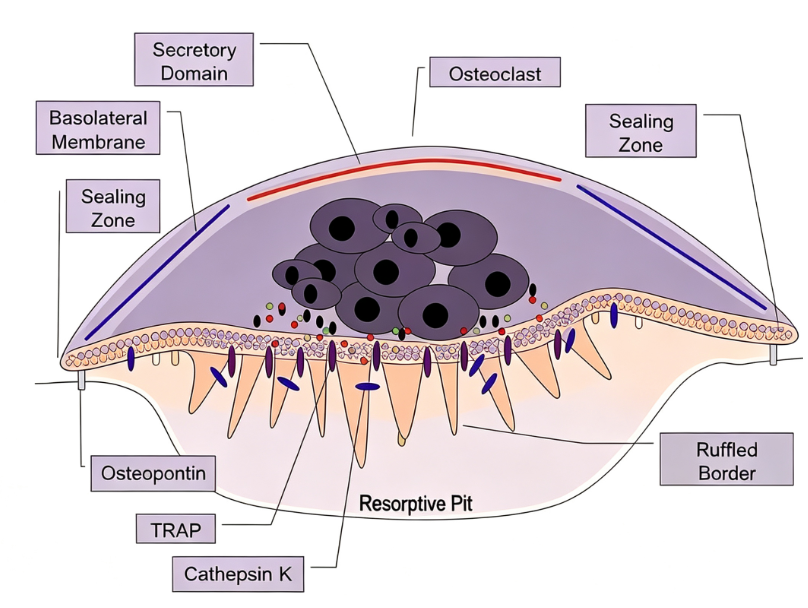
M-CSF is a key factor regulating the differentiation, proliferation, and function of monocytes and macrophages. In the hematopoietic system, M-CSF guides the differentiation of hematopoietic stem cells into the myeloid lineage by inducing the expression of the master transcription factor PU.1. M-CSF is essential for establishing and maintaining the tissue-resident macrophage pool. M-CSF-deficient op/op mice suffer from congenital osteopetrosis due to a severe lack of osteoclasts and exhibit deficiencies in macrophage populations across multiple tissues. Notably, the dependence of macrophages on M-CSF varies among tissues—Langerhans cells in the skin and microglia in the brain appear normal in op/op mice but are absent in M-CSFR-deficient mice, which can be explained by the tissue-specific expression of IL-34.
M-CSF not only plays a pivotal role in macrophage differentiation but also participates in the regulation of macrophage activation and polarization. M-CSF-driven macrophage differentiation leads to the expression of a significant portion of the M2-type transcriptome, including the macrophage mannose receptor. Given the frequently observed elevated levels of M-CSF in tumor-bearing hosts, M-CSFR signaling can play a crucial role in forming the tumor-associated macrophage pool and modulating their activation state.
III. The Central Role of M-CSF in Tumor-Associated Macrophage Regulation
Tumor-associated macrophages (TAMs) are among the most abundant immune cells in the tumor microenvironment, exhibiting dual functions of anti-tumor and pro-tumor effects, with their functional phenotypes determined by the integration of microenvironmental signals. M-CSF is a core regulator of TAM differentiation and maintenance. Through the M-CSFR signaling axis, M-CSF drives the differentiation of monocytes into TAMs and preferentially sustains the survival and function of M2-like TAM subsets. In various solid tumors, elevated expression levels of M-CSF and M-CSFR are closely associated with increased TAM infiltration, higher tumor grade, and poorer patient prognosis.
Blocking M-CSFR signaling significantly reduces TAM numbers and alters the phenotypic balance of the remaining TAMs. Studies show that M-CSFR blockade leads to the preferential depletion of M2-like MHC-IIlow or MMRhigh TAMs, while M1-like MHC-IIhigh or MMRlow TAMs are less affected. The gene expression profile of remaining TAMs after M-CSFR blockade features reduced M2 marker expression, increased M1 marker and MHC-II expression, enhanced antigen-presenting capacity, and weakened immunosuppressive activity.
IV. Clinical Prospects and Challenges of M-CSF Signaling Blockade
The M-CSF/M-CSFR signaling pathway has emerged as an important target for cancer immunotherapy. M-CSFR inhibitors (e.g., PLX3397, GW2580) have demonstrated potential in preclinical models to inhibit tumor angiogenesis and reduce tumor invasion and metastasis. More importantly, M-CSFR blockade can enhance the efficacy of radiotherapy, chemotherapy, and immune checkpoint inhibitors by reducing the immunosuppressive function of TAMs. Currently, various M-CSFR-targeting agents, including small-molecule inhibitors and anti-M-CSFR antibodies, are being evaluated in clinical trials for their effects as monotherapies or in combination therapies.
However, the effects of M-CSFR blockade vary across tumor models. In some cases, blocking M-CSFR may lead to increased G-CSF levels and neutrophil mobilization, paradoxically promoting metastasis. These findings suggest that M-CSFR-targeted therapy requires precise patient selection, with patients exhibiting high M-CSF or M-CSFR expression and poor prognosis most likely to benefit from M-CSFR/macrophage-targeted treatments.
Conclusion
As a core factor regulating the differentiation and function of the monocyte-macrophage lineage, M-CSF plays an irreplaceable role in establishing and maintaining the tissue-resident macrophage pool. In the tumor microenvironment, M-CSF drives TAM differentiation and polarization through the M-CSFR signaling axis, profoundly influencing tumor angiogenesis, invasion, metastasis, and treatment resistance. M-CSFR-targeted therapy can enhance anti-tumor immune responses by depleting M2-like TAMs and reprogramming the phenotype of remaining TAMs, offering new strategic directions for cancer immunotherapy. As a vital tool for basic research and drug development, murine M-CSF recombinant protein will continue to provide critical support for in-depth analysis of the M-CSF signaling network and optimization of tumor immunotherapy strategies.
In M-CSF-related basic research and drug screening, high-quality murine M-CSF recombinant protein is a key tool for macrophage differentiation induction, TAM polarization studies, and animal model construction. To meet this research demand, Uni offers M-CSF Protein, Mouse, suitable for in vitro induction of bone marrow-derived macrophage differentiation, exploration of M-CSF/M-CSFR signaling mechanisms, and animal model construction for studying TAM function in the tumor microenvironment.
This article is reviewed and published by the technical expert team of UA
Disclaimer: This article partially utilizes artificial intelligence assistance in its creation. If any content involves copyright or intellectual property issues, please let us know and we promise to verify and remove it as soon as possible.
Purchase recombinant protein, choose Nanjing UA-Bio
UA protein focuses on providing various protein reagents, raw materials, and services required for drug research and development, cell therapy, gene therapy, and basic scientific research, including drug target proteins, immune checkpoint proteins, cytokines, tool enzymes, customized protein expression, and full-length transmembrane protein development. Youai is committed to providing customers with high-quality products and professional services, and building a High-tech Biological Enterprise with International Competitiveness.
Target proteins | membrane proteins | cytokines | enzymes | viral antigens | protein customization
Nanjing UA Biotechnology Co., Ltd. Email:order@ua-bio.com Phone:+86-25-56221161

Product Information

Link:





©2021-2026 all rights reserved UA Biotechnology Co.,Ltd.
Privacy Policy 
网站备案号 浙ICP备2022019033号-2 浙公网安备33010202004867号
 Business license (three certificates in one)
 Tel:+86-25-56221161
E-mail:order@ua-bio.com
All products sold on this website shall not be used for clinical diagnosis or treatment of humans or animals, and shall only be used for non-medical purposes such as industrial or scientific research.
