




Th17 Cytokines: A Double-Edged Sword in Immune Defense and Inflammatory Damage
Author: Senior Product Manager of UA Views:8 


This article systematically elaborates on the molecular characteristics and biological functions of Th17 cell cytokines, focusing on their protective roles in host defense (particularly against extracellular bacteria and fungal infections) and their pathogenic effects in autoimmune inflammation, while analyzing the regulatory mechanisms of upstream signals such as IL-6 on Th17 differentiation and function.
- Recent Advances
- Product Information
Recent Advances
Th17 Cytokines: A Double-Edged Sword in Immune Defense and Inflammatory Damage
Summary
This article focuses on the molecular characteristics and biological functions of Th17 cytokines, systematically elaborating their protective roles in host defense (particularly against extracellular bacteria and fungal infections) and their pathogenic effects in autoimmune inflammation. It also analyzes the regulatory mechanisms of upstream signals such as IL-6 on Th17 differentiation and function.
This article focuses on the molecular characteristics and biological functions of Th17 cytokines, systematically elaborating their protective roles in host defense (particularly against extracellular bacteria and fungal infections) and their pathogenic effects in autoimmune inflammation. It also analyzes the regulatory mechanisms of upstream signals such as IL-6 on Th17 differentiation and function.
I. Composition and Functional Characteristics of Th17 Cytokines
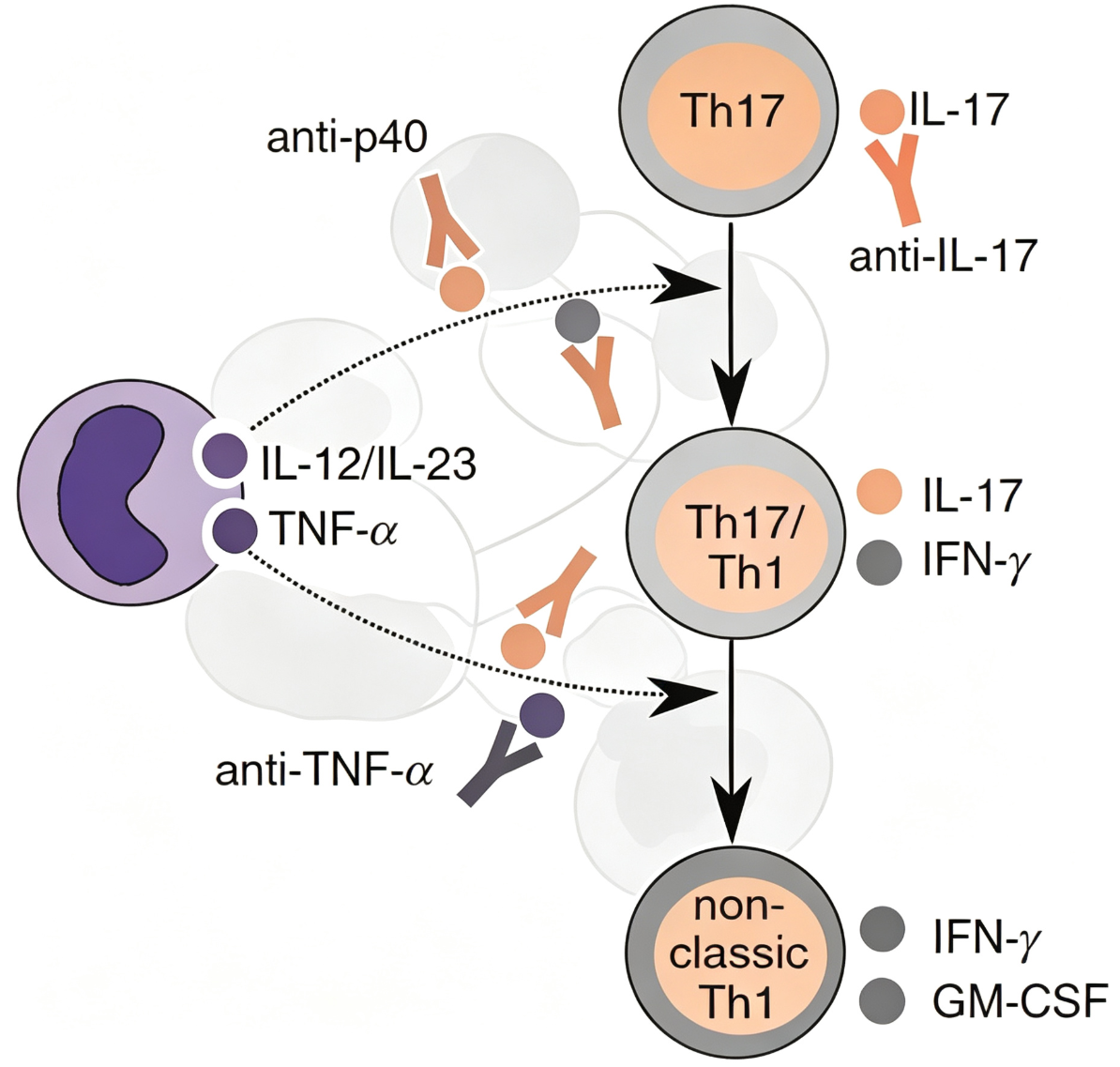
Th17 cells are a crucial subset of CD4⁺ helper T cells, characterized by the secretion of cytokines such as IL-17A, IL-17F, IL-22, and IL-21. IL-17A is the most representative effector molecule of Th17 cells, inducing the expression of chemokines (e.g., CXCL1, CXCL8/IL-8) and pro-inflammatory cytokines (e.g., TNF-α, IL-6), thereby recruiting neutrophils to sites of infection or inflammation. IL-17F shares high structural and functional homology with IL-17A, and the two exhibit synergistic effects in tissue distribution and inflammatory regulation. IL-22, another key effector cytokine secreted by Th17 cells, primarily acts on epithelial cells and barrier tissues (e.g., skin, gut, and respiratory tract), promoting antimicrobial peptide production and mucosal repair, though it also displays pathogenic effects in certain autoimmune diseases. IL-21 is a critical autocrine proliferation factor for Th17 cells, involved in IL-17A induction and the maintenance of Th17 cell function.
II. The Dual Role of Th17 Cells: Defense and Pathogenicity
Th17 cells and their secreted cytokines exhibit a clear "double-edged sword" effect in the immune system. In host defense, Th17 cells are key effector cells against extracellular bacterial and fungal infections. When pathogens breach skin or mucosal barriers, Th17 cells are recruited to infection sites, where they secrete IL-17A, IL-17F, and IL-22 to recruit neutrophils, induce epithelial cells to produce antimicrobial peptides, maintain mucosal barrier integrity, and clear pathogens. In autoimmune inflammation, however, excessive activation or dysregulation of Th17 cells becomes a major driver of immune damage. Abnormal elevation of IL-17A is often associated with autoimmune diseases and tissue inflammatory damage, such as rheumatoid arthritis, psoriasis, multiple sclerosis, and inflammatory bowel disease, where IL-17A levels correlate positively with tissue damage and disease activity.
III. The Central Role of IL-6 in Th17 Differentiation and Functional Regulation
IL-6 is a key inducer driving naïve CD4⁺ T cells toward Th17 differentiation and plays a pivotal role in amplifying inflammation in autoimmune diseases. In the presence of both TGF-β and IL-6, naïve T cells upregulate the transcription factor RORγt (in mice)/RORC (in humans), initiating the Th17 differentiation program. IL-6 activates the STAT3 signaling pathway, inducing RORγt/RORC expression while suppressing Treg differentiation. Additionally, IL-6 promotes Th17 cells to secrete IL-21, forming an autocrine amplification loop that further enhances Th17 maintenance and IL-17A production. In rheumatoid arthritis, elevated IL-6 levels in synovial tissue drive Th17 differentiation and IL-17A production, stimulating synovial fibroblast proliferation and osteoclast activation, leading to joint cartilage and bone erosion.
IV. Conclusion
Th17 cells and their secreted cytokines play dual roles in host defense and autoimmune diseases, offering both protection and pathogenicity. Effector molecules like IL-17A are indispensable for defending against extracellular bacteria and fungal infections, yet their abnormal elevation is a major driver of autoimmune inflammation and tissue damage. IL-6, as a core regulator of Th17 differentiation and functional maintenance, holds a central position in inflammatory amplification. In-depth analysis of Th17 cell differentiation mechanisms and effector molecule networks will provide critical theoretical foundations for targeted therapies in autoimmune diseases.
In Th17 cell differentiation and functional research, standardized in vitro induction systems are essential for ensuring experimental reproducibility. To meet this research need, UniLove offers a human Th17 polarization kit, suitable for in vitro directional induction of human naïve CD4⁺ T cells into the Th17 subset. This kit can be used for studies on Th17 differentiation mechanisms, autoimmune disease modeling, and anti-inflammatory drug evaluation.
This article is reviewed and published by the technical expert team of UA
Disclaimer: This article partially utilizes artificial intelligence assistance in its creation. If any content involves copyright or intellectual property issues, please let us know and we promise to verify and remove it as soon as possible.
Purchase recombinant protein, choose Nanjing UA-Bio
UA protein focuses on providing various protein reagents, raw materials, and services required for drug research and development, cell therapy, gene therapy, and basic scientific research, including drug target proteins, immune checkpoint proteins, cytokines, tool enzymes, customized protein expression, and full-length transmembrane protein development. Youai is committed to providing customers with high-quality products and professional services, and building a High-tech Biological Enterprise with International Competitiveness.
Target proteins | membrane proteins | cytokines | enzymes | viral antigens | protein customization
Nanjing UA Biotechnology Co., Ltd. Email:order@ua-bio.com Phone:+86-25-56221161

Product Information

Link:





©2021-2026 all rights reserved UA Biotechnology Co.,Ltd.
Privacy Policy 
网站备案号 浙ICP备2022019033号-2 浙公网安备33010202004867号
 Business license (three certificates in one)
 Tel:+86-25-56221161
E-mail:order@ua-bio.com
All products sold on this website shall not be used for clinical diagnosis or treatment of humans or animals, and shall only be used for non-medical purposes such as industrial or scientific research.
