




Summary
This article focuses on the molecular characteristics and biological functions of Th1 cytokines, systematically elaborating their central role in cellular immune responses, and analyzing the pathological significance of Th1/Th2 balance shifts in autoimmune diseases, tumors, and reproductive immunity.
Th1 cytokines: Pro-inflammatory protagonists in immune balance
Author: Senior Product Manager of UA Views:21 


This article focuses on the molecular characteristics and biological functions of Th1 cytokines, systematically elucidating their central role in cellular immune responses, and analyzing the pathological significance of Th1/Th2 balance shift in autoimmune diseases, tumors, and reproductive immunology.
- Recent Advances
- Product Information
Recent Advances
Th1 Cytokines: Pro-inflammatory Protagonists in Immune Balance
I. Composition and Functional Roles of Th1 Cytokines
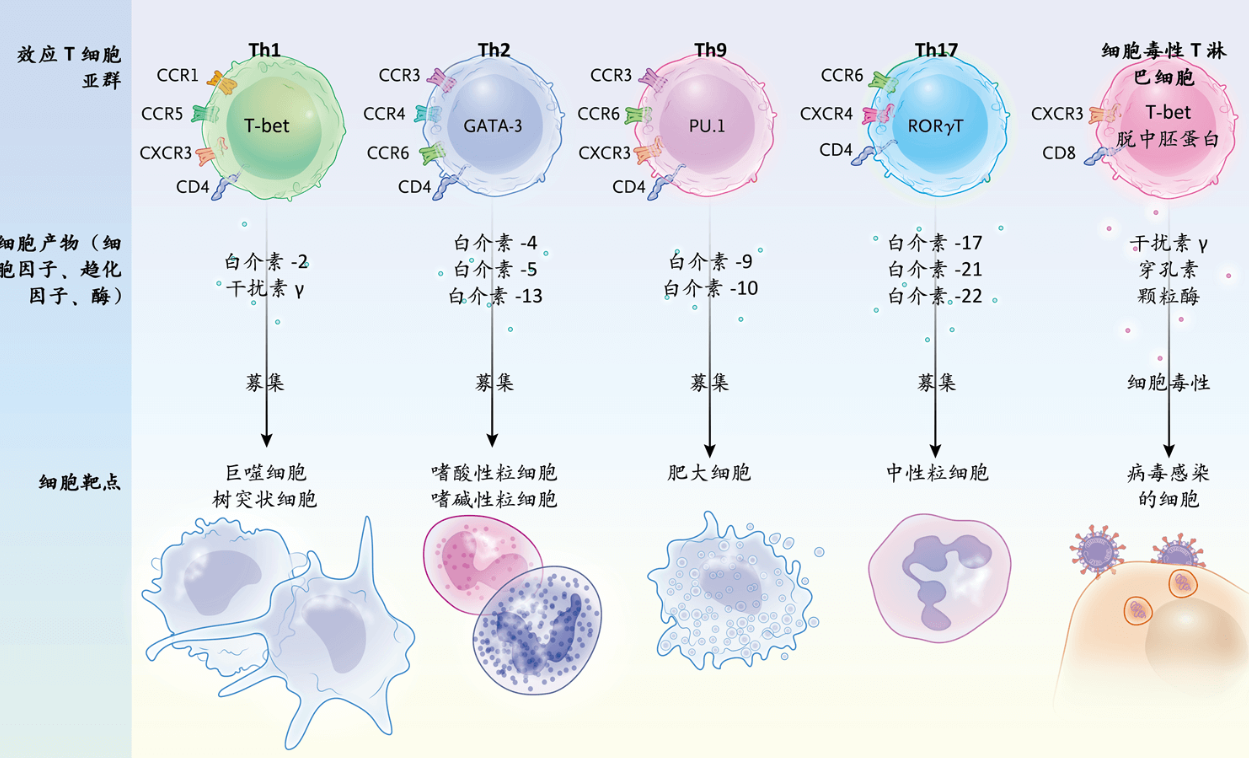
Th1 cells are a critical subset of CD4⁺ helper T cells, primarily mediating cellular immune responses through the secretion of a series of characteristic cytokines. Core members of Th1 cytokines include interleukin-2 (IL-2), interleukin-12 (IL-12), interferon-γ (IFN-γ), tumor necrosis factor-α (TNF-α), and tumor necrosis factor-β (TNF-β). IL-12 is the key inducer promoting the differentiation of naïve T cells into Th1 cells, IFN-γ is the representative effector molecule secreted by Th1 cells, TNF-α is a crucial factor mediating inflammatory responses, and IL-2 is a vital growth factor for T cell proliferation and activation. Th1 cytokines collectively promote inflammation and antiviral effects by activating macrophages, NK cells, and cytotoxic T lymphocytes, enhancing the body's ability to clear intracellular pathogens (such as viruses, certain bacteria, and parasites). Th1 cytokines also promote B cells to produce opsonizing antibody subclasses (e.g., IgG2a) and participate in delayed-type hypersensitivity reactions. Under physiological conditions, the cellular immunity mediated by Th1 cytokines and the humoral immunity mediated by Th2 cytokines maintain a dynamic balance, forming a complete network of immune responses.
II. Physiological Significance and Regulatory Mechanisms of Th1/Th2 Balance
Th1 and Th2 cells mutually inhibit and cross-regulate through their secreted cytokines, maintaining a dynamic balance between cellular and humoral immunity. Th1 cytokines (especially IFN-γ) can suppress the proliferation and differentiation of Th2 cells, while Th2 cytokines (such as IL-4 and IL-10) can inhibit the production of Th1 cytokines. This mutual regulation ensures that the immune response can select an appropriate effector mode based on the type of pathogen. When this balance is disrupted, a "Th1/Th2 shift" occurs, potentially leading to the development and progression of diseases. Excessive Th1 activation may attack self-tissues, triggering autoimmune diseases such as rheumatoid arthritis, type 1 diabetes, multiple sclerosis, chronic thyroiditis, and organ transplant rejection. Conversely, excessive Th2 activation is associated with systemic lupus erythematosus, scleroderma, and allergic diseases. In cancer patients, when Th2 cells excessively suppress Th1 cells, a Th2-dominant state emerges, making the body prone to infections and facilitating tumor immune escape.
III. Dynamic Shifts of Th1/Th2 Balance in Reproductive Immunity
In the field of reproductive immunity, the Th1/Th2 balance is closely related to pregnancy outcomes. As a semi-allograft, the embryo requires adaptive adjustments in the maternal immune system's Th1/Th2 balance. During early implantation, moderate levels of Th1 cytokines (IFN-γ and TNF-α) are beneficial for establishing a pro-inflammatory microenvironment and promoting trophoblast invasion. However, excessive levels of Th1 cytokines such as IFN-γ, TNF-α, and IL-2 can exert cytotoxic effects on the embryo, impairing early embryonic development. Therefore, during embryo implantation and pregnancy maintenance, the maternal-fetal interface is dominated by Th2-type immunity, with Th2 cytokines (e.g., IL-4, IL-5, IL-10, and IL-13) suppressing maternal-fetal rejection and allowing the embryo to evade maternal immune attack. In late pregnancy, the cytokine profile at the maternal-fetal interface shifts back toward Th1-type, participating in the initiation of labor. Excessive Th1 cytokine expression without adequate suppression may lead to adverse pregnancy outcomes such as miscarriage, fetal growth restriction, and stillbirth.
IV. Conclusion
As core executors of cellular immune responses, Th1 cytokines play pivotal roles in anti-infective immunity, anti-tumor immunity, and the regulation of autoimmune diseases. The precise maintenance of Th1/Th2 balance is crucial for immune homeostasis, and its disruption is closely linked to the pathogenesis of various diseases. In-depth research on Th1 cytokines and their differentiation mechanisms will provide a theoretical basis for immune intervention strategies targeting these diseases.
In studies of Th1 cell differentiation and function, as well as explorations of Th1/Th2 balance regulation, standardized in vitro induction systems are essential experimental tools. To meet this research need, U-Trust offers a Mouse Th1 Polarization Kit, suitable for the in vitro directional induction and differentiation of naïve CD4⁺ T cells into the Th1 subset. This kit contains key components required for Th1 polarization, employing optimized IL-12/STAT4 signaling pathway activation and side-pathway blockade strategies to ensure high-efficiency and stable Th1 differentiation. It is applicable for research on Th1 differentiation mechanisms, establishment of autoimmune disease models, and evaluation of vaccine adjuvants.
This article is reviewed and published by the technical expert team of UA
Disclaimer: This article partially utilizes artificial intelligence assistance in its creation. If any content involves copyright or intellectual property issues, please let us know and we promise to verify and remove it as soon as possible.
Purchase recombinant protein, choose Nanjing UA-Bio
UA protein focuses on providing various protein reagents, raw materials, and services required for drug research and development, cell therapy, gene therapy, and basic scientific research, including drug target proteins, immune checkpoint proteins, cytokines, tool enzymes, customized protein expression, and full-length transmembrane protein development. Youai is committed to providing customers with high-quality products and professional services, and building a High-tech Biological Enterprise with International Competitiveness.
Target proteins | membrane proteins | cytokines | enzymes | viral antigens | protein customization
Nanjing UA Biotechnology Co., Ltd. Email:order@ua-bio.com Phone:+86-25-56221161

Product Information

Link:





©2021-2026 all rights reserved UA Biotechnology Co.,Ltd.
Privacy Policy 
网站备案号 浙ICP备2022019033号-2 浙公网安备33010202004867号
 Business license (three certificates in one)
 Tel:+86-25-56221161
E-mail:order@ua-bio.com
All products sold on this website shall not be used for clinical diagnosis or treatment of humans or animals, and shall only be used for non-medical purposes such as industrial or scientific research.
