




IL-18: From a Dormant Target for Three Decades to the New Frontier of Immunotherapy
Author: Senior Product Manager of UA Views:62 


This article systematically elaborates on the molecular characteristics and biological functions of IL-18, highlighting its multifaceted roles as a member of the IL-1 superfamily in regulating Th1 immune responses, maintaining intestinal homeostasis, and metabolic regulation, while analyzing its pathological associations with autoimmune diseases, cardiovascular diseases, and tumors.
- Recent Advances
- Product Information
Recent Advances
IL-18: From a Dormant Target for Three Decades to a New Frontier in Immunotherapy
Summary
This article systematically elaborates on the molecular characteristics and biological functions of IL-18 as a member of the IL-1 superfamily, highlighting its multifaceted roles in regulating Th1 immune responses, maintaining intestinal homeostasis, and metabolic regulation. It also analyzes its pathological associations in autoimmune diseases, cardiovascular diseases, and cancer.
This article systematically elaborates on the molecular characteristics and biological functions of IL-18 as a member of the IL-1 superfamily, highlighting its multifaceted roles in regulating Th1 immune responses, maintaining intestinal homeostasis, and metabolic regulation. It also analyzes its pathological associations in autoimmune diseases, cardiovascular diseases, and cancer.
I. Molecular Characteristics and Cellular Sources of IL-18
Interleukin-18 (IL-18), initially known as interferon-γ-inducing factor (IGIF), was first discovered in Kupffer cells (liver-resident macrophages) in 1989. Its gene is located on human chromosome 11 (mouse chromosome 9) and belongs to the IL-1 superfamily. IL-18 is synthesized as an inactive precursor (pro-IL-18) and requires cleavage by caspase-1 to become a mature, active molecule, a feature highly similar to IL-1β.
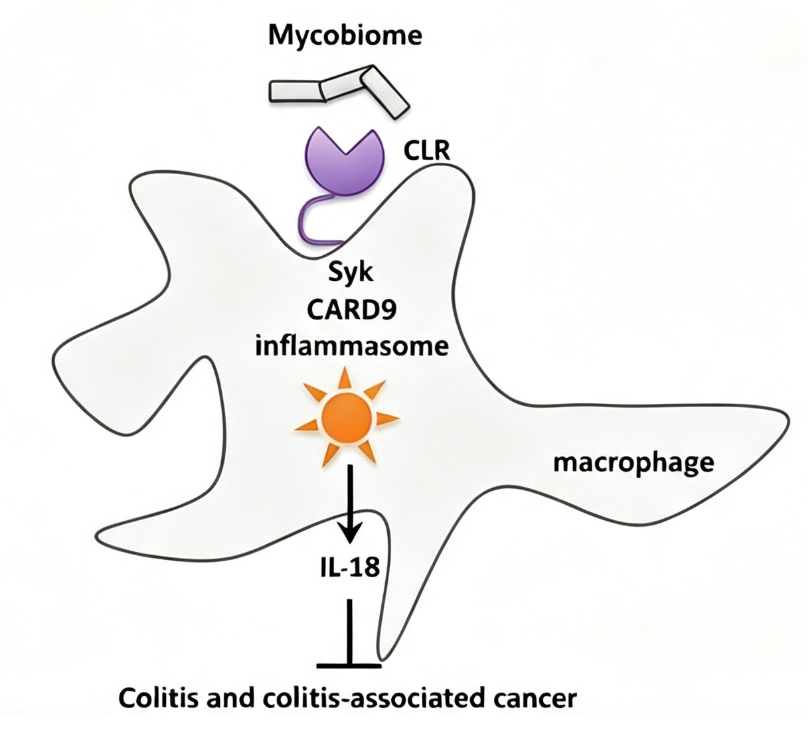
In terms of tissue distribution, IL-18 mRNA is widely expressed in various tissues. In addition to macrophages, non-hematopoietic cells such as intestinal epithelial cells, keratinocytes, and endothelial cells also constitutively express IL-18. Within the immune system, IL-18 can be detected in monocytes, dendritic cells, and B cells. This broad expression pattern is closely related to its diverse physiological functions in different tissues.
II. Receptor System and Signal Transduction Mechanisms of IL-18
IL-18 initiates signal transduction by binding to the IL-18 receptor complex on the cell surface. This receptor complex, a member of the IL-1 receptor family, consists of two subunits: the IL-18Rα chain (IL-18R1) and the IL-18Rβ chain (IL-18R accessory protein, IL-1RAcPL). After binding to the IL-18Rα chain, IL-18 recruits the IL-18Rβ chain to form a high-affinity trimeric complex. Although the IL-18Rα chain alone can bind IL-18, its affinity is low, and the participation of the IL-18Rβ chain is necessary for high-affinity binding and effective cellular signaling. The intracellular region of the receptor complex contains a TIR domain homologous to Toll-like receptors (TLRs), which recruits the MyD88 adaptor protein, subsequently activating downstream signaling molecules such as IRAK and TRAF6, ultimately leading to the activation of transcription factors NF-κB and AP-1 and the initiation of downstream target gene transcription.
The IL-18 signaling pathway is negatively regulated by IL-18 binding protein (IL-18BP). IL-18BP, a natural soluble decoy receptor for IL-18, binds IL-18 with high affinity, competitively blocking its interaction with IL-18Rα and thereby inhibiting excessive activation of IL-18 signaling. Additionally, IL-37 (an anti-inflammatory member of the IL-1 family) can bind to IL-18Rα, preventing the recruitment of IL-18Rβ and activating STAT3-mediated inhibitory signals through interaction with IL-1R8, forming a dual regulatory mechanism for IL-18 signaling.
III. Physiological Functions and Pleiotropic Regulation of IL-18
IL-18 plays a crucial regulatory role in various physiological processes. Its most classic function is to synergize with IL-12 to induce IFN-γ production in T cells and NK cells, making it a key co-stimulatory factor for Th1-type immune responses. IL-18 also contributes to maintaining intestinal homeostasis and plays an important role in intestinal barrier function and mucosal immunity. Furthermore, IL-18 is involved in regulating energy metabolism and maintaining metabolic homeostasis.
Notably, the function of IL-18 is context-dependent. In the presence of IL-12, IL-18 induces Th1-type immune responses; in the absence of IL-12, IL-18 can induce the production of Th2-type cytokines, particularly in basophils, mast cells, and CD4⁺ NKT cells.
IV. Pathological Associations of IL-18 in Various Diseases
Abnormal expression of IL-18 is closely associated with various human diseases. In adult-onset Still's disease (AOSD), patients exhibit extremely high serum IL-18 levels, which correlate strongly with the acute phase of the disease and fluctuate with inflammatory activity, making it an important biomarker for this condition. In psoriasis, IL-18 produced by keratinocytes activates Th1 and Th17 cells, driving skin inflammation. In atopic dermatitis, IL-18 can induce Th1 or Th2 immune responses depending on the presence of IL-12. In kidney diseases, serum IL-18 levels are significantly elevated in IgA nephropathy patients and are closely related to renal prognosis. In cardiovascular diseases, IL-18 is considered an independent risk factor for coronary heart disease and is associated with the progression of atherosclerosis.
V. Conclusion
As a core member of the IL-1 superfamily, IL-18 plays an irreplaceable role in host defense and immune regulation through its multifaceted functions, including inducing IFN-γ production, regulating Th1/Th2 immune balance, and maintaining intestinal homeostasis. Its abnormal expression is closely linked to various diseases such as AOSD, psoriasis, and cardiovascular diseases. With a deeper understanding of the IL-18/IL-18BP pathway and the continuous emergence of novel therapeutic strategies, this long-dormant target is now facing new opportunities for clinical application. Recombinant human IL-18 protein, as a critical tool for basic research and drug development, will continue to provide essential support for exploring the mechanisms of IL-18-related diseases and developing treatment strategies.
In IL-18-related basic research and drug screening, high-quality recombinant human IL-18 protein is a core tool for receptor binding analysis, cellular functional studies, and signal pathway exploration. To meet this research demand, UniLove offers IL-18 Protein, Human, suitable for applications such as IL-18/IL-18R binding analysis, IL-18BP activity evaluation, T cell and NK cell functional studies, and IL-18 signaling pathway mechanism exploration.
This article is reviewed and published by the technical expert team of UA
Disclaimer: This article partially utilizes artificial intelligence assistance in its creation. If any content involves copyright or intellectual property issues, please let us know and we promise to verify and remove it as soon as possible.
Purchase recombinant protein, choose Nanjing UA-Bio
UA protein focuses on providing various protein reagents, raw materials, and services required for drug research and development, cell therapy, gene therapy, and basic scientific research, including drug target proteins, immune checkpoint proteins, cytokines, tool enzymes, customized protein expression, and full-length transmembrane protein development. Youai is committed to providing customers with high-quality products and professional services, and building a High-tech Biological Enterprise with International Competitiveness.
Target proteins | membrane proteins | cytokines | enzymes | viral antigens | protein customization
Nanjing UA Biotechnology Co., Ltd. Email:order@ua-bio.com Phone:+86-25-56221161

Product Information

Link:





©2021-2026 all rights reserved UA Biotechnology Co.,Ltd.
Privacy Policy 
网站备案号 浙ICP备2022019033号-2 浙公网安备33010202004867号
 Business license (three certificates in one)
 Tel:+86-25-56221161
E-mail:order@ua-bio.com
All products sold on this website shall not be used for clinical diagnosis or treatment of humans or animals, and shall only be used for non-medical purposes such as industrial or scientific research.
