




Molecular characteristics, biological functions, and roles of FGF-9 in the central nervous system
Author: Senior Product Manager of UA Views:14 


This article systematically elaborates on the molecular characteristics and biological functions of FGF-9 as a core member of the fibroblast growth factor family, focusing on its unique secretory properties, high-affinity binding patterns with FGFR receptors, and its critical role in the development and homeostasis maintenance of the central nervous system.
- Recent Advances
- Product Information
Recent Advances
Molecular Characteristics, Biological Functions, and Central Nervous System Roles of FGF-9
Overview
This article focuses on the molecular characteristics and biological functions of FGF-9 as a core member of the fibroblast growth factor family, systematically elaborating its unique secretory properties, high-affinity binding patterns with FGFR receptors, and its critical role in the development and homeostasis maintenance of the central nervous system.
This article focuses on the molecular characteristics and biological functions of FGF-9 as a core member of the fibroblast growth factor family, systematically elaborating its unique secretory properties, high-affinity binding patterns with FGFR receptors, and its critical role in the development and homeostasis maintenance of the central nervous system.
I. Structural Classification of the FGF Family and Molecular Localization of FGF-9.
The fibroblast growth factor family is a multifunctional signaling molecule family comprising 22 members (human FGF1 to FGF23, with FGF15 being the mouse counterpart of human FGF19). Based on sequence homology and functional characteristics, the FGF family can be divided into seven subfamilies, including the FGF1, FGF4, FGF7, FGF8, FGF9, FGF11, and FGF16 subfamilies. Among these, FGF-9, FGF-16, and FGF-20 collectively form the FGF9 subfamily, sharing high sequence and functional homology. FGF-9 (also known as glia-activating factor or heparin-binding growth factor 9) was the first identified member of this subfamily, initially isolated from the conditioned medium of human glioblastoma cell lines.
Structurally, FGF-9 consists of approximately 208 amino acid residues and contains a highly conserved core region. This region is composed of 12 antiparallel β-strands folded into three similar subdomains, forming a characteristic β-trefoil structure that provides the conformational basis for FGF-9's binding to FGFR and dimerization. Unlike most FGF members, FGF-9 lacks a typical N-terminal signal peptide sequence but can still be secreted extracellularly via the classical endoplasmic reticulum-Golgi pathway, a unique attribute within the FGF family.
II. Tissue Distribution and Central Nervous System Expression Characteristics of FGF-9.
FGF-9 is widely expressed during embryonic development, including in developing heart, lung, and skeletal tissues. In adult individuals, FGF-9 expression is more selective, primarily localized to the central nervous system and kidneys. Immunohistochemical studies of rat brain tissue have revealed strong FGF-9 protein expression in neurons, with rare immunoreactivity in glial cells. FGF-9 is distributed across multiple brain regions, with prominent expression in the mitral cell layer of the olfactory bulb, red nucleus, trigeminal motor nucleus, facial nucleus, reticular nucleus, and Purkinje cell layer of the cerebellum in rats. This distribution pattern suggests that FGF-9 is closely associated with neuronal activity in normal brain function rather than being limited to injury repair processes.
III. Signaling Mechanisms and Receptor Specificity of FGF-9.
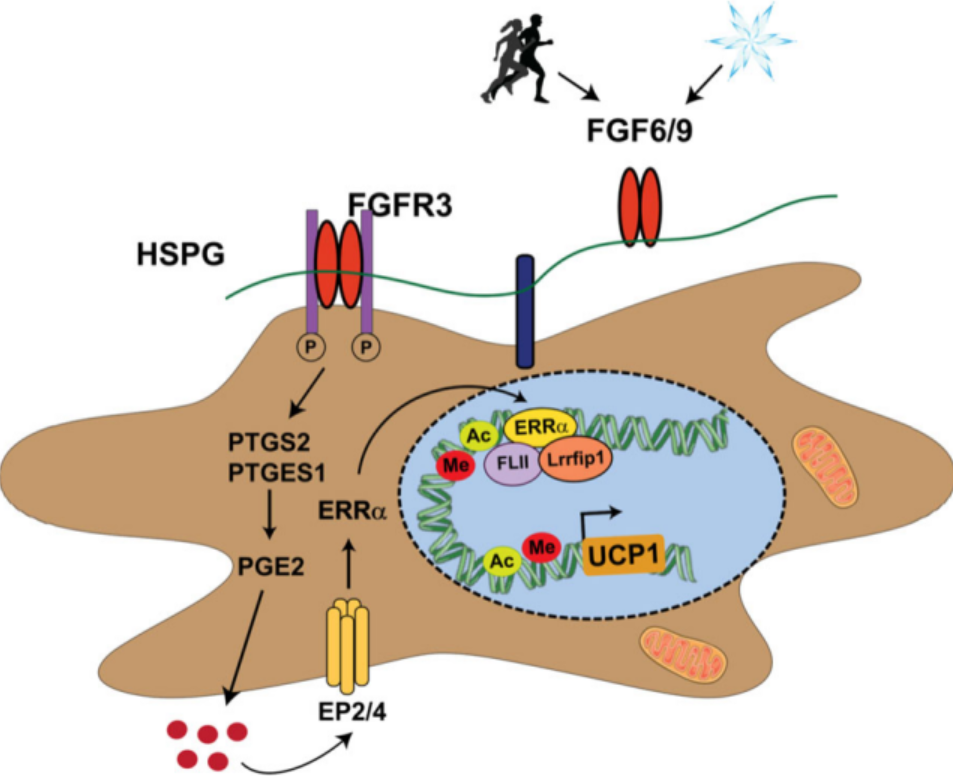
FGF-9 exerts its biological effects by binding to fibroblast growth factor receptors (FGFRs) on the cell surface. FGFRs belong to the tyrosine kinase receptor family and include four main types: FGFR1 to FGFR4. FGF-9 exhibits significant isoform selectivity in its affinity for FGFRs, with high-affinity binding to the IIIc isoforms of FGFR1, FGFR2, and FGFR3, while showing weaker affinity for FGFR4. Heparan sulfate proteoglycans act as co-receptors, enhancing the binding affinity of FGF-9 to FGFRs.
Upon binding to FGFRs, FGF-9 induces receptor dimerization and autophosphorylation, subsequently activating downstream signaling pathways such as Ras-Raf-MEK-ERK and PI3K-Akt, which regulate cell proliferation, differentiation, migration, and survival.
IV. Physiological Functions and Developmental Regulatory Roles of FGF-9.
FGF-9 plays an irreplaceable role in embryonic development. Fgf9 knockout mice die shortly after birth due to respiratory failure caused by pulmonary hypoplasia, while also exhibiting cardiac enlargement, poor vascularization, smaller skeletons, shortened intestines, and male-to-female sex reversal phenotypes. Conditional knockout mice further display ataxia and epilepsy-like central nervous system phenotypes. In humans, FGF-9 gene variants have been linked to multiple synostosis syndrome type 3, characterized by multiple joint fusions. Additionally, dysregulation of FGF-9 signaling is associated with differences in sex development and tumorigenesis, while its vascular stabilization effects may offer potential benefits for chronic diseases.
V. Conclusion.
As the founding member of the FGF9 subfamily, FGF-9, with its unique secretory properties, high selectivity for FGFR IIIc isoforms, and neuron-predominant expression pattern in the central nervous system, plays an indispensable role in embryonic development, organ formation, and neural homeostasis maintenance. Recombinant rat-derived FGF-9 protein serves as a critical molecular tool for in-depth exploration of this factor's precise functions in the central nervous system and related developmental processes.
In FGF-9-related basic research and drug screening, high-quality recombinant rat-derived FGF-9 protein is essential for neuronal culture, signaling pathway analysis, and functional studies. To meet these research needs, Uni provides FGF-9 Protein, Rat, suitable for applications such as primary rat neuron and glial cell culture and functional studies, FGFR signaling pathway mechanism exploration, and research on central nervous system development and injury repair.
This article is reviewed and published by the technical expert team of UA
Disclaimer: This article partially utilizes artificial intelligence assistance in its creation. If any content involves copyright or intellectual property issues, please let us know and we promise to verify and remove it as soon as possible.
Purchase recombinant protein, choose Nanjing UA-Bio
UA protein focuses on providing various protein reagents, raw materials, and services required for drug research and development, cell therapy, gene therapy, and basic scientific research, including drug target proteins, immune checkpoint proteins, cytokines, tool enzymes, customized protein expression, and full-length transmembrane protein development. Youai is committed to providing customers with high-quality products and professional services, and building a High-tech Biological Enterprise with International Competitiveness.
Target proteins | membrane proteins | cytokines | enzymes | viral antigens | protein customization
Nanjing UA Biotechnology Co., Ltd. Email:order@ua-bio.com Phone:+86-25-56221161

Product Information

Link:





©2021-2026 all rights reserved UA Biotechnology Co.,Ltd.
Privacy Policy 
网站备案号 浙ICP备2022019033号-2 浙公网安备33010202004867号
 Business license (three certificates in one)
 Tel:+86-25-56221161
E-mail:order@ua-bio.com
All products sold on this website shall not be used for clinical diagnosis or treatment of humans or animals, and shall only be used for non-medical purposes such as industrial or scientific research.
