




NY-ESO-1: The Translational Pathway from Cancer-Testis Antigen to Ideal Immunotherapy Target
Author: Senior Product Manager of UA Views:16 


This article focuses on the unique expression characteristics of NY-ESO-1 as a cancer-testis antigen, systematically elaborating its immune-privileged expression pattern in normal tissues and its ectopic activation mechanism in various malignant tumors. It analyzes the molecular basis of its high immunogenicity and its clinical translational value as an ideal target for TCR-T cell therapy.
- Recent Advances
- Product Information
Recent Advances
NY-ESO-1: From Cancer-Testis Antigen to Ideal Target for Immunotherapy
Overview
This article focuses on the unique expression characteristics of NY-ESO-1 as a cancer-testis antigen, systematically elaborating its immune-privileged expression pattern in normal tissues and its ectopic activation in various malignancies. It analyzes the molecular basis of its high immunogenicity and its clinical translational value as an ideal target for TCR-T cell therapy.
This article focuses on the unique expression characteristics of NY-ESO-1 as a cancer-testis antigen, systematically elaborating its immune-privileged expression pattern in normal tissues and its ectopic activation in various malignancies. It analyzes the molecular basis of its high immunogenicity and its clinical translational value as an ideal target for TCR-T cell therapy.
1. Discovery of NY-ESO-1 and Its Classification in the Cancer-Testis Antigen Family
NY-ESO-1 (New York esophageal squamous cell carcinoma-1) was first identified by Chen et al. in 1997 using SEREX technology from esophageal squamous cell carcinoma. This antigen belongs to the Cancer-Testis Antigen (CTA) family and is one of the most immunogenic tumor antigens known, capable of inducing both cellular and humoral immune responses in cancer patients. The NY-ESO-1 gene is located at Xq28, and its encoded protein exhibits a highly restricted expression pattern in normal tissues—detectable only in testicular germ cells. As the testes are immune-privileged organs lacking human leukocyte antigen expression, NY-ESO-1 within them is not recognized by the immune system, creating a unique "immune-privileged" window.
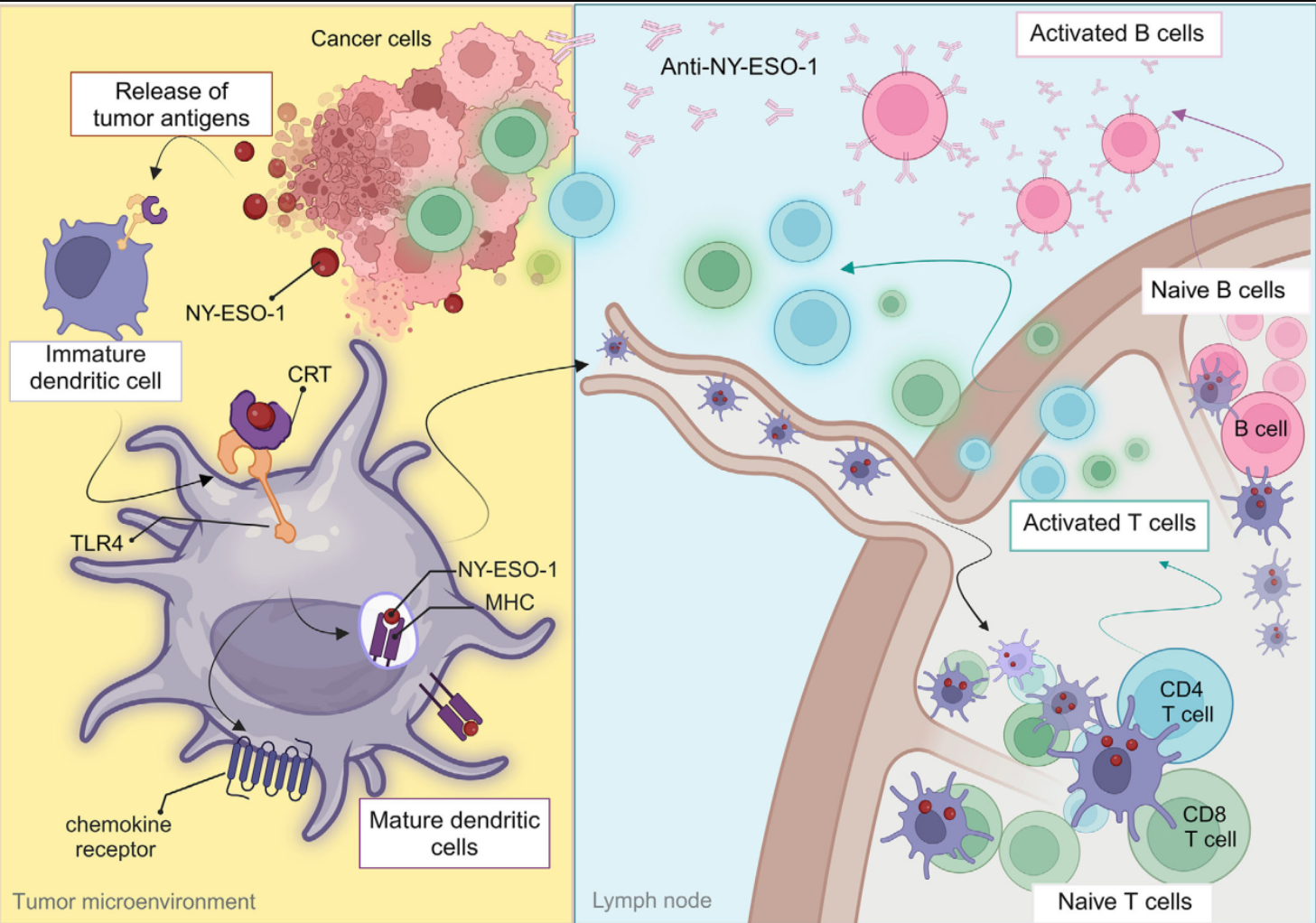
2. Ectopic Expression Profile of NY-ESO-1 in Tumors
NY-ESO-1 exhibits significant ectopic activation in various malignancies, making it one of the most extensively studied target antigens in tumor immunotherapy. Its expression distribution includes melanoma, synovial sarcoma, non-small cell lung cancer, ovarian cancer, bladder cancer, breast cancer, prostate cancer, and hepatocellular carcinoma, among others. In synovial sarcoma, the expression rate of NY-ESO-1 is as high as 80%, in melanoma it ranges from 25% to 40%, and in ovarian cancer it is approximately 30%. This broad tumor expression profile makes it a highly promising target for broad-spectrum tumor immunotherapy.
3. Unique Advantages of NY-ESO-1 as an Immunotherapy Target
NY-ESO-1 has multiple molecular advantages as a tumor antigen target. First, its expression is highly specific—absent in most normal tissues except immune-privileged testicular tissue—effectively reducing the risk of off-target toxicity in targeted therapies. Second, NY-ESO-1 is highly immunogenic, capable of spontaneously inducing high-frequency specific antibody and CD8⁺ T cell responses in patients, suggesting its potential as an ideal vaccine antigen and TCR-T target.
Based on these characteristics, NY-ESO-1-targeted immunotherapy strategies encompass multiple approaches: peptide or protein vaccines, DC vaccines, mRNA vaccines, and adoptive cell therapies based on TCR transgenics. For HLA-A*0201-positive and NY-ESO-1-positive patient populations, NY-ESO-1-specific TCR-T cell therapy has shown promising clinical responses in metastatic melanoma and synovial sarcoma, with several Phase I/II clinical studies underway.
4. Immunological Features of the HLA-A*0201/SLLMWITQC Epitope
The immunodominant epitope of NY-ESO-1, SLLMWITQC (corresponding to amino acids 157–165 of the protein), is a nonapeptide presented by the HLA-A0201 molecule and plays a central role in NY-ESO-1-specific immune responses. This epitope has the following key characteristics: restricted by HLA-A0201, recognized by CD8+ cytotoxic T cells, and present as an immunodominant epitope in various NY-ESO-1-positive tumors.
For this HLA-peptide complex, researchers have developed PE fluorescently labeled tetramer reagents, which can be used for quality control of NY-ESO-1-specific TCR-T cell products—detecting the proportion of NY-ESO-1-specific T cells in the product via flow cytometry before TCR-T cell infusion; monitoring the frequency of endogenous NY-ESO-1-specific T cells in peripheral blood to assess baseline immune response status and post-treatment immune reconstitution; and analyzing antigen-specific T cells in tumor-infiltrating lymphocytes, providing critical data for studying the immune characteristics of the tumor microenvironment.
5. Conclusion
As a representative of the cancer-testis antigen family, NY-ESO-1 has become one of the most valuable target antigens in tumor immunotherapy due to its highly restricted normal tissue expression pattern, broad tumor ectopic activation profile, and exceptional immunogenicity. The HLA-A*0201/SLLMWITQC tetramer provides a precise tool for detecting and sorting NY-ESO-1-specific T cells, with broad application value in the development and quality control of TCR-T cell therapies.
To meet the above needs for NY-ESO-1-specific T cell detection, UniLove offers the UA-MHC HLA-A*0201/SLLMWITQC NY-ESO-1 Tetramer-PE Labelled. This product is assembled from biotinylated HLA-A*0201/SLLMWITQC monomers and PE-labeled streptavidin and has been validated to specifically recognize CD8⁺ T cells specific for the NY-ESO-1 157-165 epitope. It is suitable for quality control of TCR-T cell products, monitoring the frequency of NY-ESO-1-specific T cells, and analyzing tumor-infiltrating lymphocytes. It is recommended to perform titration experiments to determine the optimal staining concentration before use, with light-protected handling throughout the process.
This article is reviewed and published by the technical expert team of UA
Disclaimer: This article partially utilizes artificial intelligence assistance in its creation. If any content involves copyright or intellectual property issues, please let us know and we promise to verify and remove it as soon as possible.
Purchase recombinant protein, choose Nanjing UA-Bio
UA protein focuses on providing various protein reagents, raw materials, and services required for drug research and development, cell therapy, gene therapy, and basic scientific research, including drug target proteins, immune checkpoint proteins, cytokines, tool enzymes, customized protein expression, and full-length transmembrane protein development. Youai is committed to providing customers with high-quality products and professional services, and building a High-tech Biological Enterprise with International Competitiveness.
Target proteins | membrane proteins | cytokines | enzymes | viral antigens | protein customization
Nanjing UA Biotechnology Co., Ltd. Email:order@ua-bio.com Phone:+86-25-56221161

Product Information

Link:





©2021-2026 all rights reserved UA Biotechnology Co.,Ltd.
Privacy Policy 
网站备案号 浙ICP备2022019033号-2 浙公网安备33010202004867号
 Business license (three certificates in one)
 Tel:+86-25-56221161
E-mail:order@ua-bio.com
All products sold on this website shall not be used for clinical diagnosis or treatment of humans or animals, and shall only be used for non-medical purposes such as industrial or scientific research.
