




The physiological functions, medical applications, and doping risks of erythropoietin
Author: Senior Product Manager of UA Views:13 


This article focuses on the biological nature of erythropoietin (EPO), systematically elaborating its core role as the sole key hormone regulating erythropoiesis in maintaining the body's oxygen supply, analyzing its medical application value in diseases such as chronic renal anemia, and based on its classification as a prohibited peptide hormone, discussing the health risks associated with its abuse in sports and advancements in detection technologies.
- Recent Advances
- Product Information
Recent Advances
Physiological Functions, Medical Applications, and Doping Risks of Erythropoietin
Overview
This article focuses on the biological nature of erythropoietin (EPO), systematically elaborating its core role as the sole key hormone regulating erythropoiesis in maintaining oxygen supply, analyzing its medical application value in diseases such as chronic renal anemia, and explaining the health risks and detection technology advancements associated with its abuse in sports as a peptide hormone listed on the prohibited list.
This article focuses on the biological nature of erythropoietin (EPO), systematically elaborating its core role as the sole key hormone regulating erythropoiesis in maintaining oxygen supply, analyzing its medical application value in diseases such as chronic renal anemia, and explaining the health risks and detection technology advancements associated with its abuse in sports as a peptide hormone listed on the prohibited list.
I. Molecular Nature and Biological Functions of EPO.
Erythropoietin is an endogenous glycoprotein hormone secreted by renal interstitial fibroblasts (in adults) and hepatocytes (during fetal development), belonging to the type I cytokine superfamily. The human EPO gene is located on chromosome 7q21-22, encoding a mature protein composed of 165 amino acid residues with a molecular weight of approximately 30.4 kDa. Its glycosylation modifications are crucial for in vivo stability, biological activity, and half-life.
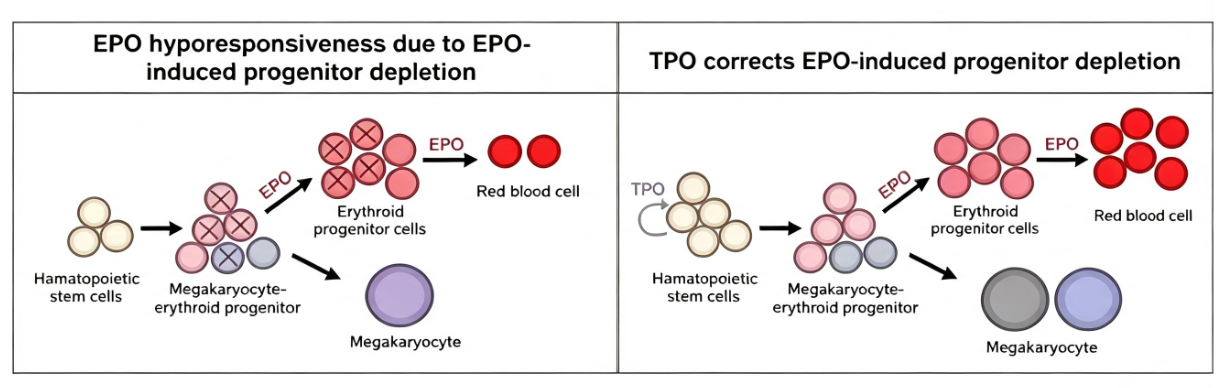
Under physiological conditions, EPO production is precisely regulated by tissue oxygen partial pressure. When renal interstitial cells detect insufficient oxygen supply (e.g., anemia, hypoxic environments, or pulmonary diseases), hypoxia-inducible factors stabilize and initiate EPO gene transcription. EPO acts on erythroid progenitor cells in the bone marrow, binding to cell surface EPO receptors and activating signaling pathways such as JAK2/STAT5 to inhibit apoptosis of erythroid progenitor cells and drive their proliferation and differentiation into proerythroblasts, basophilic erythroblasts, polychromatic erythroblasts, orthochromatic erythroblasts, and ultimately enucleated reticulocytes released into the bloodstream. As the most abundant cellular component in blood, red blood cells play a central role in transporting oxygen from the lungs to tissues throughout the body. Since mature red blood cells lack nuclei and mitochondria and cannot proliferate, EPO-driven erythropoiesis is the sole physiological pathway for generating new red blood cells, playing an irreplaceable role in maintaining oxygen supply-demand balance.
II. Clinical Applications of EPO.
Since its approval in 1989, recombinant human erythropoietin (rHuEPO) has become an indispensable therapeutic agent in clinical medicine. Its most classic application is in treating anemia caused by chronic kidney disease (particularly in end-stage renal disease patients undergoing dialysis)—renal failure leading to insufficient EPO secretion is the core etiology of renal anemia. Exogenous EPO supplementation can effectively correct anemia, reduce transfusion needs, and improve patients' quality of life. Additionally, EPO is widely used in chemotherapy-induced anemia, myelodysplastic syndromes, anemia of prematurity, and perioperative red blood cell mobilization.
III. Doping Risks and Pathological Consequences of EPO in Sports.
In competitive sports, EPO is classified as an S2 peptide hormone, growth factor, and related substance on the Prohibited List, explicitly banned for use. Athletes inject exogenous EPO to artificially increase hematocrit and hemoglobin concentration, enhancing blood oxygen-carrying capacity to improve endurance performance—this effect is particularly pronounced in endurance sports such as long-distance running, cycling, and cross-country skiing. However, the health risks associated with exogenous EPO abuse are severe. Excessive elevation of hematocrit significantly increases blood viscosity and flow resistance, placing greater strain on the heart. This hypercoagulable state can lead to thrombosis, causing life-threatening cardiovascular events such as deep vein thrombosis, pulmonary embolism, myocardial infarction, or stroke, and may even result in sudden death.
Notably, as a large glycoprotein, EPO is degraded and inactivated in the digestive tract if taken orally, necessitating subcutaneous or intravenous injection. EPO positivity can hardly be explained by "accidental ingestion," indicating intentional use. With advancements in doping detection technology, both blood and urine samples can now effectively detect EPO and its metabolites, providing robust technical support for anti-doping efforts.
IV. Conclusion.
As the sole key hormone regulating erythropoiesis, EPO plays an irreplaceable physiological role in maintaining oxygen homeostasis, and its medical applications have brought significant benefits to numerous patients with anemia. However, its abuse in sports reflects a one-sided pursuit of physiological enhancement and disregard for safety boundaries. Scientifically understanding EPO's physiological functions, medical value, and doping risks is crucial for standardizing its clinical use and preventing misuse. Human recombinant EPO protein, as an essential tool for basic research and detection method development, will continue to provide critical support for exploring EPO signaling networks.
In EPO-related basic research and detection method development, high-quality human recombinant EPO protein is a core tool for signal pathway analysis, receptor binding studies, and immunoassay development. To meet this research need, U-Impact offers EPO Protein, Human, suitable for EPO-EPOR binding activity studies, JAK2/STAT5 signaling pathway exploration, and the establishment and validation of EPO immunoassays.
This article is reviewed and published by the technical expert team of UA
Disclaimer: This article partially utilizes artificial intelligence assistance in its creation. If any content involves copyright or intellectual property issues, please let us know and we promise to verify and remove it as soon as possible.
Purchase recombinant protein, choose Nanjing UA-Bio
UA protein focuses on providing various protein reagents, raw materials, and services required for drug research and development, cell therapy, gene therapy, and basic scientific research, including drug target proteins, immune checkpoint proteins, cytokines, tool enzymes, customized protein expression, and full-length transmembrane protein development. Youai is committed to providing customers with high-quality products and professional services, and building a High-tech Biological Enterprise with International Competitiveness.
Target proteins | membrane proteins | cytokines | enzymes | viral antigens | protein customization
Nanjing UA Biotechnology Co., Ltd. Email:order@ua-bio.com Phone:+86-25-56221161

Product Information

Link:





©2021-2026 all rights reserved UA Biotechnology Co.,Ltd.
Privacy Policy 
网站备案号 浙ICP备2022019033号-2 浙公网安备33010202004867号
 Business license (three certificates in one)
 Tel:+86-25-56221161
E-mail:order@ua-bio.com
All products sold on this website shall not be used for clinical diagnosis or treatment of humans or animals, and shall only be used for non-medical purposes such as industrial or scientific research.
