




KRAS G12D Mutation: From the "Undruggable" Dilemma to a Breakthrough in Immunotherapy Targeting
Author: Senior Product Manager of UA Views:16 


This article systematically elaborates on the molecular characteristics and clinical distribution of KRAS G12D, the most common KRAS mutation subtype, as well as its mechanisms in driving tumorigenesis. It provides an in-depth analysis of the challenges in drug development due to the lack of covalent binding sites and unique GTP hydrolysis kinetics. Additionally, it focuses on how TCR-T cell therapy-based immunotherapy strategies can achieve precise targeting of this "undruggable" target using MHC-peptide tetramer technology.
- Recent Advances
- Product Information
Recent Advances
KRAS G12D Mutation: Breaking the "Undruggable" Barrier and Emerging as a Novel Target for Immunotherapy
Summary
This article systematically elaborates on the molecular characteristics, clinical distribution, and tumor-driving mechanisms of KRAS G12D, the most common KRAS mutation subtype. It delves into the challenges in drug development due to the lack of covalent binding sites and unique GTP hydrolysis kinetics, and highlights how TCR-T cell therapy-based immunotherapy strategies can precisely target this "Death Star" using MHC-peptide tetramer technology.
This article systematically elaborates on the molecular characteristics, clinical distribution, and tumor-driving mechanisms of KRAS G12D, the most common KRAS mutation subtype. It delves into the challenges in drug development due to the lack of covalent binding sites and unique GTP hydrolysis kinetics, and highlights how TCR-T cell therapy-based immunotherapy strategies can precisely target this "Death Star" using MHC-peptide tetramer technology.
I. The Central Role of KRAS Mutations in Tumors and Subtype Distribution.
The RAS gene family is the most widely mutated oncogene in human tumors, detectable in nearly 30% of human malignancies, and was one of the first human proto-oncogenes identified in oncology. The RAS family includes three subtypes—KRAS, HRAS, and NRAS—located on human chromosomes 12p12.1, 11p15.5, and 1p13.2, respectively. These encode four proteins: HRAS, NRAS, KRAS4A, and KRAS4B, with KRAS4B being the primary functional subtype. Among all RAS family mutations, KRAS mutations account for approximately 85%, making it the most dominant subtype driving tumorigenesis and one of the most critical targets in precision oncology.
KRAS functions as a molecular switch, cycling between the GTP-bound active state and the GDP-bound inactive state to receive and transmit signals from membrane-bound receptors, regulating key processes such as cell proliferation, differentiation, and survival. KRAS mutations primarily cluster around four hotspot codons (12, 13, 61, and 146), with codon 12 being the most frequently mutated. Among codon 12 mutations, G12D is the most common, followed by G12V and G12C.
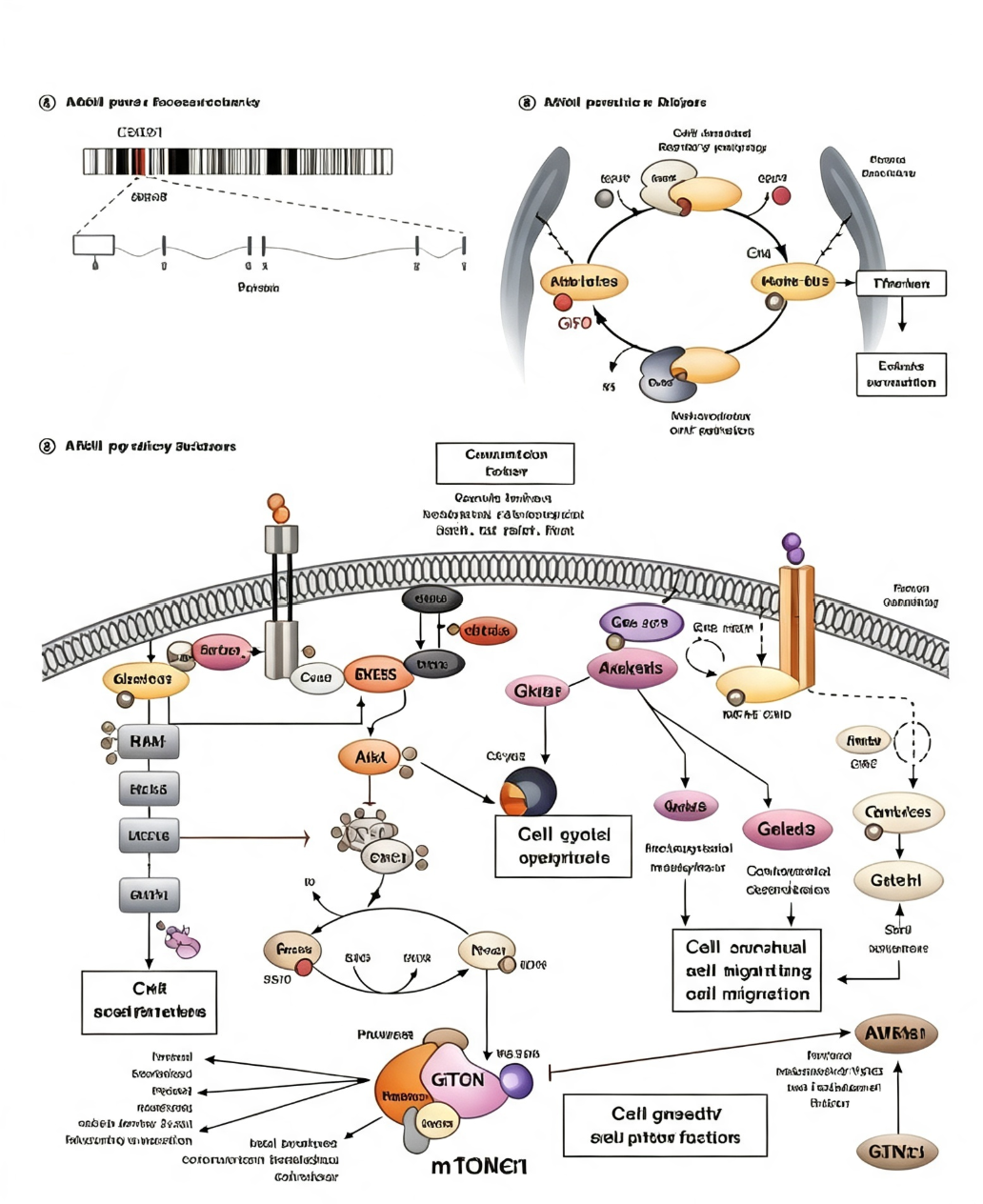
II. Clinical Distribution and Epidemiological Features of KRAS G12D.
KRAS G12D mutation exhibits distinct clinical distribution patterns across various solid tumors. In pancreatic ductal adenocarcinoma, KRAS mutation rates exceed 90%, with G12D being the predominant subtype. A large cohort study of 221,164 samples revealed that G12D accounts for 33.26% of KRAS mutations in pancreatic cancer, making it the most common KRAS mutation in this malignancy. In colorectal cancer, KRAS mutation rates are approximately 45% (about 49% in Chinese populations), with G12D comprising 13% to 30% of KRAS mutations, varying by study population. In non-small cell lung cancer (particularly lung adenocarcinoma), G12D mutations represent about 4% to 5% of KRAS mutations. Although the proportion is relatively low, the high incidence of lung cancer still results in a substantial patient population.
III. Historical Understanding of KRAS as "Undruggable" and the G12C Breakthrough.
Since its discovery in 1982, KRAS has been regarded as an "undruggable" target, primarily due to several interrelated factors. First, KRAS has picomolar affinity for GTP, while intracellular GTP concentrations are as high as 0.5 mmol/L. This extremely strong binding, coupled with ligand concentrations far exceeding inhibitor potential, makes competitive inhibition nearly impossible. Second, the KRAS protein surface is nearly spherical and smooth, lacking typical small-molecule binding pockets, posing a fundamental structural challenge for drug design. Third, the D-domains of RAS family subtypes are highly homologous, making selective targeting chemically difficult.
The successful development of KRAS G12C inhibitors provided a critical counterexample to the "undruggable" paradigm. By exploiting the cysteine residue introduced by the G12C mutation to form a covalent bond, these inhibitors irreversibly trap KRAS G12C in the inactive GDP-bound state, thereby blocking its signaling.
IV. Unique Challenges in KRAS G12D Drug Development.
The G12D mutation involves the substitution of glycine at codon 12 with aspartate, which carries a terminal carboxyl group, presenting even greater challenges for drug development than G12C. First, the G12D subtype lacks the cysteine residue near switch pocket II, precluding covalent binding strategies. Second, G12D's GTP hydrolysis rate is 2 to 3 times slower than G12C's, causing it to remain predominantly in the GTP-bound active state. Although similar binding pockets exist in the GDP-bound state, pharmacological strategies targeting the inactive state are less effective for G12D compared to G12C.
V. TCR-T Cell Therapy and MHC Tetramer Application Strategies.
Given the bottlenecks in direct small-molecule inhibition, leveraging the immune system to target KRAS G12D neoantigens has emerged as a promising alternative. The aberrant protein produced by KRAS G12D mutation is degraded by the proteasome, generating short peptide fragments containing the mutation site. These peptides are presented on the tumor cell surface by HLA molecules, forming neoantigens recognizable by T cells. Based on this, researchers are developing TCR-T cell therapies specific to KRAS G12D. By screening and expanding TCRs that can specifically recognize HLA-peptide complexes, T cells are endowed with the ability to precisely kill tumor cells.
VI. Conclusion.
KRAS G12D, as one of the most common driver mutations in multiple solid tumors, is seeing its "undruggable" barrier gradually overcome by immunotherapy. TCR-T cell therapy, by targeting HLA-presented mutant peptide neoantigens, opens a new path for precision treatment of G12D mutations. The HLA-A*1101/VVVGADGVGK tetramer, as a key detection tool in this field, will continue to facilitate the discovery and validation of antigen-specific TCRs.
In the development pipeline of TCR-T cell therapy, MHC-peptide tetramers are the core tool for screening, identifying, and validating antigen-specific T cells. To meet the research needs for KRAS G12D targeting, UniLove offers the UA-MHC HLA-A*1101/VVVGADGVGK KRAS G12D Tetramer-PE Labelled. This product is a PE-labeled tetramer complex that can be directly used for flow cytometry detection and sorting of HLA-A*1101-restricted KRAS G12D neoantigen-specific CD8+ T cells. It holds significant value in TCR screening, affinity evaluation, and vaccine immune monitoring.
This article is reviewed and published by the technical expert team of UA
Disclaimer: This article partially utilizes artificial intelligence assistance in its creation. If any content involves copyright or intellectual property issues, please let us know and we promise to verify and remove it as soon as possible.
Purchase recombinant protein, choose Nanjing UA-Bio
UA protein focuses on providing various protein reagents, raw materials, and services required for drug research and development, cell therapy, gene therapy, and basic scientific research, including drug target proteins, immune checkpoint proteins, cytokines, tool enzymes, customized protein expression, and full-length transmembrane protein development. Youai is committed to providing customers with high-quality products and professional services, and building a High-tech Biological Enterprise with International Competitiveness.
Target proteins | membrane proteins | cytokines | enzymes | viral antigens | protein customization
Nanjing UA Biotechnology Co., Ltd. Email:order@ua-bio.com Phone:+86-25-56221161

Product Information

Link:





©2021-2026 all rights reserved UA Biotechnology Co.,Ltd.
Privacy Policy 
网站备案号 浙ICP备2022019033号-2 浙公网安备33010202004867号
 Business license (three certificates in one)
 Tel:+86-25-56221161
E-mail:order@ua-bio.com
All products sold on this website shall not be used for clinical diagnosis or treatment of humans or animals, and shall only be used for non-medical purposes such as industrial or scientific research.
