




Activin A: An Emerging Key Factor in Cancer Cell-Mediated Suppression of NK Cell Immune Surveillance
Author: Senior Product Manager of UA Views:12 


This article focuses on the central role of Activin A in tumor immune evasion, systematically elucidating the molecular mechanisms by which this cytokine suppresses the proliferation and activity of natural killer cells to weaken anti-tumor immune responses, and analyzing the therapeutic potential of targeting Activin A to restore NK cell function.
- Recent Advances
- Product Information
Recent Advances
Activin A: An Emerging Key Factor in Cancer Cell-Mediated Suppression of NK Cell Immune Surveillance
Summary
This article systematically elaborates on the central role of Activin A in tumor immune evasion, detailing the molecular mechanisms by which this cytokine suppresses natural killer cell proliferation and activity to weaken anti-tumor immune responses, and analyzes the therapeutic potential of targeting Activin A to restore NK cell function.
This article systematically elaborates on the central role of Activin A in tumor immune evasion, detailing the molecular mechanisms by which this cytokine suppresses natural killer cell proliferation and activity to weaken anti-tumor immune responses, and analyzes the therapeutic potential of targeting Activin A to restore NK cell function.
I. The Critical Role of NK Cells in Tumor Immunity
Natural killer cells are core members of the human innate immune system, capable of recognizing and lysing virus-infected cells and tumor cells without prior sensitization, making them widely regarded as the first line of defense against cancer. Unlike T cells, NK cells do not rely on specific antigen presentation by tumors but instead recognize target cells through the balance of signals from surface activating and inhibitory receptors. NK cell activity is closely related to the clinical prognosis of cancer patients—an 11-year follow-up study showed that higher NK cell activity correlates with better overall patient survival rates. This finding establishes NK cell activity as a significant prognostic factor for cancer patients.
However, in the tumor microenvironment, NK cell function is suppressed in multiple ways, preventing them from effectively executing their cytotoxic functions. Currently, it is known that tumors can inhibit NK cell activity through various mechanisms. While research on immune checkpoint pathways has transformed cancer treatment, many mechanisms remain to be elucidated.
II. Discovery of Activin A as a Novel NK Cell Suppressor
A study published in Science Signaling by an Australian research team revealed a previously unrecognized pathway of NK cell suppression. The study found that Activin A, secreted in the tumor microenvironment, significantly impairs NK cell proliferation and cytotoxic activity, thereby weakening NK cell-mediated tumor clearance. Unlike classical T cell inhibitory pathways (e.g., PD-1/PD-L1, LAG-3), Activin A mediates its suppressive effects on NK cells through independent signaling nodes, suggesting the existence of multiple parallel tumor immune evasion pathways and providing a theoretical basis for combination targeting strategies.
In vitro experiments demonstrated that NK cell proliferation is markedly inhibited in the presence of Activin A. This suppression is closely related to the local concentration of Activin A in the tumor microenvironment, indicating that tumor cells may actively shape an immunosuppressive microenvironment by upregulating Activin A secretion.
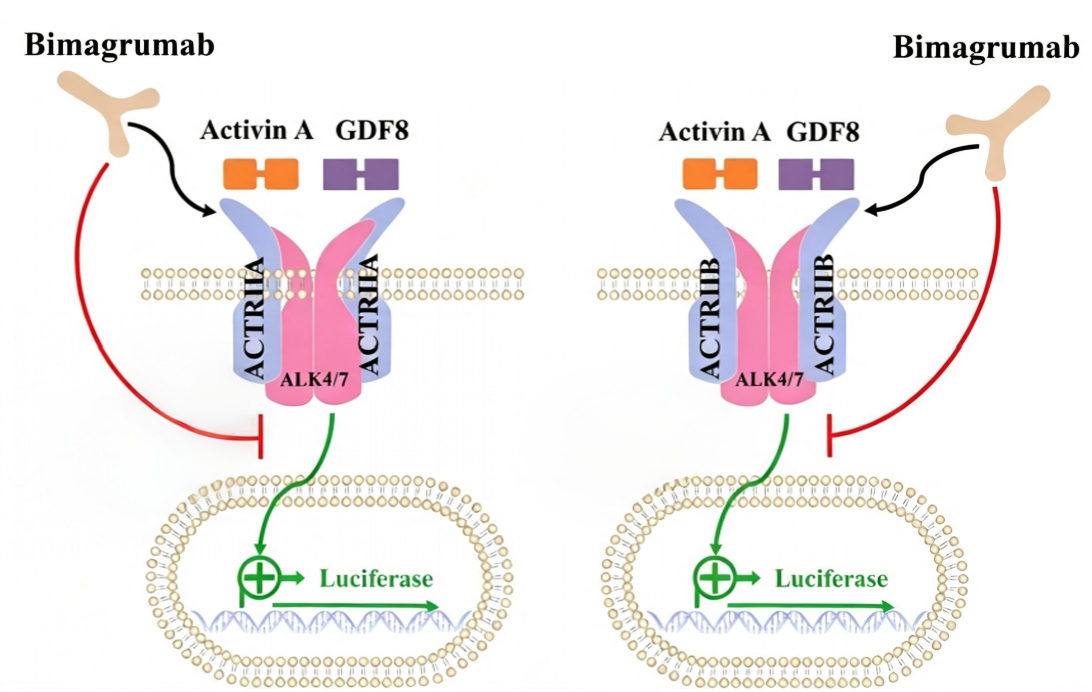
III. Strategies and Prospects for Targeting Activin A to Restore NK Cell Anti-Tumor Activity
The study further validated the therapeutic potential of blocking Activin A signaling. Follistatin, a natural Activin A-binding protein, can neutralize the biological activity of Activin A. In a humanized melanoma mouse model, blocking Activin A with Follistatin restored NK cell proliferation and effector function, significantly slowing tumor growth. This proof-of-concept experiment demonstrates that targeting the Activin A-Follistatin axis is a feasible strategy for reactivating NK cell-mediated anti-tumor immunity.
This discovery complements existing immune checkpoint inhibitors. Anti-PD-1/PD-L1 therapy primarily relieves T cell suppression but has limited response rates, partly because other immune cell subsets (e.g., NK cells) remain functionally inhibited. By co-targeting Activin A, it is possible to restore NK cell anti-tumor activity while relieving T cell suppression, achieving more comprehensive immune activation.
IV. Conclusion
Activin A, as a newly identified NK cell immunosuppressive factor in the tumor microenvironment, plays a crucial role in tumor immune evasion by impairing NK cell proliferation and cytotoxic function. Therapeutic strategies targeting the Activin A pathway have shown potential in preclinical models to restore NK cell anti-tumor activity. This discovery opens new avenues for developing cancer immunotherapies independent of existing immune checkpoint inhibitors.
In basic research and drug screening related to Activin A, high-quality human recombinant Activin A protein is an essential tool for studying NK cell function, analyzing signaling pathways, and evaluating antagonists. To meet this research demand, UniLove provides Activin A Protein, Human, suitable for NK cell proliferation and functional regulation studies, Activin A/Smad signaling pathway analysis, and in vitro activity evaluation of Activin A-neutralizing antibodies or small-molecule inhibitors.
This article is reviewed and published by the technical expert team of UA
Disclaimer: This article partially utilizes artificial intelligence assistance in its creation. If any content involves copyright or intellectual property issues, please let us know and we promise to verify and remove it as soon as possible.
Purchase recombinant protein, choose Nanjing UA-Bio
UA protein focuses on providing various protein reagents, raw materials, and services required for drug research and development, cell therapy, gene therapy, and basic scientific research, including drug target proteins, immune checkpoint proteins, cytokines, tool enzymes, customized protein expression, and full-length transmembrane protein development. Youai is committed to providing customers with high-quality products and professional services, and building a High-tech Biological Enterprise with International Competitiveness.
Target proteins | membrane proteins | cytokines | enzymes | viral antigens | protein customization
Nanjing UA Biotechnology Co., Ltd. Email:order@ua-bio.com Phone:+86-25-56221161

Product Information

Link:





©2021-2026 all rights reserved UA Biotechnology Co.,Ltd.
Privacy Policy 
网站备案号 浙ICP备2022019033号-2 浙公网安备33010202004867号
 Business license (three certificates in one)
 Tel:+86-25-56221161
E-mail:order@ua-bio.com
All products sold on this website shall not be used for clinical diagnosis or treatment of humans or animals, and shall only be used for non-medical purposes such as industrial or scientific research.
