




Molecular Pathology and New Advances in Targeted Therapy for Factor XI Deficiency
Views:12 


This article systematically elaborates on the discovery history, molecular genetic basis, and unique clinical manifestations of coagulation factor XI deficiency (hemophilia C), analyzing the pathological puzzle of its lack of correlation between bleeding tendency and FXI levels as an autosomal recessive genetic disorder.
- Recent Advances
- Product Information
Recent Advances
Molecular Pathology and Targeted Therapy Advances in Factor XI Deficiency
Summary
This article systematically reviews the discovery history, molecular genetic basis, and unique clinical manifestations of Factor XI deficiency (Hemophilia C), analyzing the pathological puzzle of its lack of correlation between bleeding tendency and FXI levels as an autosomal recessive disorder.
This article systematically reviews the discovery history, molecular genetic basis, and unique clinical manifestations of Factor XI deficiency (Hemophilia C), analyzing the pathological puzzle of its lack of correlation between bleeding tendency and FXI levels as an autosomal recessive disorder.
I. Molecular Structure and Physiological Function of Factor XI.
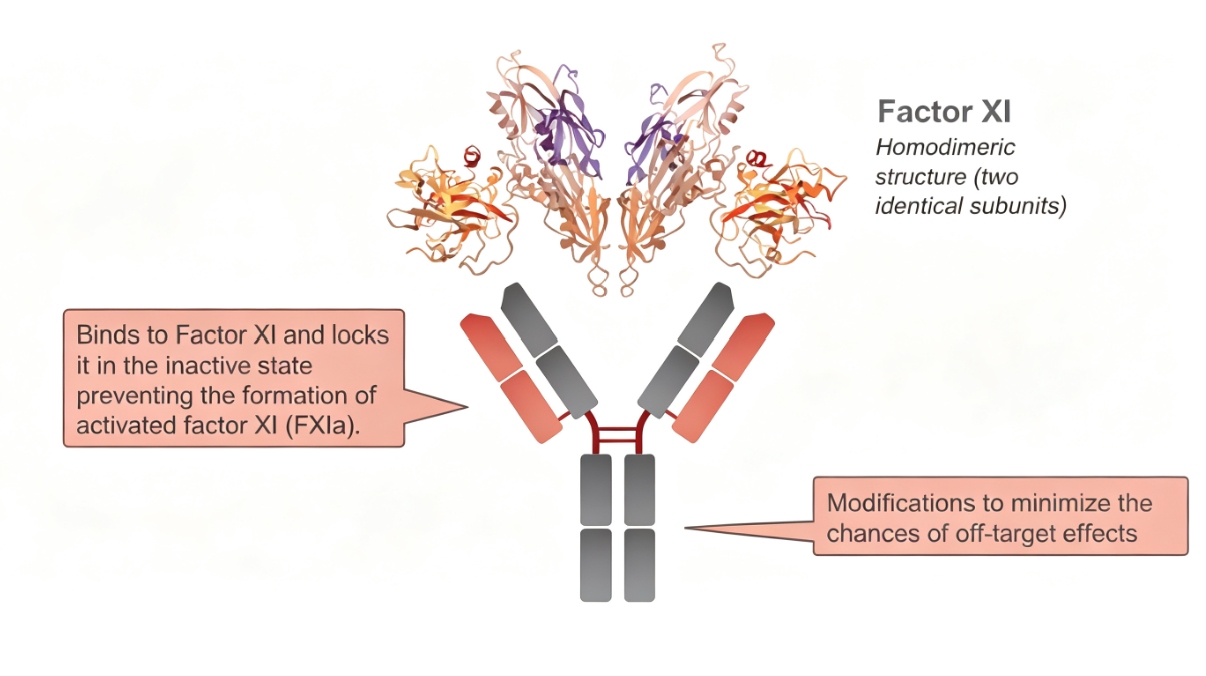
Factor XI (FXI) is a serine protease zymogen synthesized by hepatocytes and a member of the contact factor family. Structurally, FXI exhibits distinctive features that set it apart from other coagulation factors—it is a homodimer composed of two identical 80 kDa subunits linked by non-covalent bonds and disulfide bridges, each subunit containing four apple domains (A1-A4) and a catalytic domain. The apple domains form a disk-like structure approximately 60 Å in diameter, providing binding sites for high-molecular-weight kininogen, prothrombin, platelets, and FXI's substrate FIX. Activation of FXI occurs through cleavage of the arginine 369-isoleucine 370 bond in each subunit, mediated by thrombin or FXIIa. FXIa serves as a "backup factor" in vivo, activating FIX and amplifying coagulation, with its greater role potentially lying in the direct activation of FX.
II. Discovery and Epidemiology of Factor XI Deficiency.
Factor XI deficiency was first reported by Rosenthal et al. in 1953 and initially termed Hemophilia C (also known as plasma thromboplastin antecedent deficiency) to distinguish it from Hemophilia A (FVIII deficiency) and Hemophilia B (FIX deficiency). This disorder follows an autosomal recessive inheritance pattern, affecting both sexes equally, with mutations in the F11 gene located on chromosome 4q35.2 as its molecular basis. The condition is rare in the general population but most prevalent among Ashkenazi Jews, with heterozygote carrier rates reaching 2% to 13% and homozygote rates around 0.1%. Estimates suggest that FXI deficiency is the most common among rare bleeding disorders and ranks second only to von Willebrand disease in bleeding disorders affecting women. Domestic epidemiological surveys indicate a standardized prevalence of approximately 0.08 per 100,000.
III. Molecular Pathology and Gene Mutation Types.
To date, approximately 250 F11 gene mutations have been identified, categorized into three subtypes based on molecular mechanisms: Type I involves splice site mutations leading to splicing errors; Type II comprises stop codon mutations resulting in inactive truncated molecules; and Type III consists of missense mutations producing dysfunctional FXI proteins. Homozygous patients typically exhibit FXI activity below 15%, while heterozygotes range between 20% and 70%. Activation of FXI depends on FXIIa converting FXI zymogen into FXIa, completing the intrinsic coagulation pathway cascade; thus, APTT is prolonged in FXI deficiency.
IV. Clinical Manifestations: The Paradox of Bleeding Symptoms and FXI Levels.
Factor XI deficiency exhibits highly heterogeneous clinical manifestations, with its most striking feature being the lack of a clear correlation between bleeding tendency and plasma FXI levels. Some patients with FXI levels below 10% show no bleeding symptoms, while others with levels as high as 50% display significant bleeding tendencies. This absence of correlation complicates disease management. Homozygous patients usually exhibit bleeding tendencies, whereas heterozygotes may remain asymptomatic unless combined with other coagulation disorders. Post-surgical or post-traumatic bleeding is the primary manifestation, occurring immediately or hours to days after injury. Spontaneous bleeding such as epistaxis, gingival bleeding, skin bruising, and menorrhagia is relatively rare. Unlike Hemophilia A/B, this disorder typically does not cause spontaneous joint or muscle bleeding, with bleeding sites predominantly located in tissues with high fibrinolytic activity, such as the oral cavity and urinary tract.
V. Abelacimab: A Novel Anti-FXI Targeted Strategy.
FXI plays a crucial role in thrombosis, and its inhibition can provide effective anticoagulation while reducing bleeding risk. Based on this concept, FXI has become a hot target for next-generation anticoagulant development. Abelacimab is a fully human monoclonal antibody targeting FXI, exerting dual inhibitory effects by binding to FXI and blocking its activation. Results show that Abelacimab reduces free FXI levels by over 97%, with major or clinically relevant non-major bleeding events decreasing by 62%-69% compared to the rivaroxaban group. The trial was terminated early due to significantly reduced bleeding events. U-ABio offers Anti-Human F11/Factor XI Monoclonal Antibody (Abelacimab) for FXI-related research and drug development experiments.
VI. Conclusion.
Factor XI deficiency, as Hemophilia C, presents a classic enigma in coagulation due to its unique clinical feature—the lack of correlation between bleeding symptoms and FXI levels. With deepening understanding of FXI's physiological functions, anti-FXI targeted strategies are demonstrating potential to improve the safety window of existing anticoagulant therapies.
Disclaimer: This article partially utilizes artificial intelligence assistance in its creation. If any content involves copyright or intellectual property issues, please let us know and we promise to verify and remove it as soon as possible.
Purchase recombinant protein, choose Nanjing UA-Bio
UA protein focuses on providing various protein reagents, raw materials, and services required for drug research and development, cell therapy, gene therapy, and basic scientific research, including drug target proteins, immune checkpoint proteins, cytokines, tool enzymes, customized protein expression, and full-length transmembrane protein development. Youai is committed to providing customers with high-quality products and professional services, and building a High-tech Biological Enterprise with International Competitiveness.
Target proteins | membrane proteins | cytokines | enzymes | viral antigens | protein customization
Nanjing UA Biotechnology Co., Ltd. Email:order@ua-bio.com Phone:+86-25-56221161

Product Information

Link:





©2021-2026 all rights reserved UA Biotechnology Co.,Ltd.
Privacy Policy 
网站备案号 浙ICP备2022019033号-2 浙公网安备33010202004867号
 Business license (three certificates in one)
 Tel:+86-25-56221161
E-mail:order@ua-bio.com
All products sold on this website shall not be used for clinical diagnosis or treatment of humans or animals, and shall only be used for non-medical purposes such as industrial or scientific research.
