




Factor XI deficiency: a rare inherited bleeding disorder
Views:12 


This article systematically elaborates on the molecular pathological basis, genetic characteristics, clinical manifestations, and diagnostic and therapeutic strategies of coagulation factor XI deficiency (hemophilia C), analyzing its key differences from hemophilia A/B.
- Recent Advances
- Product Information
Recent Advances
Factor XI Deficiency: A Rare Inherited Bleeding Disorder
Overview
This article systematically elaborates on the molecular pathology, genetic characteristics, clinical manifestations, and treatment strategies of Factor XI deficiency (Hemophilia C), analyzing its key differences from Hemophilia A/B.
This article systematically elaborates on the molecular pathology, genetic characteristics, clinical manifestations, and treatment strategies of Factor XI deficiency (Hemophilia C), analyzing its key differences from Hemophilia A/B.
1. Molecular Structure and Physiological Function of Factor XI
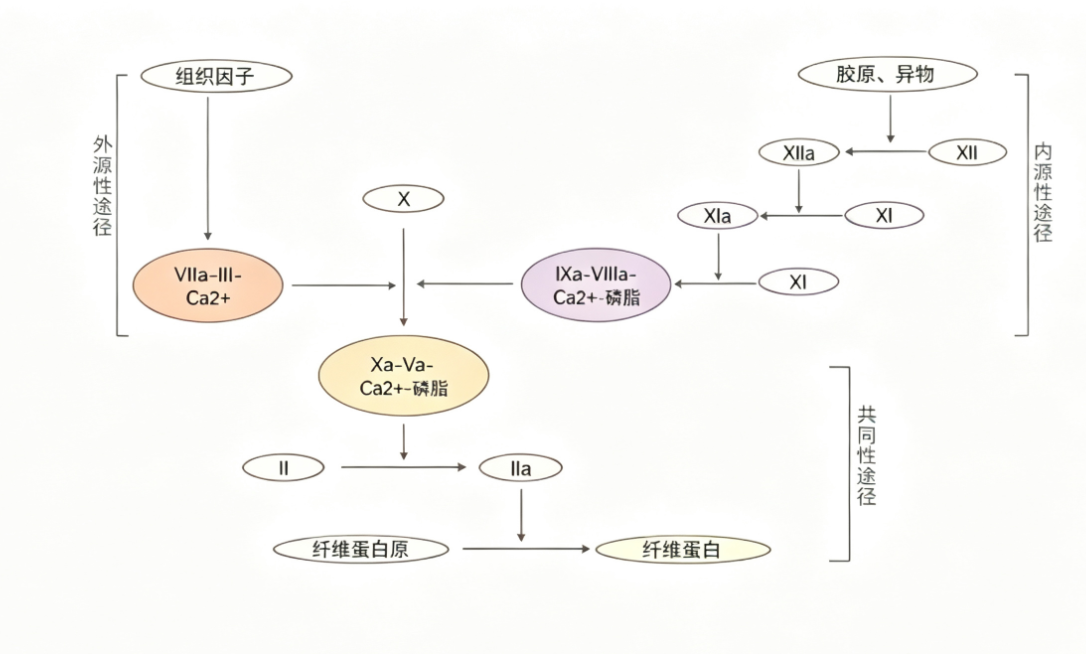
Factor XI (FXI) is a key protease in the blood coagulation cascade, encoded by the F11 gene and primarily synthesized in the liver, circulating in plasma as a zymogen. FXI has unique molecular features—it is a homodimer composed of two identical polypeptide chains linked by disulfide bonds, each containing four apple domains and one catalytic domain. This structural characteristic distinguishes FXI within the coagulation factor family, originating from an evolutionary gene duplication event with the KLKB1 gene encoding plasma prekallikrein.
The primary physiological function of FXI is to activate Factor IX in the coagulation cascade, amplifying thrombin generation signals and promoting fibrin clot formation. Unlike Factor XII, FXI deficiency leads to bleeding tendencies, indicating its indispensable role in normal hemostasis. Its activation is likely mediated by thrombin rather than solely dependent on the contact pathway.
2. Molecular Pathology and Genetics of Factor XI Deficiency
Factor XI deficiency (also known as Hemophilia C or PTA deficiency) is a rare autosomal recessive bleeding disorder caused by mutations in the F11 gene. Located on chromosome 4q35.2, approximately 250 different F11 gene mutations have been identified, leading to reduced FXI protein levels or functional abnormalities.
Based on mutation types and molecular mechanisms, the disease can be classified into three subtypes: Type I involves splice-site mutations causing abnormal splicing; Type II involves nonsense mutations producing inactive truncated molecules; and Type III involves missense mutations forming dysfunctional FXI proteins. Homozygous patients typically have FXI activity below 15%, while heterozygotes range between 20%-70%. Notably, Factor XI deficiency fundamentally differs from Hemophilia A/B—the former is autosomal recessive, affecting both sexes, whereas the latter is X-linked recessive, primarily affecting males.
The prevalence in the general population is approximately 1/100,000, but it is most common among Ashkenazi Jews, with heterozygote carrier rates reaching 2%-13% and homozygotes around 0.1%.
3. Clinical Manifestations: Discrepancy Between Symptom Severity and FXI Levels
Factor XI deficiency exhibits highly heterogeneous clinical manifestations, with its most striking feature being the lack of clear correlation between bleeding tendency severity and plasma FXI levels. Approximately half of patients have mild or no symptoms, and even within the same family, symptom presentation can vary significantly.
Common symptoms include epistaxis (nosebleeds), easy bruising, abnormal bleeding after trauma or surgery (especially dental procedures), and menorrhagia (heavy or prolonged menstrual bleeding) in women. Unlike Hemophilia A/B, the disorder typically does not cause spontaneous joint bleeds or muscle hematomas. Bleeding often occurs in tissues with high fibrinolytic activity, such as the oral cavity and urinary tract. This unique bleeding pattern suggests FXI may play a specialized role in local fibrinolysis regulation.
4. Diagnostic Methods and Treatment Strategies
Diagnosis requires a series of coagulation tests conducted by hematology specialists. Key diagnostic criteria include prolonged activated partial thromboplastin time (aPTT), normal prothrombin time (PT) and thrombin time (TT), and reduced FXI activity levels. The normal FXI:C range is 72%-130%, with homozygous patients typically below 15%. Genetic testing may be performed for confirmation and subtyping when necessary.
For treatment, minor bleeding usually requires no intervention; severe trauma or postoperative bleeding necessitates replacement therapy. Treatment options include fresh frozen plasma, FXI concentrates (not yet available domestically), antifibrinolytic agents (e.g., tranexamic acid), and fibrin glue. For women with menorrhagia, hormonal contraceptives and antifibrinolytics can effectively control symptoms.
5. FXI as a Novel Target for Anticoagulation Therapy
Notably, congenital FXI deficiency is associated with significantly reduced thrombosis risk while exhibiting relatively mild bleeding tendencies. This discovery has positioned FXI as a promising target for novel anticoagulant development. Abelacimab (Anti-Human F11/Factor XI Monoclonal Antibody) is available for FXI-related research and drug development, offering new perspectives for balancing efficacy and safety in anticoagulation therapy.
Disclaimer: This article partially utilizes artificial intelligence assistance in its creation. If any content involves copyright or intellectual property issues, please let us know and we promise to verify and remove it as soon as possible.
Purchase recombinant protein, choose Nanjing UA-Bio
UA protein focuses on providing various protein reagents, raw materials, and services required for drug research and development, cell therapy, gene therapy, and basic scientific research, including drug target proteins, immune checkpoint proteins, cytokines, tool enzymes, customized protein expression, and full-length transmembrane protein development. Youai is committed to providing customers with high-quality products and professional services, and building a High-tech Biological Enterprise with International Competitiveness.
Target proteins | membrane proteins | cytokines | enzymes | viral antigens | protein customization
Nanjing UA Biotechnology Co., Ltd. Email:order@ua-bio.com Phone:+86-25-56221161

Product Information

Link:





©2021-2026 all rights reserved UA Biotechnology Co.,Ltd.
Privacy Policy 
网站备案号 浙ICP备2022019033号-2 浙公网安备33010202004867号
 Business license (three certificates in one)
 Tel:+86-25-56221161
E-mail:order@ua-bio.com
All products sold on this website shall not be used for clinical diagnosis or treatment of humans or animals, and shall only be used for non-medical purposes such as industrial or scientific research.
