

Structural and functional analysis of the G protein of Nipah virus and the application value of its His-tagged recombinant protein
Views:9 


The Nipah virus, as a highly lethal zoonotic pathogen, relies critically on its glycoprotein G for invading host cells, playing an irreplaceable role in this process. In-depth research into the structure and function of the G protein not only helps elucidate the virus's pathogenic mechanisms but also provides a vital molecular target for vaccine development and antiviral drug design. Recombinant G protein and its derivatives serve as essential research tools, demonstrating broad application prospects in virology studies and the development of immunodetection technologies.
- Recent Advances
- Product Information
Recent Advances
Structural and Functional Insights into Nipah Virus G Protein and the Application Value of His-Tagged Recombinant Protein
Brief Introduction: Nipah virus, as a highly lethal zoonotic pathogen, relies critically on its glycoprotein G for host cell entry. In-depth studies of the structure and function of G protein not only elucidate the viral pathogenesis but also provide essential molecular targets for vaccine development and antiviral drug design. Recombinant G protein and its derivatives serve as vital research tools, demonstrating broad application prospects in virology research and immunodetection technology development.
Basic Structural Features and Biological Functions of Nipah Virus G Protein
Nipah virus belongs to the genus Henipavirus within the family Paramyxoviridae. Its genome encodes multiple structural proteins, among which the G protein is the primary receptor-binding protein located on the viral envelope surface. This protein is responsible for recognizing and binding to specific host cell receptors—ephrin-B2 and ephrin-B3—during the initial stage of viral infection, thereby initiating viral entry. Structural biology studies reveal that the extracellular domain of Nipah virus G protein forms a unique β-propeller structure, with a central cavity serving as the key binding site for receptor molecules. Upon receptor binding, G protein undergoes conformational changes, triggering the activation of the fusion protein F, ultimately mediating the fusion of the viral envelope with the host cell membrane. This intricate molecular recognition mechanism determines the host range and tissue tropism of Nipah virus, while also making it a critical target for antiviral intervention.
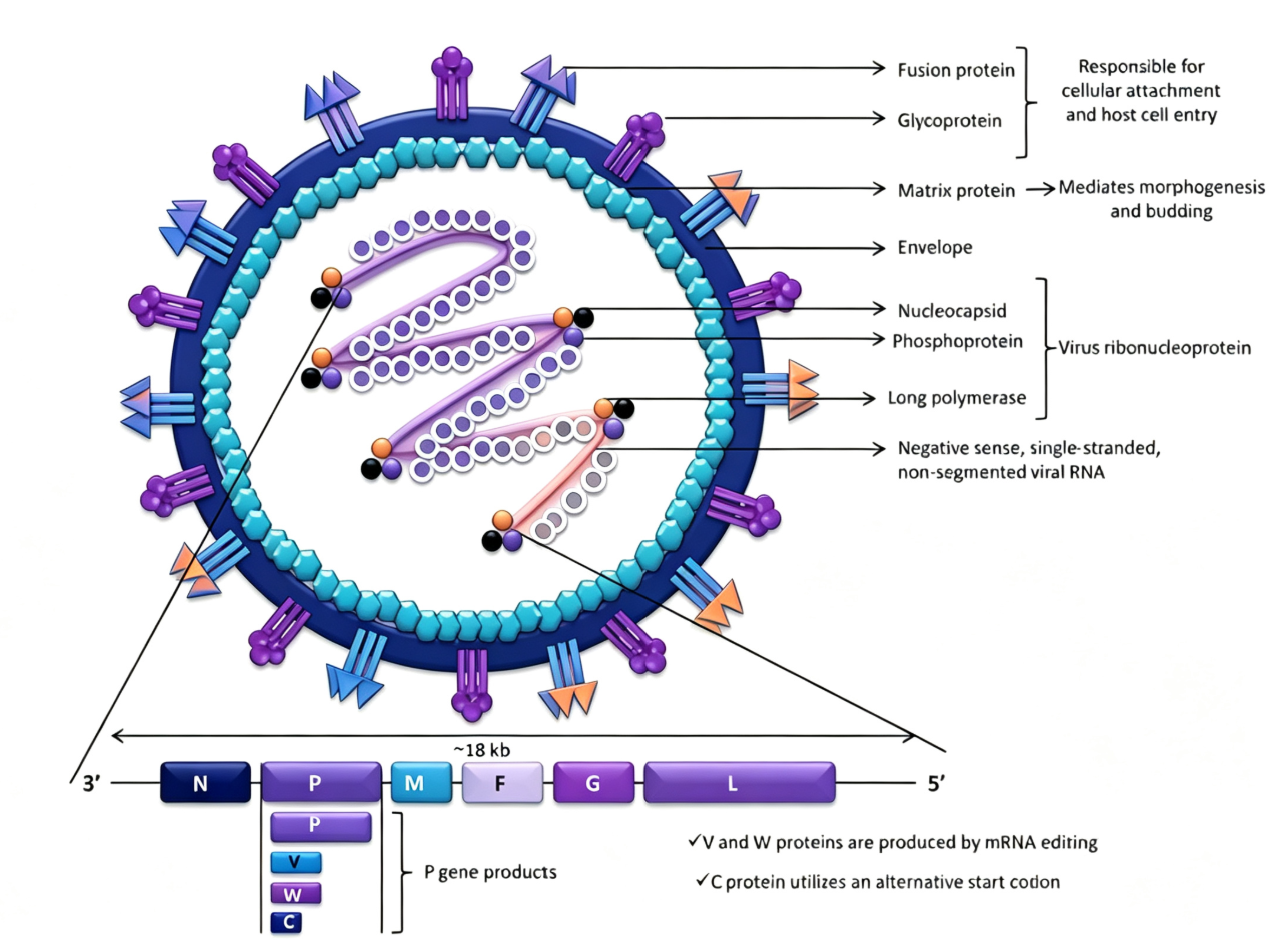
His-Tagged Recombinant Expression Strategy for Nipah Virus G Protein
In recombinant protein technology, polyhistidine tags are widely used for protein expression, purification, and detection due to their small molecular weight, low immunogenicity, and minimal impact on protein native conformation. For Nipah virus G protein, researchers have successfully employed prokaryotic expression systems to produce truncated forms of recombinant G protein antigens. By cloning gene fragments encoding partial extracellular sequences of G protein into prokaryotic expression vectors carrying His tags and inducing expression in Escherichia coli, soluble recombinant proteins with a molecular weight of approximately 50 kDa can be obtained. These recombinant proteins can be specifically recognized by His tag antibodies and also bind to polyclonal antibodies against Nipah virus G protein, indicating retained antigenicity of the native protein. Additionally, eukaryotic expression systems have been used to produce full-length G protein fused with His tags, yielding recombinant antigens with more native-like conformations and biological activity.
Application Value of His-Tagged Recombinant G Protein in Serological Detection
Immunological detection methods based on His-tagged recombinant G protein provide critical technical support for Nipah virus surveillance and vaccine efficacy evaluation. Studies show that indirect ELISA methods using prokaryotically expressed truncated G protein as coating antigens can specifically detect antibodies in Nipah virus-positive sera, with no cross-reactivity observed with sera positive for related pathogens such as Rift Valley fever virus and West Nile virus, demonstrating excellent specificity and sensitivity. The antibody titer of known positive sera detected by this method can reach up to 1:20,480, with intra- and inter-assay coefficients of variation both below 10%, indicating good reproducibility. These results highlight the practical value of His-tagged recombinant G protein as a detection antigen, applicable for the development of Nipah virus antibody detection kits and evaluation of vaccine immunogenicity.
Selection and Application of High-Quality His-Tagged Recombinant Protein Products
In Nipah virus-related research, the use of high-quality recombinant protein products is crucial for the reliability and reproducibility of experimental results. The HRSVL (strain Long) Glycoprotein G Protein, His Tag product provided by U-Impact is a recombinant fusion protein produced in the HEK293 eukaryotic expression system. Its amino acid sequence covers the His67-Gln298 region of HRSV G protein, with an 8×His tag fused at the C-terminus. This product exhibits a purity of over 95% as verified by SDS-PAGE, endotoxin levels below 0.1 EU/μg, and is lyophilized in PBS buffer for convenient experimental use and long-term storage. The eukaryotic expression system ensures proper post-translational modifications and native conformations, making it particularly suitable for applications such as immunoassays, antibody screening, and protein interaction studies. Researchers can select appropriate forms of recombinant G protein based on specific experimental needs to ensure scientific rigor.
In summary, Nipah virus G protein, as a key molecule in viral host cell entry, remains a central focus of research in this field. The successful preparation and application of His-tagged recombinant G protein provide indispensable core tools for serological diagnosis, vaccine development, and antiviral drug screening for Nipah virus. The availability of high-quality commercial products further lowers research barriers, significantly advancing related basic research and translational applications.
```
Disclaimer: This article partially utilizes artificial intelligence assistance in its creation. If any content involves copyright or intellectual property issues, please let us know and we promise to verify and remove it as soon as possible.
Purchase recombinant protein, choose Nanjing UA-Bio
UA protein focuses on providing various protein reagents, raw materials, and services required for drug research and development, cell therapy, gene therapy, and basic scientific research, including drug target proteins, immune checkpoint proteins, cytokines, tool enzymes, customized protein expression, and full-length transmembrane protein development. Youai is committed to providing customers with high-quality products and professional services, and building a high-tech enterprise with international competitiveness.
Target proteins | membrane proteins | cytokines | enzymes | viral antigens | protein customization
Nanjing UA Biotechnology Co., Ltd. Email:order@ua-bio.com Phone:0571-87565022

Product Information

Link:





©2021-2026 all rights reserved UA Biotechnology Co.,Ltd.

网站备案号 浙ICP备2022019033号-2 浙公网安备33010202004867号
 Business license (three certificates in one)
 Tel:+86-0571-87565022
E-mail:order@ua-bio.com
All products sold on this website shall not be used for clinical diagnosis or treatment of humans or animals, and shall only be used for non-medical purposes such as industrial or scientific research.
