Human DcR3 His-Tagged Protein Provides a Key Tool for Studying Inflammatory Regulation Mechanisms in Sepsis
I. Pathological Challenges of Sepsis and the Unique Role of DcR3
Sepsis is a life-threatening organ dysfunction caused by a dysregulated host response to infection, with its core pathological feature being uncontrolled systemic inflammation triggered by infection. Despite advances in anti-infective therapies and organ support technologies, the clinical mortality rate of sepsis remains high, indicating that strategies targeting pathogens alone are insufficient to fully control disease progression. A deeper understanding of the intrinsic mechanisms of the body's inflammatory regulatory network has become a critical breakthrough for improving outcomes. Among numerous inflammatory regulatory molecules, decoy receptor 3 (DcR3) has attracted widespread attention due to its unique biological properties. As the only member of the tumor necrosis factor receptor superfamily secreted in soluble form, DcR3 can freely distribute in body fluids without relying on transmembrane anchoring. By neutralizing multiple ligands in the tumor necrosis factor superfamily, such as FasL, LIGHT, and TL1A, it negatively regulates the excessive amplification of inflammatory signals. This special molecular configuration makes it a potential biomarker for inflammatory disease progression and suggests its therapeutic potential in acute critical conditions like sepsis.
II. Research Objectives and Core Scientific Questions
Through in vitro expression of DcR3 protein and validation of its potent inhibitory effect on lipopolysaccharide (LPS)-induced inflammatory responses in cellular models, the therapeutic role of DcR3 in LPS-induced sepsis mouse models was preliminarily confirmed. However, the deeper molecular mechanisms by which DcR3 exerts protective effects in the complex pathological environment of sepsis remain unclear, particularly its impact on the immune-metabolic network and gut microbiota, which has yet to be systematically elucidated.
III. Expression and Preparation of DcR3 Protein and Validation of Its Anti-Inflammatory Activity In Vitro
The experiment first obtained high-purity human DcR3 protein through a recombinant expression system. In in vitro cellular models, macrophages were stimulated with LPS to simulate bacterial endotoxin attack, and the changes in inflammatory cytokine profiles were measured after DcR3 treatment. The results showed that DcR3 significantly inhibited the release of key pro-inflammatory cytokines such as tumor necrosis factor-α (TNF-α), interleukin-6 (IL-6), and interleukin-1β (IL-1β), while promoting the upregulation of the anti-inflammatory cytokine interleukin-10 (IL-10). This indicates that the protein possesses broad-spectrum inflammatory regulatory activity at the cellular level. This in vitro evidence provides a reliable functional basis for subsequent in vivo animal experiments and confirms that the recombinant DcR3 protein meets research requirements in terms of structural integrity and biological activity.
IV. Survival-Protective Effects of DcR3 in the CLP Sepsis Mouse Model
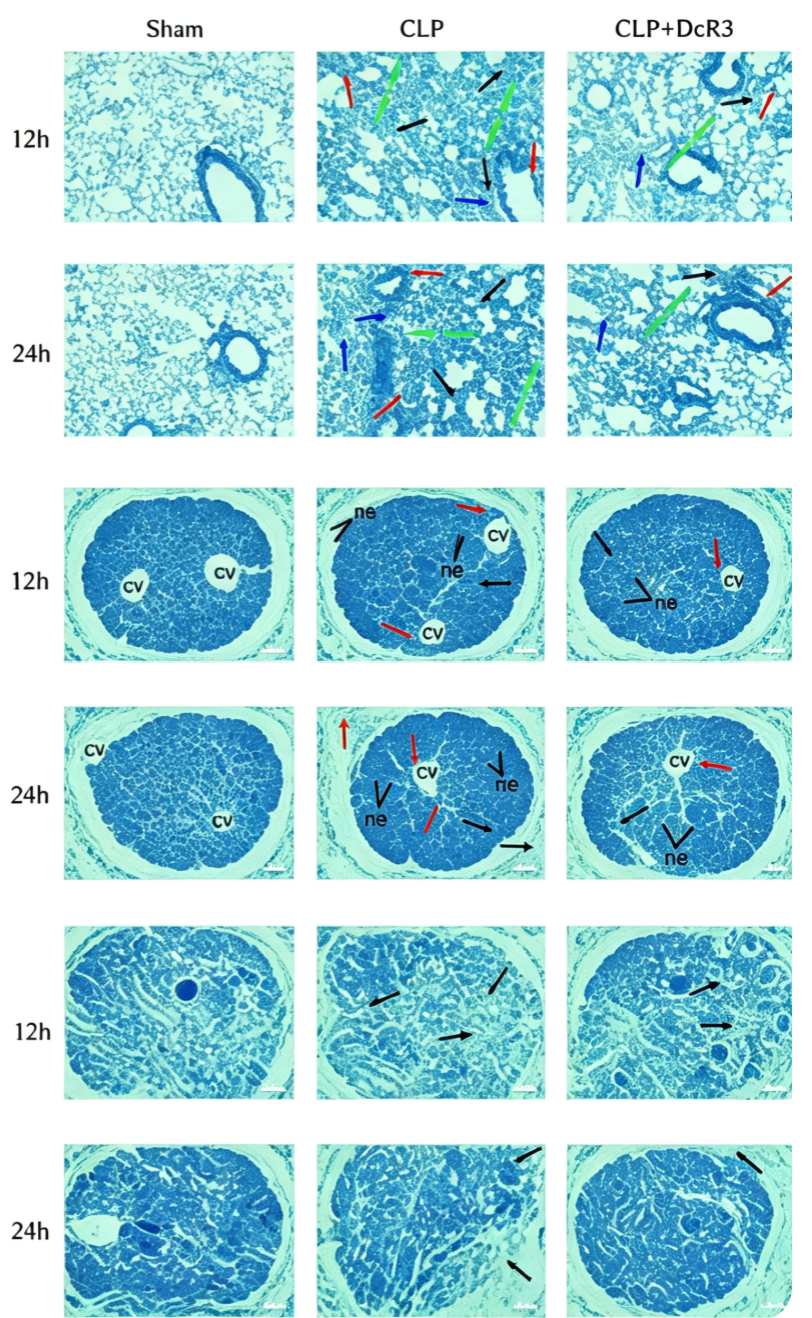
To address the disparities between the acute LPS stimulation model and the clinical course of sepsis, a cecal ligation and puncture (CLP)-induced polymicrobial infectious sepsis mouse model was established. This model, which involves ligating and puncturing the cecum to cause continuous leakage of mixed bacteria in the abdominal cavity, closely mimics the progressive pathological evolution of clinical abdominal-origin sepsis. Experimental animals were randomly divided into a DcR3 treatment group and a control group, and recombinant DcR3 protein was administered via tail vein injection. Survival status and clinical scores were continuously monitored. The results were encouraging: the 7-day survival rate of the DcR3 treatment group was significantly higher than that of the control group, and sepsis-related clinical signs such as abnormal body temperature, reduced activity, and piloerection were markedly improved. This discovery, for the first time, confirmed the potent therapeutic effect of DcR3 in a polymicrobial infection model close to clinical reality, providing critical animal experimental evidence for its clinical translation.
V. Molecular Mechanisms of DcR3 in Inhibiting Persistent Excessive Inflammatory Responses
Systematic detection of inflammatory cytokine profiles in peritoneal lavage fluid and serum from CLP mice revealed that DcR3 intervention significantly suppressed the formation of a pro-inflammatory cytokine storm, particularly showing a marked inhibitory effect on the levels of late-stage inflammatory mediators such as TNF-α and macrophage migration inhibitory factor (MIF). Transcriptome analysis further demonstrated that in DcR3-treated mice, gene clusters related to the nuclear factor-κB (NF-κB) signaling pathway, Toll-like receptor (TLR) signaling pathway, and interferon response in liver and spleen tissues were significantly downregulated, while anti-inflammatory and repair-related genes were upregulated. This transcriptional reprogramming evidence suggests that DcR3 not only physically blocks specific ligands but may also systematically suppress excessive inflammation by reshaping the overall transcriptional landscape of immune cells, thereby protecting the host from immunopathological damage.
VI. Impact of DcR3 on Gut Microbiota in Sepsis
Given the critical role of the gut as an inflammatory amplifier during sepsis progression, the research team conducted 16S rRNA sequencing analysis on the intestinal contents of CLP mice. The results showed that control mice with sepsis exhibited significant gut dysbiosis, characterized by reduced abundance of beneficial bacteria and increased relative proportions of opportunistic pathogens. In contrast, DcR3 treatment partially maintained the stability of the gut microbiota, normalizing microbial diversity and community structure. This finding suggests that the protective effects of DcR3 may be partially achieved by preserving intestinal barrier integrity and microbiota homeostasis, revealing a new functional dimension of this molecule in gut-immune axis regulation.
VII. Conclusions and Prospects: The Translational Potential of DcR3 as a Sepsis Intervention Target
In summary, based on the CLP sepsis mouse model and utilizing cellular biology, transcriptomics, and microecology, this study systematically demonstrated that human DcR3 protein can effectively suppress persistent excessive inflammatory responses in a polymicrobial infection context, significantly improving the survival rate of septic mice. The research not only preliminarily elucidated the potential molecular basis of DcR3's protective effects through negative regulation of inflammatory signaling pathways and maintenance of gut microbiota stability but also provided solid preclinical experimental evidence for developing DcR3 as an adjunctive therapeutic agent for sepsis. Human DcR3 His-tagged protein, as the core experimental material of this study, plays an irreplaceable role in in vitro activity screening, mechanistic exploration, and subsequent drug development, continuously driving advancements in the field of inflammatory regulation.
Nanjing Youai Biotechnology Co., Ltd. provides human DcR3 His-tagged protein-related products. This product, DcR3 His Tag Protein, Human, is suitable for sepsis inflammation mechanism research, DcR3 ligand binding analysis, cellular-level activity evaluation, and animal model treatment experiments. The protein product undergoes strict quality control, ensuring high purity and biological activity, and serves as a reliable experimental tool for exploring inflammatory disease mechanisms and preclinical evaluation of candidate drugs.










 Business license (three certificates in one)