




When immunological experiments are repeatedly plagued by batch-to-batch variation, what exactly should be looked at in the quality control of mouse IL-4 recombinant protein?
Author: Senior Product Manager of UA Views:9 


This article starts from the molecular biological characteristics of mouse interleukin-4 (IL-4), reviews its core functions in Th2 immune responses and experimental application scenarios, and then discusses the impact of key quality attributes of recombinant proteins on experimental reproducibility.
- Recent Advances
- Product Information
Recent Advances
When Immunological Experiments Are Repeatedly Hampered by Batch-to-Batch Variability, What Exactly Should Be Examined in the Quality Control of Mouse IL-4 Recombinant Protein?
Brief Introduction: Starting from the molecular biological characteristics of mouse interleukin-4 (IL-4), this article reviews its core functions in Th2 immune responses and its experimental application scenarios, and further discusses the impact of key quality attributes of recombinant proteins on experimental reproducibility.
I. Molecular Characteristics and Expression Background of Mouse IL-4.
Interleukin-4 (IL-4) is a pleiotropic cytokine secreted by activated T cells, mast cells, basophils, and eosinophils, exhibiting a typical Th2 bias in immune responses. The mouse IL-4 gene is located on chromosome 11, and its encoded mature protein exists as a monomer containing three intrachain disulfide bonds, with a spatial structure presenting a bundled fold composed of four α-helices. This structural feature determines the stability of its binding to the receptor and also implies that correct pairing of disulfide bonds during recombinant expression is a prerequisite for obtaining products with high specific activity.
From the perspective of signal transduction, IL-4 exerts its effects through two types of receptor complexes: the type I receptor consists of IL-4Rα and the common γ chain, mainly expressed on lymphocytes; the type II receptor is composed of IL-4Rα and IL-13Rα1, with a broader distribution. After receptor occupancy, the JAK-STAT pathway is initiated, in which phosphorylation and dimerization of STAT6 are key nodes for IL-4 signaling to be transmitted into the nucleus. The activation intensity of this pathway directly depends on the affinity between the ligand and the receptor, and the folding state of the recombinant protein has a decisive influence on this.
II. Functional Coordinates of IL-4 in Immunological Research.
In B cell biology, the contribution of IL-4 is particularly prominent. It synergizes with other stimulatory signals to promote B cell proliferation and drives immunoglobulin class switching toward IgG1 and IgE. At the same time, IL-4 upregulates the expression of MHC class II molecules and the low-affinity IgE receptor CD23 on the B cell surface, enhancing antigen presentation capacity. At the T cell level, IL-4 participates in the directed differentiation of naive CD4⁺ T cells toward the Th2 phenotype, constituting a self-reinforcing positive feedback loop.
From a broader perspective, IL-4 occupies a pivotal position in the pathological processes of allergic inflammation and asthma. It promotes mast cell priming and chemotaxis, mediates the recruitment and activation of eosinophils, and participates in airway epithelial cell proliferation and altered secretory function. In parasite infection models, the absence of IL-4 leads to aggravated intestinal inflammation and delayed mucosal repair, suggesting that it also plays a role in tissue-protective immunity. This multifunctionality makes IL-4 a tool protein frequently used in research on allergic diseases, parasite immunity, and the tumor microenvironment.
III. How Key Quality Attributes of Recombinant Proteins Affect Experimental Reproducibility.
When researchers dissolve lyophilized powder and add it to a cell culture system, what is actually introduced is a biological reagent defined by multiple quality parameters. Purity and endotoxin levels are the most commonly cited indicators, but their practical significance needs to be understood in the context of specific experiments. An SDS-PAGE purity above 95% means that contaminating protein bands are not visible under Coomassie brilliant blue staining; however, low-abundance but highly active contaminating proteases may still cause cytokine degradation during prolonged culture. An endotoxin level below 0.1 EU/μg is particularly critical for experiments involving macrophages or dendritic cells, because even trace amounts of lipopolysaccharide can interfere with Th2 polarization readouts through the TLR4 pathway.
Specific activity is another parameter that is often overlooked yet directly determines dosage and response. The ED50 value measured by the HT-2 cell proliferation assay reflects the concentration of protein per unit mass required to induce half-maximal proliferation, and products obtained from different expression systems and refolding processes may differ several-fold in this indicator. If researchers follow concentrations reported in the literature without performing dose validation on a new batch, differences between experimental and control groups may be systematically compressed or amplified. In addition, tag strategy also deserves attention: untagged native-sequence IL-4 is closer to the physiological state in receptor binding behavior, while tagged versions may introduce unexpected interactions in certain antibody pairing or receptor binding experiments.
IV. Parameter Configuration and Experimental Suitability of Uni-Prot Mouse IL-4 Protein.
The IL-4 Protein, Mouse (UA040192) provided by Uni-Prot offers relatively complete information disclosure across the above quality control dimensions. This product uses a CHO expression system, with the amino acid sequence covering the mature region from His23 to Ser140 and a molecular weight of approximately 18 kDa (under non-reducing conditions). This apparent molecular weight is higher than the common value for E. coli-expressed products, suggesting that it may carry glycosylation modifications——a noteworthy feature for experiments that need to mimic the post-translational state of native mouse IL-4.
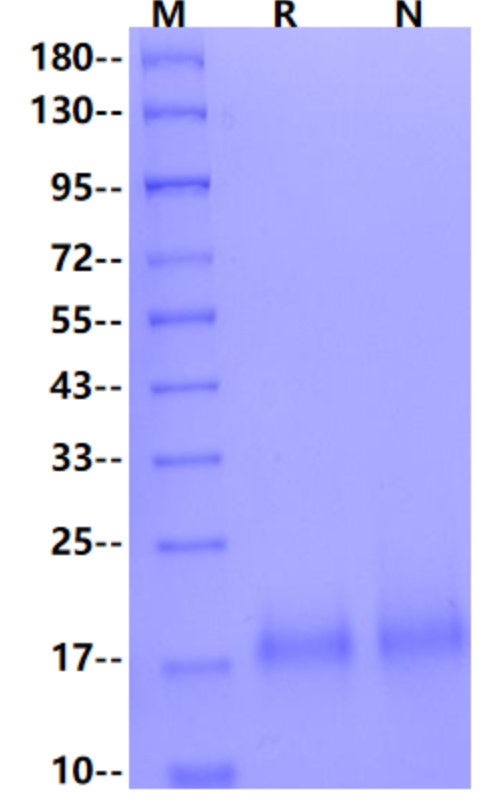
In terms of purity and endotoxin control, this product is labeled with SDS-PAGE purity greater than 95% and endotoxin below 0.1 EU/μg. Combined with Uni-Prot's consistent emphasis on low-endotoxin processes in its cytokine product line, this parameter level can meet the basic requirements of most cell culture and immunological experiments. The tag-free design avoids the issue of residual enzymatic cleavage that may arise from tag removal and also reduces potential steric interference of the tag sequence with the receptor binding interface. For Th2 differentiation induction, B cell class switching analysis, and in vitro stimulation steps in allergy models, these characteristics together constitute a predictable reagent foundation. If researchers need to confirm batch-specific activity, they should still rely on dose-response curves in their own experimental systems.
This article is reviewed and published by the technical expert team of UA
Disclaimer: This article partially utilizes artificial intelligence assistance in its creation. If any content involves copyright or intellectual property issues, please let us know and we promise to verify and remove it as soon as possible.
Purchase recombinant protein, choose 
UA protein focuses on providing various protein reagents, raw materials, and services required for drug research and development, cell therapy, gene therapy, and basic scientific research, including drug target proteins, immune checkpoint proteins, cytokines, tool enzymes, customized protein expression, and full-length transmembrane protein development. Nanjing Univ is committed to providing customers with high-quality products and professional services, and building a High-tech Biological Enterprise with International Competitiveness.
Target proteins | membrane proteins | cytokines | enzymes | viral antigens | protein customization
Nanjing UNIV Biotechnology Co., Ltd. Email:order@ua-bio.com Phone:+86-25-56221161

Product Information

Link:





©2021-2026 all rights reserved UNIV Biotechnology Co.,Ltd.
Privacy Policy
网站备案号 苏ICP备2025207586号-2 浙公网安备33010202004867号
 Business license (three certificates in one)
Tel:+86-25-56221161
E-mail:order@ua-bio.com
All products sold on this website shall not be used for clinical diagnosis or treatment of humans or animals, and shall only be used for non-medical purposes such as industrial or scientific research.


