




IL‑6 Recombinant Protein: A Pleiotropic Cytokine and Clinical Biomarker in the Inflammatory Regulatory Network
Author: Senior Product Manager of UA Views:9 


This article focuses on the molecular characteristics and biological functions of interleukin‑6 (IL‑6). It systematically elaborates the core regulatory role of this pleiotropic inflammatory cytokine in innate and adaptive immune responses, analyzes its multi-level functional impacts on B cells, T cells, hepatocytes and hematopoietic stem cells, and compares its kinetic characteristics with those of other inflammatory biomarkers.
- Recent Advances
- Product Information
Recent Advances
IL-6 Recombinant Protein: A Pleiotropic Cytokine and Clinical Biomarker in the Inflammatory Regulatory Network
Brief Summary: Focusing on the molecular characteristics and biological functions of interleukin-6 (IL-6), this article systematically describes its central regulatory role as a pleiotropic inflammatory cytokine in innate and adaptive immune responses, analyzes its multi-level functional effects on B cells, T cells, hepatocytes, and hematopoietic stem cells, and compares its kinetic characteristics with those of other inflammatory markers.
I. Molecular Characteristics and Cellular Sources of IL-6.
Interleukin-6, abbreviated as IL-6, is a pleiotropic inflammatory cytokine with broad functions and an important member of the interleukin family. IL-6 is a small glycoprotein with a molecular weight of 19 to 28 kDa, consisting of 184 amino acids that form four α-helical structures, typically existing as a monomer. IL-6 is produced by fibroblasts, monocytes/macrophages, T lymphocytes, B lymphocytes, epithelial cells, keratinocytes, and various tumor cells. This broad cellular source determines the multiple functions of IL-6 in immune responses, inflammatory reactions, and tissue homeostasis maintenance. Under physiological conditions, serum IL-6 concentrations are typically at low levels, whereas they can rapidly increase hundreds of times under infection, trauma, or inflammatory stimulation, indicating its status as a core mediator of the acute-phase response.
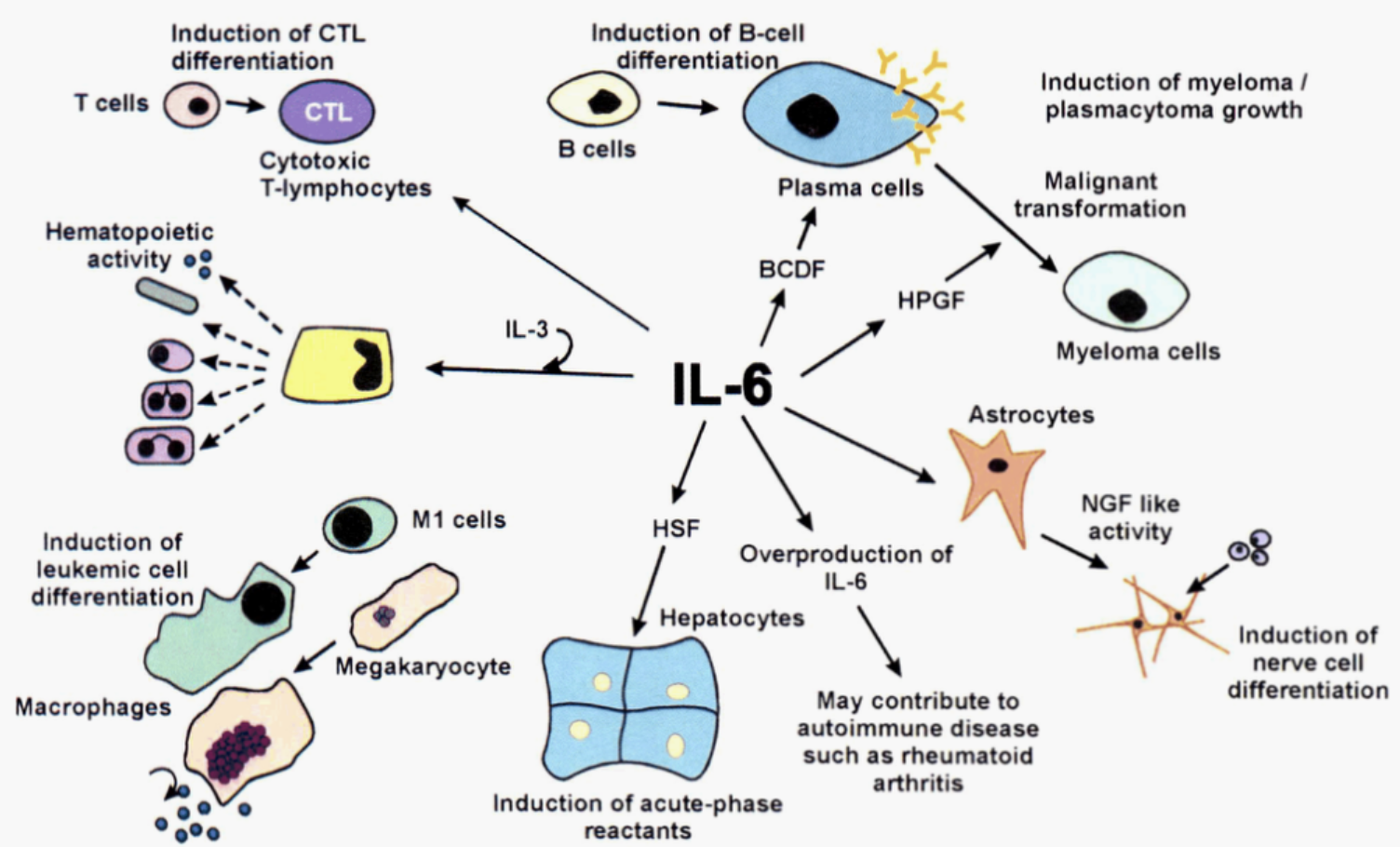
II. Central Role of IL-6 in Innate and Adaptive Immunity.
IL-6 is an important cytokine expressed in the initial response of the innate immune system to injury and infection. It can promote the liver to produce acute-phase reactants, including CRP, C3, Fbg, TPO, SAA, and Hepc, while also stimulating and altering bone marrow cells to produce more polymorphonuclear leukocytes. IL-6 also plays an important role in acquired immune responses by stimulating antibody production and inducing naive CD4+ T cell differentiation into effector T cells. IL-6 activates vascular endothelial cells to produce IL-6, IL-8, monocyte chemoattractant protein-1, intercellular adhesion molecule-1, and C5a receptor, and induces vascular endothelial cadherin breakdown. Additionally, IL-6 can promote the differentiation or proliferation of several non-immune cell types.
III. Functional Regulation of Multiple Immune Cells and Target Cells by IL-6.
IL-6 can promote T cell population expansion and activation as well as B cell differentiation, regulate the acute-phase response, and influence vascular diseases, lipid metabolism, insulin resistance, mitochondrial activity, the neuroendocrine system, and neuropsychological behavior through hormone-like properties. Additionally, IL-6 promotes osteoclast and angiogenic differentiation, keratinocyte and mesangial cell proliferation, and the growth of myeloma and plasmacytoma cells.
Effects on B lymphocytes are manifested in that IL-6 can induce B cell proliferation, differentiation, and antibody production. When B cells are activated after antigen stimulation and differentiate into IgM, IgG, and IgA-type antibodies, IL-6 participation is particularly required. Effects on T lymphocytes are manifested in that IL-6 is a terminal accessory factor for cytotoxic T lymphocytes, can induce CTL activity, and enables immature thymocytes to develop into CTLs. IL-6 is also a T cell activation factor and can induce T cell expression of IL-2 receptors through second messenger effects. Effects on hepatocytes are manifested in that IL-6 is a potent inducer of acute-phase response proteins, capable of inducing hepatocyte synthesis of acute-phase response proteins at the gene transcription level, with SAA and CRP increases being particularly prominent. Effects on hematopoietic stem cells are manifested in that IL-6 can synergize with other cytokines to promote early bone marrow stem cell growth, enhance blood cell differentiation, and promote colony formation.
IV. Kinetic Comparison of IL-6 with Other Inflammatory Markers.
In inflammatory responses, the elevation of IL-6 occurs earlier than other cytokines, as well as earlier than CRP and PCT. After bacterial infection, IL-6 levels rise rapidly, peaking at 2 hours; PCT increases after 2 hours, while CRP increases rapidly only after 6 hours. Moreover, the magnitude of IL-6 elevation is consistent with infection severity and persists for a longer duration, so IL-6 can be used to assist in the early diagnosis of acute infection. IL-6 can also be used to evaluate infection severity and judge prognosis; when IL-6 exceeds 1000 pg/mL, it indicates a poor prognosis. Dynamic observation of IL-6 levels also helps to understand the progression of infectious diseases and the response to treatment.
However, in inflammatory responses, although IL-6 elevation occurs earlier than other markers, its specificity for distinguishing infection from non-infection is inferior to that of PCT and CRP. IL-6 elevation can also occur in certain non-infectious states, such as surgery, trauma, sterile acute pancreatitis, and autoimmune diseases. Therefore, comprehensive judgment combined with other indicators is needed in clinical application.
V. Clinical Application Value of IL-6.
IL-6 has important value in early infection identification—playing an important role in the identification of sepsis, neonatal sepsis, and respiratory infections, as well as early postoperative infection identification, with IL-6 elevation positively correlated with disease severity. In terms of autoimmune diseases, IL-6 is associated with various diseases including rheumatoid arthritis, psoriasis, and systemic lupus erythematosus, with patients typically having higher serum IL-6 levels. In the oncology field, IL-6 is associated with plasmacytoma, chronic lymphocytic leukemia, acute myeloid leukemia, multiple myeloma, and Hodgkin's disease. It can promote tumor growth, angiogenesis, and metastasis, and reduce anti-tumor immune responses, and is considered one of the tumor biomarkers.
In terms of distinguishing infection types, if CRP, PCT, and IL-6 are all significantly elevated in the blood of patients with bloodstream infection, Gram-negative bacterial infection is more likely; if CRP and PCT are elevated but IL-6 elevation is not significant, Gram-positive bacterial infection is more likely. Additionally, IL-6 levels in hepatitis B virus-infected patients can serve as a prognostic tool for cancer susceptibility. Damaged mesangial cells in the kidney also overproduce IL-6, leading to mesangial proliferative glomerulonephritis. Alzheimer's disease also causes abnormal IL-6 elevation. In clinical practice, different IL-6 concentrations have different clinical implications; for example, in this case, the patient's IL-6 result was greater than 4702 pg/mL, far exceeding 250 pg/mL, suggesting that the patient may have sepsis with a potentially poor prognosis.
VI. Conclusion.
In IL-6-related basic research and drug development, high-quality recombinant IL-6 protein is a core tool for dissecting its signal transduction mechanisms and evaluating its biological functions. To address the needs of IL-6 functional research and detection method development, UniBio provides IL-6 Protein, Human. This product is suitable for application scenarios including IL-6/JAK-STAT signaling pathway mechanism research, B cell and T cell function research, establishment and validation of IL-6 immunoassays, and functional studies of IL-6 in inflammatory diseases and tumors.
As one of the most functionally broad pleiotropic cytokines in the immune system, IL-6, by virtue of its broad regulatory capacity over B cells, T cells, hepatocytes, and hematopoietic stem cells, as well as its unique status as a core mediator of the acute-phase response, plays an irreplaceable role in innate and adaptive immune responses. Its kinetic characteristic of elevating earlier than conventional inflammatory markers makes it an important indicator for early infection diagnosis and disease monitoring. IL-6 Protein, Human provides reliable tool support for in-depth analysis of the IL-6 signaling network and the development of related disease treatment strategies, and will continue to drive in-depth exploration in the fields of inflammatory diseases and tumor research.
This article is reviewed and published by the technical expert team of UA
Disclaimer: This article partially utilizes artificial intelligence assistance in its creation. If any content involves copyright or intellectual property issues, please let us know and we promise to verify and remove it as soon as possible.
Purchase recombinant protein, choose 
UA protein focuses on providing various protein reagents, raw materials, and services required for drug research and development, cell therapy, gene therapy, and basic scientific research, including drug target proteins, immune checkpoint proteins, cytokines, tool enzymes, customized protein expression, and full-length transmembrane protein development. Nanjing Univ is committed to providing customers with high-quality products and professional services, and building a High-tech Biological Enterprise with International Competitiveness.
Target proteins | membrane proteins | cytokines | enzymes | viral antigens | protein customization
Nanjing UNIV Biotechnology Co., Ltd. Email:order@ua-bio.com Phone:+86-25-56221161

Product Information

Link:





©2021-2026 all rights reserved UNIV Biotechnology Co.,Ltd.
Privacy Policy 
网站备案号 苏ICP备2025207586号-2 浙公网安备33010202004867号
 Business license (three certificates in one)
 Tel:+86-25-56221161
E-mail:order@ua-bio.com
All products sold on this website shall not be used for clinical diagnosis or treatment of humans or animals, and shall only be used for non-medical purposes such as industrial or scientific research.


