




Interpretation and Observation of the Domestic Supply System for Cytokines
Author: Senior Product Manager of UA Views:11 


Cytokines, as indispensable functional proteins in the fields of immune regulation, cell culture, and cell therapy, have long relied on imported products in the domestic market.
- Recent Advances
Recent Advances
Interpretation and Observations on the Domestic Supply System of Cytokines
1. Industry Background: Real-world Challenges in Cytokine Research and Application
Cytokines, as indispensable functional proteins in immune regulation, cell culture, and cell therapy, have long relied on imported products in the domestic market. This dependence has led to issues such as high costs, unstable supply cycles, and poor batch-to-batch consistency. Particularly in experiments involving the culture and differentiation of immune cells like T cells, NK cells, and macrophages, even minor variations in protein purity and activity can affect the reproducibility of results. As the cell therapy industry transitions from the laboratory to clinical and industrial stages, this issue is further magnified—CAR-T and other therapies impose stricter compliance requirements for traceability and animal-free attributes during pilot-scale production. Against this backdrop, the industry's demand for domestic suppliers with stable supply capabilities and professional technical expertise is becoming increasingly urgent.
2. Professional Interpretation: The Logic of a Tiered Cytokine Product System
To address these challenges, Nanjing UA Bioscience Co., Ltd. (branded as UA BIOSCIENCE) has developed a cytokine product system covering both research and industrial applications, based on years of R&D experience. This system can be understood from three perspectives.
First, there are conventional research-grade cytokines for scientific scenarios. These products are positioned as comprehensive tools for immune regulation research, covering interleukins (e.g., IL-2, IL-7, IL-15) and growth factors. They primarily address the stringent requirements for high purity and activity in cell culture, differentiation, and inflammatory pathway studies. By minimizing batch-to-batch variations, they ensure reproducibility in experimental systems involving T cells, NK cells, macrophages, and others.
Second, there are GMP-grade cytokines for industrial scenarios. These products are positioned as raw materials for industrial-scale cell therapy, addressing compliance requirements such as traceability and animal-free attributes in preclinical development and production (e.g., CAR-T). Their activity levels are comparable to imported brands, providing cost-effective solutions for cell therapy companies. Core categories include IL-2, IL-7, and IL-15, supporting pilot-scale production of immune cells.
Third, there are cell culture activation/polarization kits, which are ready-to-use induction reagent sets. These products simplify complex reagent ratios and inconsistent induction protocols, lowering the operational barrier for beginners. They come with complete protocols and flow cytometry validation solutions, supporting the induction of T cell subsets (e.g., Th1/Th2/Th17) and macrophage polarization (M1/M2), thereby reducing experimental preparation time.
These three tiers correspond to research exploration, industrial translation, and operational efficiency needs, forming a complete support pathway from basic research to preclinical production.
3. In-depth Observations: Industry Trends and Potential Directions
From an industry development perspective, cytokine-related products exhibit several noteworthy trends. First, the advancement of the cell therapy industry is transforming GMP-grade, animal-free, and traceable attributes from "optional" to "mandatory," imposing higher demands on suppliers' quality control systems. Second, experimental operations are moving toward standardization and kit-based solutions. The emergence of ready-to-use induction kits reflects the dual demand for efficiency and result stability, reducing reliance on researchers' empirical experience. Third, the domestic substitution process continues to deepen. Beyond price and supply stability, batch-to-batch consistency and literature verifiability have become critical metrics for evaluating suppliers' professional capabilities. These trends suggest that industry users should comprehensively assess suppliers' expression platform capabilities, quality control system integrity, and technical service maturity when selecting cytokine products, rather than focusing solely on price.
4. Corporate Value: Technical Expertise Supporting Systematic Product Output
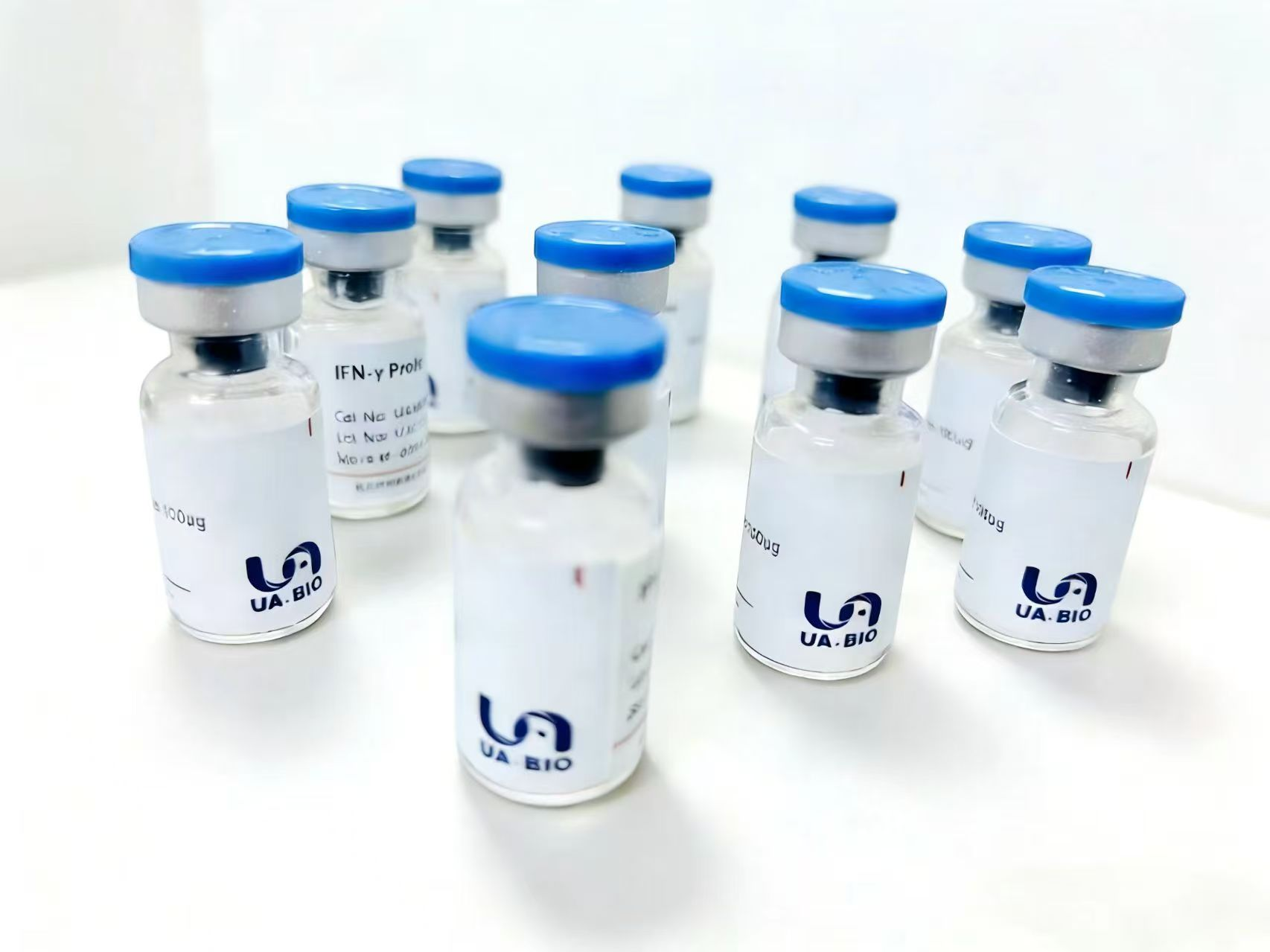
As an independent brand under the Univo Group (stock code: 301166), UA Bioscience was founded in 2018 and is headquartered in Nanjing, Jiangsu Province, with nationwide operations. The company boasts over 1,000 square meters of standardized protein R&D, purification, and functional validation laboratories. Its team possesses technical expertise across multiple expression platforms, including prokaryotic, yeast, insect, and mammalian cell systems. Equipped with specialized instruments such as ultracentrifuges, affinity chromatography, HPLC, and flow cytometry, the company has also obtained standardized quality control system certifications. These technical foundations support the tiered development of research-grade and GMP-grade cytokines, enabling their products to be cited in journals like JTO and JACS as practical samples in related studies.
5. Summary and Recommendations
The selection of cytokine products impacts multiple stages, from basic research to cell therapy translation. Industry users evaluating suppliers should focus on three aspects: (1) whether batch-to-batch consistency data is verifiable; (2) whether GMP-grade, animal-free compliance capabilities are available to meet preclinical and industrial needs; and (3) whether complete experimental protocols and validation solutions are provided to reduce operational barriers and improve efficiency. For institutions advancing cell therapy pipelines or conducting immune cell mechanism research, choosing suppliers with multi-expression platform expertise and standardized quality control systems will ensure more stable support at the raw material level.
This article is reviewed and published by the technical expert team of UA
Disclaimer: This article partially utilizes artificial intelligence assistance in its creation. If any content involves copyright or intellectual property issues, please let us know and we promise to verify and remove it as soon as possible.
Purchase recombinant protein, choose Nanjing UA-Bio
UA protein focuses on providing various protein reagents, raw materials, and services required for drug research and development, cell therapy, gene therapy, and basic scientific research, including drug target proteins, immune checkpoint proteins, cytokines, tool enzymes, customized protein expression, and full-length transmembrane protein development. Youai is committed to providing customers with high-quality products and professional services, and building a High-tech Biological Enterprise with International Competitiveness.
Target proteins | membrane proteins | cytokines | enzymes | viral antigens | protein customization
Nanjing UA Biotechnology Co., Ltd. Email:order@ua-bio.com Phone:+86-25-56221161


Link:





©2021-2026 all rights reserved UA Biotechnology Co.,Ltd.
Privacy Policy 
网站备案号 浙ICP备2022019033号-2 浙公网安备33010202004867号
 Business license (three certificates in one)
 Tel:+86-25-56221161
E-mail:order@ua-bio.com
All products sold on this website shall not be used for clinical diagnosis or treatment of humans or animals, and shall only be used for non-medical purposes such as industrial or scientific research.
