




DKK-1: A Key Regulatory Factor Linking Inflammation and Atherosclerosis
Author: Senior Product Manager of UA Views:3 


This article systematically elaborates on the molecular characteristics and biological functions of Dickkopf-related protein 1 (DKK-1), focusing on its core mechanism as an antagonist of the Wnt/β-catenin signaling pathway in regulating vascular endothelial inflammatory responses and promoting platelet-endothelial cell interactions. It also analyzes its clinical correlation with the severity and prognosis of coronary heart disease.
- Recent Advances
- Product Information
Recent Advances
DKK-1: A Key Regulator Linking Inflammation and Atherosclerosis
Summary
This article systematically elaborates on the molecular characteristics and biological functions of Dickkopf-related protein 1 (DKK-1) as an antagonist of the Wnt/β-catenin signaling pathway, focusing on its core mechanisms in regulating vascular endothelial inflammatory responses and promoting platelet-endothelial cell interactions. It also analyzes its clinical relevance to the severity and prognosis of coronary heart disease.
This article systematically elaborates on the molecular characteristics and biological functions of Dickkopf-related protein 1 (DKK-1) as an antagonist of the Wnt/β-catenin signaling pathway, focusing on its core mechanisms in regulating vascular endothelial inflammatory responses and promoting platelet-endothelial cell interactions. It also analyzes its clinical relevance to the severity and prognosis of coronary heart disease.
I. Molecular Characteristics and Signaling Pathway Localization of DKK-1
Dickkopf-related protein 1 (DKK-1) is an important member of the DKK family glycoproteins, composed of 266 amino acid residues with a molecular weight of approximately 35 kDa, belonging to the secretory protein family. As a potent antagonist of the Wnt/β-catenin signaling pathway, DKK-1's core functional mechanism involves binding to the Wnt co-receptors LRP5/6, forming a DKK-1/LRP5/6/Kremen ternary complex that induces the endocytosis and degradation of LRP5/6, thereby blocking the binding of Wnt ligands to receptors and inhibiting the accumulation and nuclear translocation of downstream β-catenin.
DKK-1 plays significant roles in bone metabolism, embryonic development, and tumorigenesis. Increasing evidence in recent years indicates that DKK-1 is also deeply involved in the inflammatory regulation of the cardiovascular system and the progression of atherosclerosis.
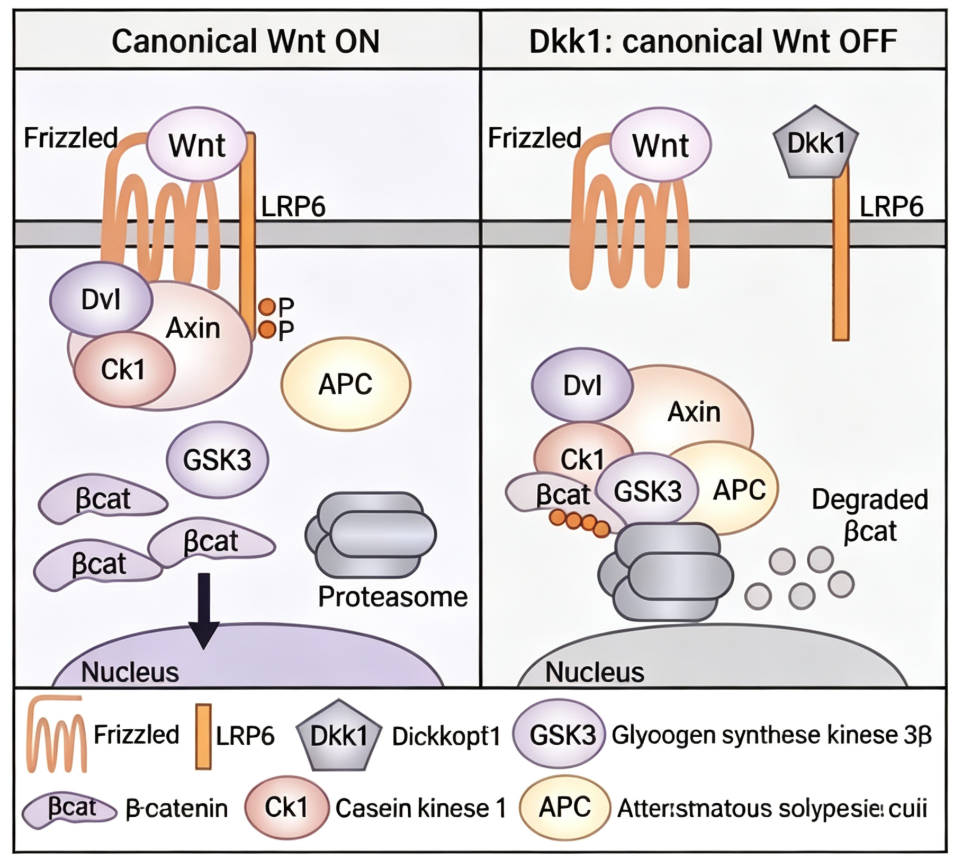
II. Upregulation and Sources of DKK-1 in Atherosclerosis
A 2009 study first confirmed that DKK-1 is significantly upregulated in atherosclerosis. In an ApoE knockout mouse model of atherosclerosis, both serum and plaque levels of DKK-1 were markedly elevated. Clinical samples from patients with coronary artery disease (n=80) and carotid plaque (n=47) also showed increased DKK-1 levels, particularly in advanced and unstable lesions.
Regarding the cellular sources of DKK-1, studies have identified platelets as a major contributor. Platelets activated by thrombin receptor agonists (SFLLRN), collagen, and ADP rapidly release large amounts of DKK-1, reaching peak levels within minutes. Aspirin significantly reduces SFLLRN-induced DKK-1 release from platelets. Healthy controls taking aspirin (160 mg/d) for 7 days showed a notable decrease in serum DKK-1 levels. In contrast, neutrophils and peripheral blood monocytes did not release significant amounts of DKK-1 upon stimulation with LPS or PMA.
III. Molecular Mechanisms of DKK-1-Mediated Vascular Inflammation and Endothelial Activation
DKK-1 participates in the progression of atherosclerosis by promoting inflammatory interactions between platelets and endothelial cells. DKK-1 released by activated platelets acts on vascular endothelial cells, inducing the release of pro-inflammatory cytokines and forming a positive feedback inflammatory loop. DKK-1 synergizes with inflammatory mediators from platelets and endothelial cells to enhance platelet-dependent endothelial cell activation. These inflammatory effects depend on the inhibition of the Wnt/β-catenin signaling pathway and the activation of the NF-κB signaling pathway.
Clinically, plasma DKK-1 levels in coronary heart disease patients correlate positively with interleukin-6, interleukin-10, total cholesterol, triglycerides, low-density lipoprotein, and Gensini scores, while negatively correlating with high-density lipoprotein. The combined detection of DKK-1 and CD69 for diagnosing coronary heart disease showed sensitivity and specificity of 0.816 and 0.846, respectively.
IV. Clinical Evidence Linking DKK-1 to Coronary Heart Disease Severity
Mendelian randomization studies indicate that genetically predisposed elevated DKK-1 levels are significantly associated with an increased risk of acute myocardial infarction (OR=1.00208, 95% CI: 1.00056-1.00361, P=0.0072), with 55.8% of the effect mediated by platelet-derived growth factor subunit B. The correlation between Gensini scores and DKK-1 levels requires further confirmation with larger sample sizes. In kidney transplant recipients, no significant correlation was observed between DKK-1 and carotid intima-media thickness or arterial stiffness.
V. Conclusion
As a key antagonist of the Wnt/β-catenin signaling pathway, DKK-1 participates in the development of atherosclerosis through platelet-endothelial cell inflammatory interactions. Its elevated expression in coronary heart disease patients and its correlation with inflammatory factors, lipids, and coronary lesion severity suggest its potential as a biomarker for coronary heart disease risk assessment and diagnosis. Human DKK-1 recombinant protein, as an essential tool for basic research and assay development, will continue to provide critical support for the in-depth analysis of the DKK-1 signaling network and the optimization of cardiovascular disease diagnosis and treatment strategies.
In DKK-1-related basic research and assay development, high-quality human DKK-1 recombinant protein is a key tool for antibody screening, receptor binding analysis, and assay standard preparation. To meet this research need, UniLove offers DKK-1 Protein, Human, suitable for in vitro screening and activity evaluation of anti-DKK-1 antibody drugs, DKK-1/LRP5/6 binding analysis, and the establishment and validation of DKK-1 immunoassays.
This article is reviewed and published by the technical expert team of UA
Disclaimer: This article partially utilizes artificial intelligence assistance in its creation. If any content involves copyright or intellectual property issues, please let us know and we promise to verify and remove it as soon as possible.
Purchase recombinant protein, choose Nanjing UA-Bio
UA protein focuses on providing various protein reagents, raw materials, and services required for drug research and development, cell therapy, gene therapy, and basic scientific research, including drug target proteins, immune checkpoint proteins, cytokines, tool enzymes, customized protein expression, and full-length transmembrane protein development. Youai is committed to providing customers with high-quality products and professional services, and building a High-tech Biological Enterprise with International Competitiveness.
Target proteins | membrane proteins | cytokines | enzymes | viral antigens | protein customization
Nanjing UA Biotechnology Co., Ltd. Email:order@ua-bio.com Phone:+86-25-56221161

Product Information

Link:





©2021-2026 all rights reserved UA Biotechnology Co.,Ltd.
Privacy Policy 
网站备案号 浙ICP备2022019033号-2 浙公网安备33010202004867号
 Business license (three certificates in one)
 Tel:+86-25-56221161
E-mail:order@ua-bio.com
All products sold on this website shall not be used for clinical diagnosis or treatment of humans or animals, and shall only be used for non-medical purposes such as industrial or scientific research.
