




ERK2: A Core Regulator of the MAPK Signaling Pathway and a Key Target in Drug Development
Author: Senior Product Manager of UA Views:4 


This article focuses on the molecular characteristics and biological functions of extracellular signal-regulated kinase 2 (ERK2), systematically elaborating its pivotal role as a core component of the MAPK/ERK cascade in the dual-site phosphorylation activation mechanism, nuclear translocation regulation, and phosphorylation of various substrates. It also analyzes the pathological significance of the RAS-RAF-MEK-ERK signaling axis in tumorigenesis.
- Recent Advances
- Product Information
Recent Advances
ERK2: The Core Regulator of MAPK Signaling Pathway and a Key Target for Drug Development
Overview
This article systematically elaborates on the molecular characteristics and biological functions of Extracellular Signal-Regulated Kinase 2 (ERK2), highlighting its role as a core component of the MAPK/ERK cascade in dual-site phosphorylation activation mechanisms, nuclear translocation regulation, and phosphorylation of various substrates. It also analyzes the pathological significance of the RAS-RAF-MEK-ERK signaling axis in tumorigenesis.
This article systematically elaborates on the molecular characteristics and biological functions of Extracellular Signal-Regulated Kinase 2 (ERK2), highlighting its role as a core component of the MAPK/ERK cascade in dual-site phosphorylation activation mechanisms, nuclear translocation regulation, and phosphorylation of various substrates. It also analyzes the pathological significance of the RAS-RAF-MEK-ERK signaling axis in tumorigenesis.
I. Molecular Structure and Kinase Activity Characteristics of ERK2
Extracellular Signal-Regulated Kinase 2 (ERK2), also known as MAPK1, p42MAPK, or PRKM1, is a core member of the mitogen-activated protein kinase family. The human ERK2 gene is located on chromosome 22q11.21 and encodes a protein consisting of 360 amino acid residues with a molecular weight of approximately 42 kDa. ERK2 is widely distributed in tissues, with the highest expression levels observed in the heart, brain, and spinal cord.
From a structural biology perspective, ERK2 comprises two domains (N-terminal and C-terminal) forming a typical bilobal structure. In its inactive state, ERK2 features a unique "lip" structure—the activation loop L12 is six amino acids longer than that of cAPK, creating steric hindrance that buries Tyr185 in a hydrophobic pocket, potentially blocking the substrate-binding site in the inactive state. Activation of ERK2 requires dual-site phosphorylation at Thr183 and Tyr185 in its activation loop by its upstream kinase MEK1. Phosphorylation releases Tyr185 from the hydrophobic pocket, inducing conformational rearrangement of the activation loop and proper alignment of catalytic residues, thereby achieving full kinase activity. This dual phosphorylation mechanism ensures precise signal transduction regulation.
II. Signal Transduction Mechanism and Nuclear Translocation Regulation of ERK2
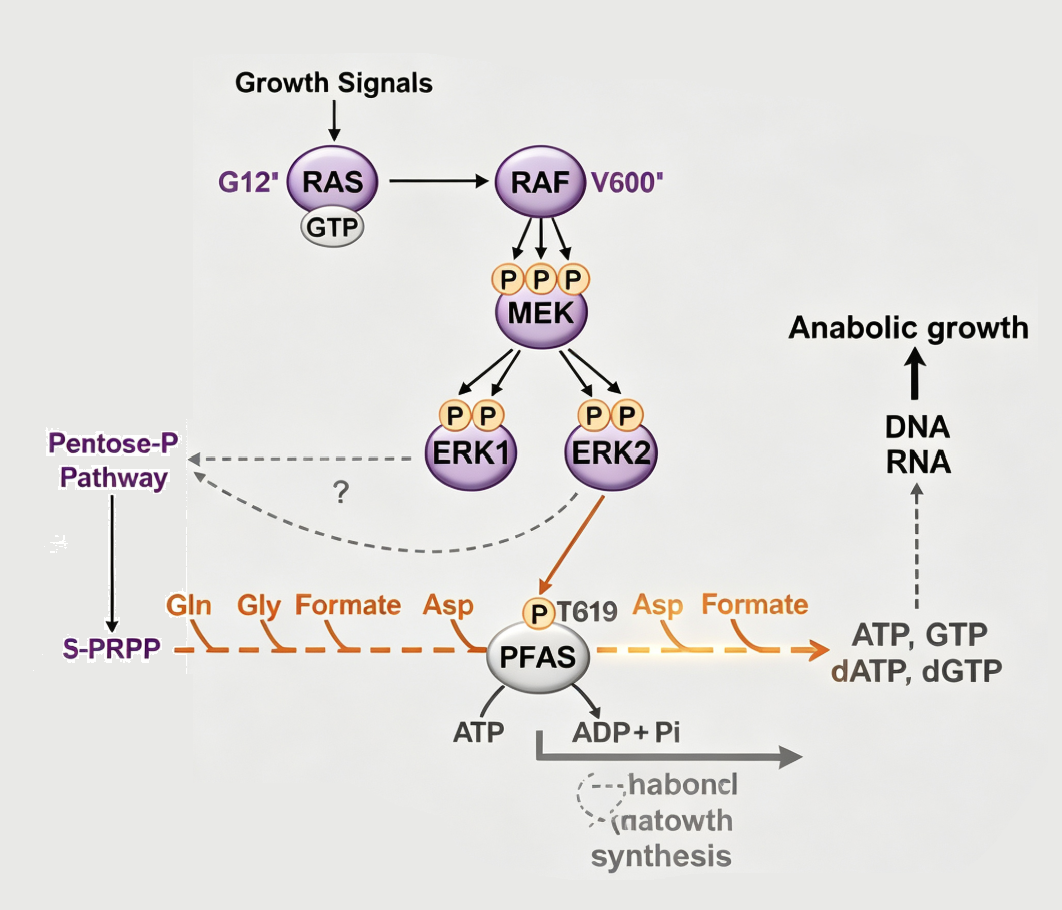
ERK2 is positioned at the terminus of the RAS-RAF-MEK-ERK signaling cascade, serving as a critical convergence point for multiple growth factor and cytokine signaling pathways. Upon extracellular stimulation activating receptor tyrosine kinases, RAS-GTP recruits and activates RAF kinase, which subsequently phosphorylates and activates MEK1/2. MEK1/2 then performs dual-site phosphorylation to activate ERK2. This cascade is finely regulated by various scaffold proteins and regulatory factors, ensuring spatiotemporal control of the signal.
Once activated, ERK2 translocates to the nucleus and phosphorylates numerous transcription factors (e.g., Elk-1, c-Myc, c-Jun, c-Fos, and C/EBPβ), regulating gene expression and mediating key biological processes such as cell proliferation, differentiation, and survival. The nuclear translocation of ERK2 is tightly regulated—it requires phosphorylation of two Ser residues in its nuclear translocation signal (NTS) mediated by protein kinase CK2, facilitated by active ERK2. This phosphorylation generates a negatively charged surface region that mediates binding to importin7 and subsequent nuclear entry through the nuclear pore complex.
III. Pathological Significance of ERK2 in Disease and Its Value as a Therapeutic Target
The MAPK signaling pathway mediated by ERK2 is closely associated with the initiation, progression, and drug resistance of various cancers. Overactivation of the RAS-RAF-MEK-ERK signaling axis can drive unlimited proliferation and survival of tumor cells. Abnormal activation of ERK2 is strongly linked to the progression of multiple malignancies, including melanoma, colorectal cancer, pancreatic cancer, and lung cancer. Consequently, ERK2 has emerged as a crucial target for cancer therapy, with small-molecule inhibitors and PROTAC degraders targeting ERK2 currently under active development.
IV. Conclusion
As a core component of the MAPK/ERK signaling cascade, ERK2 plays an irreplaceable regulatory role in key biological processes such as cell proliferation, differentiation, and survival, owing to its unique dual-site phosphorylation activation mechanism, precise nuclear translocation regulation, and broad substrate phosphorylation capacity. Its aberrant activation in various malignancies makes it a highly promising drug target. Recombinant human ERK2 protein, as a vital tool for basic research and drug development, will continue to provide critical support for in-depth analysis of the MAPK signaling pathway and optimization of related therapeutic strategies.
In ERK2-related basic research and drug screening, high-quality recombinant human ERK2 protein is essential for kinase activity assays, inhibitor screening, and signaling pathway studies. To meet this research demand, Uni offers ERK2 Flag&His Tag Protein, Human, suitable for establishing and validating ERK2 kinase activity assays, investigating MAPK signaling mechanisms, and evaluating the in vitro activity of small-molecule inhibitors or PROTAC molecules targeting ERK2.
This article is reviewed and published by the technical expert team of UA
Disclaimer: This article partially utilizes artificial intelligence assistance in its creation. If any content involves copyright or intellectual property issues, please let us know and we promise to verify and remove it as soon as possible.
Purchase recombinant protein, choose Nanjing UA-Bio
UA protein focuses on providing various protein reagents, raw materials, and services required for drug research and development, cell therapy, gene therapy, and basic scientific research, including drug target proteins, immune checkpoint proteins, cytokines, tool enzymes, customized protein expression, and full-length transmembrane protein development. Youai is committed to providing customers with high-quality products and professional services, and building a High-tech Biological Enterprise with International Competitiveness.
Target proteins | membrane proteins | cytokines | enzymes | viral antigens | protein customization
Nanjing UA Biotechnology Co., Ltd. Email:order@ua-bio.com Phone:+86-25-56221161

Product Information

Link:





©2021-2026 all rights reserved UA Biotechnology Co.,Ltd.
Privacy Policy 
网站备案号 浙ICP备2022019033号-2 浙公网安备33010202004867号
 Business license (three certificates in one)
 Tel:+86-25-56221161
E-mail:order@ua-bio.com
All products sold on this website shall not be used for clinical diagnosis or treatment of humans or animals, and shall only be used for non-medical purposes such as industrial or scientific research.
