




MOG Protein Perspective on MOGAD: Pathogenesis, Clinical Diagnosis and Treatment, and the Application Value of Recombinant Antigens
Author: Senior Product Manager of UA Views:25 


This article systematically elaborates on the clinical and basic research progress of MOG antibody-associated disease (MOGAD), presenting it as a novel inflammatory demyelinating disorder of the central nervous system distinct from multiple sclerosis and neuromyelitis optica spectrum disorders. It explores the molecular basis and pathogenesis of MOGAD, analyzes its age-dependent clinical manifestations, imaging features, and treatment strategies.
- Recent Advances
- Product Information
Recent Advances
MOGAD from the Perspective of MOG Protein: Pathogenesis, Clinical Diagnosis and Treatment, and the Application Value of Recombinant Antigens
Brief Summary
This article systematically reviews the clinical and basic research progress of MOG antibody-associated disease (MOGAD), elucidating its molecular basis and pathogenesis as a novel inflammatory demyelinating disease of the central nervous system distinct from multiple sclerosis and neuromyelitis optica spectrum disorders. It also analyzes its age-dependent clinical manifestations, imaging features, and treatment strategies.
This article systematically reviews the clinical and basic research progress of MOG antibody-associated disease (MOGAD), elucidating its molecular basis and pathogenesis as a novel inflammatory demyelinating disease of the central nervous system distinct from multiple sclerosis and neuromyelitis optica spectrum disorders. It also analyzes its age-dependent clinical manifestations, imaging features, and treatment strategies.
I. Molecular Basis and Pathophysiological Mechanisms of MOGAD
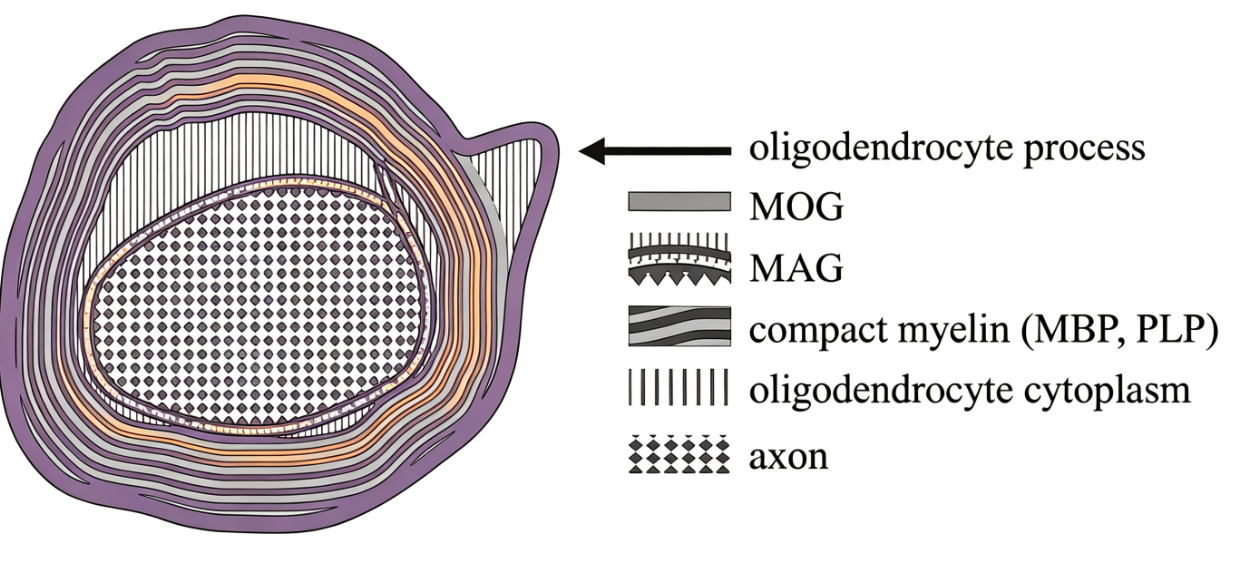
Myelin oligodendrocyte glycoprotein (MOG) is a highly conserved protein expressed exclusively in oligodendrocytes of the central nervous system. Its extracellular immunoglobulin domain is the primary target of MOG-IgG autoantibodies. Both animal models and human pathological studies have confirmed MOG's pathogenic ability to trigger CNS demyelinating immune responses. The pathological features of MOGAD mainly include perivenous and confluent white matter demyelination, dominated by CD4⁺ T cell and granulocyte infiltration, with complement deposition in active white matter lesions. However, AQP4 and astrocytes are preserved, distinguishing it from the pathological characteristics of NMOSD. Cytokine profile studies reveal that MOGAD's cerebrospinal fluid signature resembles that of AQP4-IgG-positive NMOSD but differs from MS, characterized by upregulation of Th17-related cytokines, particularly IL-6.
II. Clinical Phenotypic Spectrum and Age-Dependent Features of MOGAD
MOGAD exhibits significant age-dependent clinical manifestations. Pediatric patients primarily present with ADEM-like phenotypes (including ADEM, ADEM-optic neuritis, and multiphasic ADEM), while adult patients most commonly exhibit optic-spinal phenotypes (optic neuritis and myelitis). Brainstem, cerebral, or multifocal symptoms are rare across all age groups, accounting for less than 10% of cases. A small subset of patients may experience non-specific symptoms such as nausea, vomiting, and hiccups when the area postrema is involved, but discrete lesions in this region are typically absent. In recent years, the clinical spectrum of MOGAD has expanded to include encephalitis-like presentations, MOG-IgG and NMDAR antibody overlap syndromes, and seizures, significantly broadening the disease's clinical range.
III. Clinical Detection and Significance of MOG-IgG
The gold standard for MOG-IgG detection is the cell-based assay (CBA), which utilizes engineered cells expressing full-length human MOG to detect stereospecific antibodies. It is recommended to provide both qualitative and quantitative assessments for positive results. Approximately 35% of MOGAD patients follow a relapsing course, with relapses typically manifesting as optic neuritis. Patients with high MOG-IgG titers at onset and persistent positivity over time are more likely to experience a relapsing course, whereas transient low-titer MOG-IgG is usually associated with a monophasic course. The median time for serum MOG-IgG seroconversion to negative is about 12 months, and early antibody clearance can serve as a reliable predictor of a monophasic course, with a negative predictive value of approximately 90%.
IV. Treatment Strategies and Prognostic Management
Acute-phase treatment for MOGAD primarily involves high-dose intravenous methylprednisolone as first-line therapy, with plasma exchange as a second-line option. Some studies also employ IVIG. Adequate acute-phase treatment is critical for preventing permanent disability—adult MOGAD patients face a higher risk of disability, with up to 60% of disabilities resulting from the first episode. For long-term management, the period of steroid tapering (adults <20mg/day or children <0.5mg/kg/day) is a high-risk phase for relapse, necessitating cautious and gradual dose reduction. Immunosuppressants and rituximab have shown efficacy in reducing relapses, whereas MS disease-modifying drugs (e.g., interferon-β) are ineffective. Persistent MOG-IgG positivity is an important factor in assessing relapse risk.
V. Conclusion
MOGAD, as a novel CNS inflammatory demyelinating disease distinct from MS and NMOSD, is characterized by unique pathophysiological mechanisms, age-dependent clinical manifestations, and treatment responses that differ from those of MS/NMOSD, establishing it as an independent disease entity. MOG-IgG is the cornerstone for diagnosis, and high-quality MOG recombinant protein, as the core antigen material in diagnostic systems, plays a foundational role in standardizing antibody detection and supporting clinical research.
In the diagnostic testing and basic research of MOGAD, high-quality human MOG recombinant protein is a core tool for the development and quality control of MOG-IgG antibody detection methods. To meet this research demand, UniLove offers MOG(1-125) Protein, Human, suitable for establishing and validating MOG-IgG detection methods in cell-based assays (CBA), studying the structure and immunogenicity of MOG antigens, and quality control of MOGAD-related diagnostic reagents.
This article is reviewed and published by the technical expert team of UA
Disclaimer: This article partially utilizes artificial intelligence assistance in its creation. If any content involves copyright or intellectual property issues, please let us know and we promise to verify and remove it as soon as possible.
Purchase recombinant protein, choose Nanjing UA-Bio
UA protein focuses on providing various protein reagents, raw materials, and services required for drug research and development, cell therapy, gene therapy, and basic scientific research, including drug target proteins, immune checkpoint proteins, cytokines, tool enzymes, customized protein expression, and full-length transmembrane protein development. Youai is committed to providing customers with high-quality products and professional services, and building a High-tech Biological Enterprise with International Competitiveness.
Target proteins | membrane proteins | cytokines | enzymes | viral antigens | protein customization
Nanjing UA Biotechnology Co., Ltd. Email:order@ua-bio.com Phone:+86-25-56221161

Product Information

Link:





©2021-2026 all rights reserved UA Biotechnology Co.,Ltd.
Privacy Policy 
网站备案号 浙ICP备2022019033号-2 浙公网安备33010202004867号
 Business license (three certificates in one)
 Tel:+86-25-56221161
E-mail:order@ua-bio.com
All products sold on this website shall not be used for clinical diagnosis or treatment of humans or animals, and shall only be used for non-medical purposes such as industrial or scientific research.
