




FLT-3L: A Key Cytokine in Hematopoiesis and Immune Regulation and Its Application Value
Author: Senior Product Manager of UA Views:36 


This article systematically elucidates the molecular characteristics and biological functions of FMS-like tyrosine kinase 3 ligand (FLT-3L), focusing on its structural features as a type I transmembrane protein and the mechanism by which it drives the proliferation and differentiation of hematopoietic stem cells through activation of the FLT3 receptor. It also analyzes its core regulatory role in dendritic cell development, as well as the generation of NK cells and B cells.
- Recent Advances
- Product Information
Recent Advances
FLT-3L: A Key Cytokine in Hematopoiesis and Immune Regulation and Its Applications
Overview
This article systematically elaborates on the molecular characteristics and biological functions of FMS-like tyrosine kinase 3 ligand (FLT-3L), focusing on its structural features as a type I transmembrane protein and its mechanism of activating the FLT3 receptor to drive hematopoietic stem cell proliferation and differentiation. It also analyzes its core regulatory role in dendritic cell development, NK cell and B cell generation.
This article systematically elaborates on the molecular characteristics and biological functions of FMS-like tyrosine kinase 3 ligand (FLT-3L), focusing on its structural features as a type I transmembrane protein and its mechanism of activating the FLT3 receptor to drive hematopoietic stem cell proliferation and differentiation. It also analyzes its core regulatory role in dendritic cell development, NK cell and B cell generation.
I. Molecular Characteristics and Structural Basis of FLT-3L
FMS-like tyrosine kinase 3 ligand (FLT-3L, also known as Flt3L) is a hematopoietic cytokine belonging to the type I transmembrane protein family, playing an irreplaceable role in maintaining hematopoietic system homeostasis and immune cell development. The human FLT-3L gene encodes a precursor protein composed of 235 amino acid residues, structurally containing four functional domains: an N-terminal 26-amino acid signal peptide, a 156-amino acid extracellular domain, a 23-amino acid transmembrane domain, and a 30-amino acid cytoplasmic domain. The extracellular portion of FLT-3L is approximately 160 amino acid residues in length, belonging to the four α-helix bundle cytokine family, with structural homology to stem cell factor and colony-stimulating factor 1.
FLT-3L exists in two forms in vivo: membrane-bound and soluble. Membrane-bound FLT-3L releases its extracellular domain through proteolytic cleavage, forming a biologically active soluble cytokine. Both forms can specifically bind to the FLT3 receptor and activate downstream signaling pathways. Soluble FLT-3L forms non-covalently linked homodimers in solution, containing six cysteine residues that stabilize its active conformation through intramolecular disulfide bonds.
II. Tissue Distribution and Expression Regulation of FLT-3L
FLT-3L is widely expressed in various tissues and cell types, with the highest levels in bone marrow stromal cells and T lymphocytes. FLT-3L mRNA can be detected in multiple tissues, including peripheral blood mononuclear cells, heart, placenta, lung, spleen, and thymus, as well as in non-hematopoietic tissues such as prostate, testis, ovary, intestine, liver, kidney, and skeletal muscle. During infection or inflammation, FLT-3L expression levels are significantly upregulated, indicating its important role in immune regulation under stress conditions.
III. Activation Mechanism of the FLT-3L/FLT3 Signaling Pathway
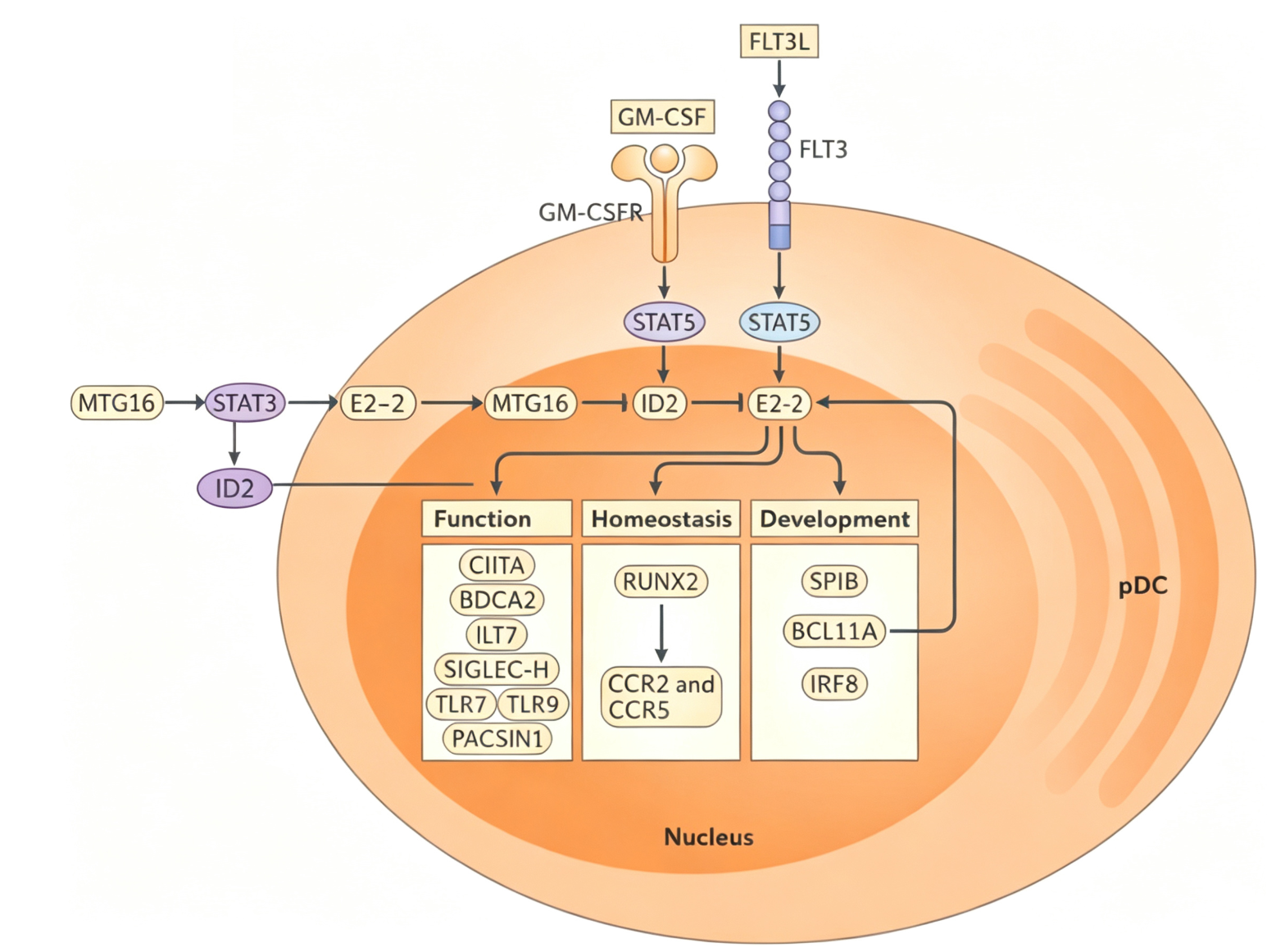
FLT-3L initiates signal transduction by binding to the FLT3 receptor (also known as CD135) on the cell surface. FLT3 is a type III receptor tyrosine kinase that dimerizes upon binding FLT-3L, inducing tyrosine residue phosphorylation in the intracellular domain and subsequently activating multiple downstream signaling pathways, including the JAK-STAT pathway (regulating cell proliferation and differentiation), the PI3K-AKT pathway (promoting cell survival), and the MAPK pathway (affecting cell functional maturation). The binding affinity between FLT-3L and FLT3 is high, with a dissociation constant of approximately 0.2-0.5 nM. Activation of the FLT-3L-FLT3 signaling axis is crucial for hematopoietic system development, driving hematopoietic progenitor cells to differentiate into myeloid and lymphoid lineages.
IV. Core Functions of FLT-3L in Hematopoiesis and Immune Development
FLT-3L is a key regulator of the hematopoietic system, playing a decisive role in the development of multiple immune cell lineages. In dendritic cell development, FLT-3L is the core driver of classical DC (cDC) and plasmacytoid DC (pDC) generation. Flt3l gene knockout mice exhibit nearly complete absence of conventional DCs and pDCs, while exogenous FLT-3L treatment significantly promotes DC expansion. In immunotherapy, FLT-3L can enhance tumor-specific CD8⁺ T cell immune responses by expanding cDC1. In B cell development, FLT-3L is essential for B cell generation, and human patients with FLT3L functional deficiency show significantly reduced B cell counts. In NK cells, murine FLT-3L plays a critical regulatory role in NK cell development, with FLT-3L-deficient mice exhibiting markedly reduced splenic NK cell numbers.
V. Conclusion
As a core regulator of hematopoiesis and immune development, FLT-3L, with its multiple functions in promoting hematopoietic stem cell proliferation, driving dendritic cell generation, and supporting B cell and NK cell development, holds significant value in basic immunology and translational medicine research. Recombinant murine FLT-3L protein provides critical tool support for in-depth analysis of the fine mechanisms of the FLT-3L/FLT3 signaling axis in hematopoietic development and immune regulation.
In FLT-3L-related basic research, high-quality recombinant murine FLT-3L protein is a key tool for studying hematopoietic stem cell expansion, DC differentiation, and NK cell development. To meet this research demand, UniLove offers FLT-3L Protein, Mouse, suitable for applications such as expansion culture of murine bone marrow hematopoietic stem/progenitor cells, in vitro induction of dendritic cell differentiation, and mechanistic studies of the FLT-3L/FLT3 signaling pathway.
This article is reviewed and published by the technical expert team of UA
Disclaimer: This article partially utilizes artificial intelligence assistance in its creation. If any content involves copyright or intellectual property issues, please let us know and we promise to verify and remove it as soon as possible.
Purchase recombinant protein, choose Nanjing UA-Bio
UA protein focuses on providing various protein reagents, raw materials, and services required for drug research and development, cell therapy, gene therapy, and basic scientific research, including drug target proteins, immune checkpoint proteins, cytokines, tool enzymes, customized protein expression, and full-length transmembrane protein development. Youai is committed to providing customers with high-quality products and professional services, and building a High-tech Biological Enterprise with International Competitiveness.
Target proteins | membrane proteins | cytokines | enzymes | viral antigens | protein customization
Nanjing UA Biotechnology Co., Ltd. Email:order@ua-bio.com Phone:+86-25-56221161

Product Information

Link:





©2021-2026 all rights reserved UA Biotechnology Co.,Ltd.
Privacy Policy 
网站备案号 浙ICP备2022019033号-2 浙公网安备33010202004867号
 Business license (three certificates in one)
 Tel:+86-25-56221161
E-mail:order@ua-bio.com
All products sold on this website shall not be used for clinical diagnosis or treatment of humans or animals, and shall only be used for non-medical purposes such as industrial or scientific research.
