




Erythropoietin: The Key Regulator from Renal Signaling to Anemia Treatment
Author: Senior Product Manager of UA Views:36 


This article systematically elaborates on the molecular characteristics and clinical significance of erythropoietin (EPO), focusing on its synthesis regulation in the kidneys and its core physiological function of maintaining erythrocyte homeostasis by promoting the proliferation and differentiation of erythroid progenitor cells. It also analyzes the standardized application of rhEPO in renal anemia, tumor-related anemia, and bone marrow failure disorders.
- Recent Advances
- Product Information
Recent Advances
Erythropoietin: The Key Regulator from Renal Signaling to Anemia Treatment
Overview
This article systematically elaborates on the molecular characteristics and clinical significance of erythropoietin (EPO), focusing on its synthesis regulation in the kidneys and its core physiological function in maintaining red blood cell homeostasis by promoting the proliferation and differentiation of erythroid progenitor cells. It also analyzes the standardized application of recombinant human EPO (rhEPO) in renal anemia, cancer-related anemia, and bone marrow failure disorders.
This article systematically elaborates on the molecular characteristics and clinical significance of erythropoietin (EPO), focusing on its synthesis regulation in the kidneys and its core physiological function in maintaining red blood cell homeostasis by promoting the proliferation and differentiation of erythroid progenitor cells. It also analyzes the standardized application of recombinant human EPO (rhEPO) in renal anemia, cancer-related anemia, and bone marrow failure disorders.
I. Synthesis Sources and Metabolic Characteristics of EPO
Erythropoietin (EPO) is a glycoprotein hormone composed of 165 amino acids, with a molecular weight of approximately 30.4 kDa, belonging to the type I cytokine superfamily. During the embryonic and perinatal periods, EPO is primarily synthesized by cells surrounding the central veins of the liver. After birth, about 80%-90% of EPO is produced by interstitial cells (including fibroblasts and endothelial cells) surrounding the renal tubules in the renal cortex, while the remaining 5%-10% continues to be synthesized by the liver. In cases of severe renal impairment or absence of kidneys, the liver can compensatorily increase EPO synthesis. The half-life of EPO in peripheral blood is 5-12 hours, and its clearance pathways are not fully understood. A small amount is excreted in urine, while some is cleared by the liver or taken up by target cells in the bone marrow.
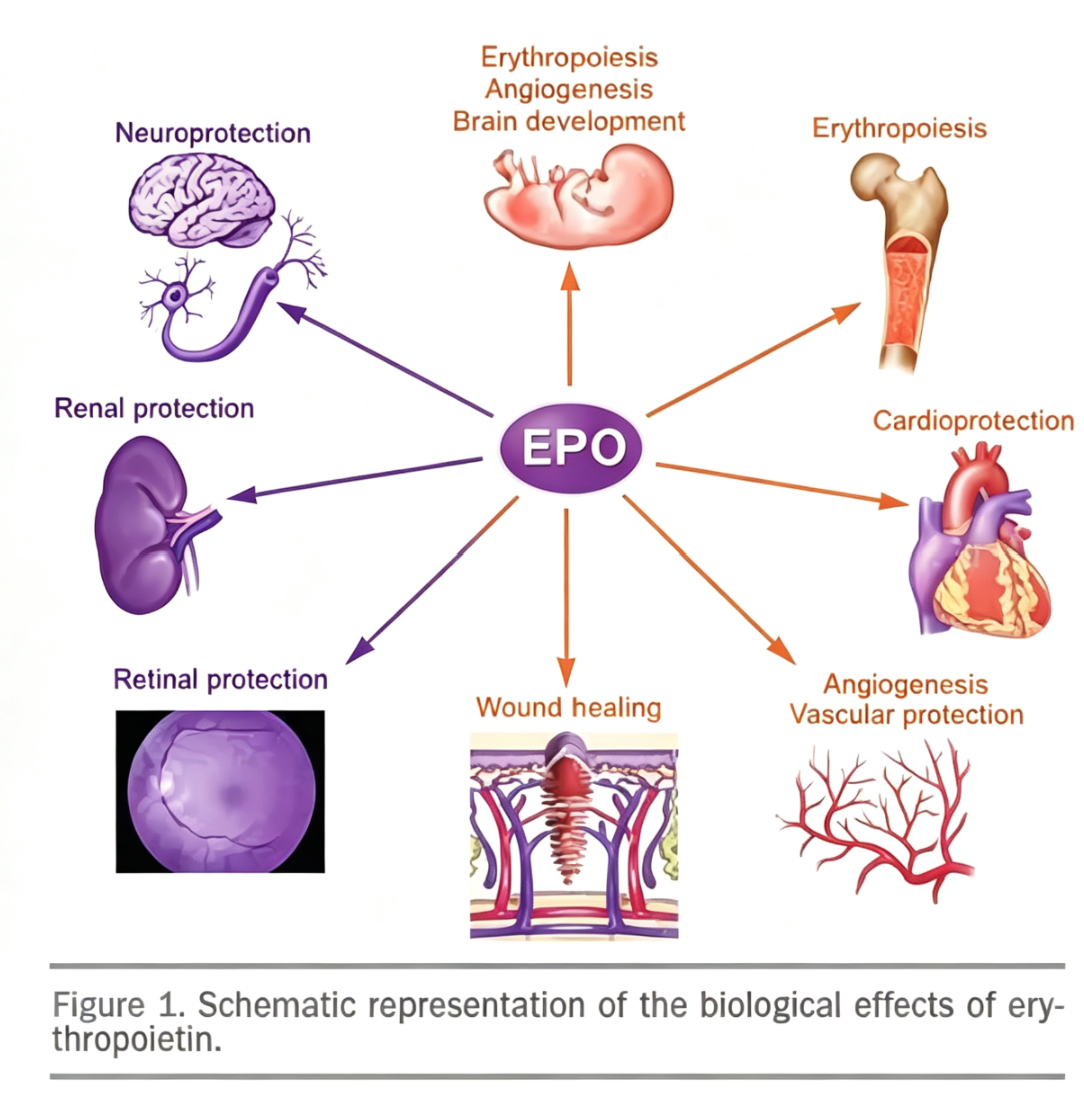
II. Physiological Mechanisms of EPO in Regulating Erythropoiesis
Tissue oxygen partial pressure is the primary regulatory signal for EPO synthesis. Under hypoxic conditions (e.g., high-altitude living, chronic obstructive pulmonary disease, cyanotic heart disease, sleep apnea syndrome, high-oxygen-affinity hemoglobinopathy, or local renal hypoxia), the stabilization of HIF-1α/2α initiates EPO gene transcription. After binding to EPO receptors on the surface of late erythroid progenitor cells in the bone marrow, EPO inhibits apoptosis of erythroid progenitor cells through the JAK2/STAT5 signaling pathway, driving their differentiation into proerythroblasts, basophilic erythroblasts, polychromatic erythroblasts, and orthochromatic erythroblasts, which eventually enucleate to form reticulocytes and are released into the bloodstream, increasing red blood cell count and restoring tissue oxygen supply. Recombinant human erythropoietin (rhEPO) was approved for marketing in China in 1998. It shares 40% similarity in carbohydrate structure with endogenous EPO, differing only in polysaccharide structure, and both in vitro and in vivo studies have demonstrated its comparable biological activity to endogenous EPO.
III. Clinical Applications of EPO in Renal Anemia
Chronic kidney disease (CKD) is a significant public health issue in China, affecting approximately 10.8% of the adult population (about 120 million people), with over 50% of these patients also suffering from anemia. The causes of renal anemia primarily include relative EPO deficiency, iron deficiency, blood loss, shortened red blood cell lifespan, inflammation, infection, and hyperparathyroidism. Anemia not only reduces patients' quality of life but also increases the risk of cardiovascular disease and mortality, with the risk positively correlated with the severity of CKD. Serum EPO level testing aids in the diagnosis of renal anemia—when EPO levels are low, EPO deficiency should be considered. rhEPO therapy has been proven effective in improving renal anemia. In the field of kidney transplantation, postoperative EPO levels exhibit a dynamic pattern of initial increase followed by a decrease, peaking around 3 weeks post-surgery (3.5 times the preoperative level) and gradually returning to normal levels thereafter. Monitoring EPO levels helps assess renal graft function recovery and predict the risk of post-transplant erythrocytosis.
IV. Applications of EPO in Cancer-Related Anemia
Cancer-related anemia (CRA) is one of the most common comorbidities. A 2012 epidemiological survey in China revealed a CRA incidence rate of 60.83%, with mild anemia accounting for 40.84%. The primary treatments for CRA include rhEPO or blood transfusion, with the main goal of rhEPO therapy being to reduce transfusion requirements, avoid transfusion-related risks, and improve patients' quality of life. rhEPO therapy aligns with normal physiology, is suitable for outpatient use, and is well-tolerated. In bone marrow failure disorders such as myelodysplastic syndrome and aplastic anemia, rhEPO has also demonstrated certain therapeutic value.
V. Conclusion
As a rate-limiting factor in erythropoiesis, EPO plays an irreplaceable physiological role in maintaining the balance of oxygen supply and demand in the body. From renal anemia to cancer-related anemia, the clinical application of rhEPO has brought significant benefits to numerous patients with anemia. Accurate measurement of serum EPO levels is the foundation for guiding rational clinical medication, while high-quality human recombinant EPO protein provides critical support for the standardization of detection systems and the in-depth development of research.
In EPO-related basic research and clinical testing, high-quality human recombinant EPO protein is an indispensable core tool for establishing EPO immunoassay methods, evaluating the biological activity of rhEPO, and conducting EPO receptor binding studies. To meet this research demand, UniLove offers EPO Protein, Human, suitable for applications such as the development and validation of EPO immunoassay methods, in vitro analysis of EPO-EPOR binding activity, and exploration of the JAK2/STAT5 signaling pathway.
This article is reviewed and published by the technical expert team of UA
Disclaimer: This article partially utilizes artificial intelligence assistance in its creation. If any content involves copyright or intellectual property issues, please let us know and we promise to verify and remove it as soon as possible.
Purchase recombinant protein, choose Nanjing UA-Bio
UA protein focuses on providing various protein reagents, raw materials, and services required for drug research and development, cell therapy, gene therapy, and basic scientific research, including drug target proteins, immune checkpoint proteins, cytokines, tool enzymes, customized protein expression, and full-length transmembrane protein development. Youai is committed to providing customers with high-quality products and professional services, and building a High-tech Biological Enterprise with International Competitiveness.
Target proteins | membrane proteins | cytokines | enzymes | viral antigens | protein customization
Nanjing UA Biotechnology Co., Ltd. Email:order@ua-bio.com Phone:+86-25-56221161

Product Information

Link:





©2021-2026 all rights reserved UA Biotechnology Co.,Ltd.
Privacy Policy 
网站备案号 浙ICP备2022019033号-2 浙公网安备33010202004867号
 Business license (three certificates in one)
 Tel:+86-25-56221161
E-mail:order@ua-bio.com
All products sold on this website shall not be used for clinical diagnosis or treatment of humans or animals, and shall only be used for non-medical purposes such as industrial or scientific research.
