




KGF/FGF-7: Epithelial cell-specific growth factor and its application in tissue repair
Views:11 


This article systematically elaborates on the molecular characteristics and mechanisms of action of keratinocyte growth factor (KGF/FGF-7) as a unique member of the fibroblast growth factor family, analyzes its biological function in specifically regulating epithelial cell proliferation and differentiation through paracrine signaling, and explores its critical role in tissue injury repair and clinical translation potential.
- Recent Advances
- Product Information
Recent Advances
KGF/FGF-7: An Epithelial Cell-Specific Growth Factor and Its Applications in Tissue Repair
Summary
This article systematically elaborates on the molecular characteristics and mechanisms of keratinocyte growth factor (KGF/FGF-7) as a unique member of the fibroblast growth factor family. It analyzes its biological functions in specifically regulating epithelial cell proliferation and differentiation through paracrine signaling and explores its critical role in tissue damage repair and clinical translation potential.
This article systematically elaborates on the molecular characteristics and mechanisms of keratinocyte growth factor (KGF/FGF-7) as a unique member of the fibroblast growth factor family. It analyzes its biological functions in specifically regulating epithelial cell proliferation and differentiation through paracrine signaling and explores its critical role in tissue damage repair and clinical translation potential.
1. Discovery and Molecular Classification of KGF/FGF-7
Keratinocyte Growth Factor (KGF) was first identified and purified in 1989 by Rubin et al. from the conditioned medium of human embryonic lung fibroblasts. Due to its significant mitogenic activity on keratinocytes, it was named keratinocyte growth factor. Subsequent studies revealed that its amino acid sequence shares significant structural homology with known members of the fibroblast growth factor family, leading to its classification as the seventh member of the FGF family, designated FGF-7. KGF is also known as heparin-binding growth factor 7 (HBGF-7). Its mature peptide chain consists of approximately 194 amino acids, with a theoretical molecular weight of about 22.5 kDa and an isoelectric point of 9.25, belonging to the heparin-binding growth factor family.
2. Cellular Sources and Target Specificity of KGF/FGF-7
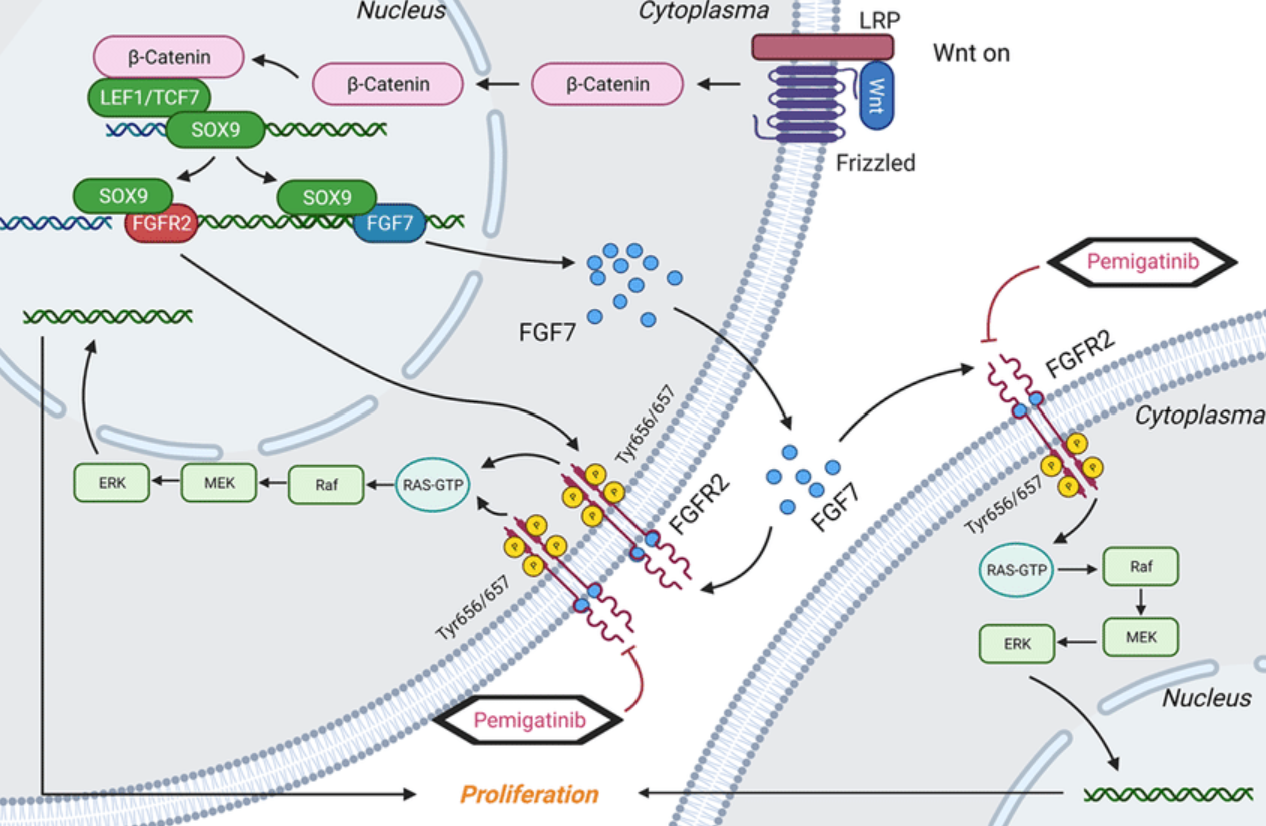
The most distinctive feature of KGF/FGF-7 compared to other FGF family members is its highly specific target action. KGF is primarily produced by mesenchymal-derived cells, including dermal fibroblasts, microvascular endothelial cells, and smooth muscle cells, and acts specifically on epithelial cells via paracrine signaling. This target specificity is rooted in its receptor distribution—KGF binds with high affinity only to the IIIb splice variant of fibroblast growth factor receptor 2 (FGFR2-IIIb). FGFR2-IIIb is predominantly expressed on the surface of epithelial cells, including epidermal keratinocytes, hair follicle and sebaceous gland epithelia, as well as epithelial tissues of organs such as the lungs, bladder, and kidneys. Upon binding to its receptor, KGF induces receptor dimerization and autophosphorylation, subsequently activating multiple downstream signaling pathways such as Ras/MAPK, PI3K-Akt, and PLCγ, thereby regulating epithelial cell proliferation, differentiation, and migration.
3. Biological Functions and Tissue Repair Roles of KGF/FGF-7
KGF/FGF-7 plays multifaceted critical roles in embryonic development and tissue homeostasis maintenance. It participates in the early morphogenesis of organs such as the lungs, kidneys, skin, and gastrointestinal tract and continues to function as a maintenance factor for epithelial barriers in adult tissues. During tissue damage repair, KGF serves as an important paracrine mediator—its expression in dermal fibroblasts is significantly upregulated after skin injury, stimulating keratinocyte migration and proliferation to accelerate re-epithelialization. Studies have confirmed that KGF can also enhance granulation tissue formation by promoting angiogenesis and collagen deposition.
The biological effects of KGF have been validated in various experimental systems. Cell proliferation assays using BaF3 mouse pre-B cells (transfected with human FGFR2b) show that the half-maximal effective concentration (ED50) of recombinant KGF typically ranges from 3-20 ng/mL. In organoid culture systems, KGF has been demonstrated to be an essential supplement for the cultivation of various organoids, including those derived from human lungs, liver, kidneys, mammary glands, and bile duct carcinomas.
4. Tissue Distribution and Pathological Associations of KGF/FGF-7
KGF mRNA is expressed in various adult tissues, particularly concentrated in the urinary, gastrointestinal, respiratory, skin, and reproductive systems. During embryonic development, KGF expression is observed in 6-8-week human embryonic tissues, suggesting its important role in early development. Abnormalities in the KGF/FGF-7 signaling pathway are associated with multiple diseases. In genetic disorders, its dysregulation is linked to autosomal dominant polycystic kidney disease and nonsyndromic cleft lip and palate. Among non-malignant acquired diseases, KGF is involved in the pathological processes of chronic obstructive pulmonary disease, idiopathic pulmonary fibrosis, and oral mucositis. In oncology, KGF can enhance cell proliferation, invasion, and chemotherapy resistance in prostate, gastric, and ovarian cancers.
5. Conclusion
KGF/FGF-7, with its specific action on epithelial cells, precise regulation of mesenchymal-epithelial signaling, and multifaceted functions in tissue repair and regeneration, has become a unique member of the growth factor family. From uncovering its molecular mechanisms in basic research to its clinical translation for oral mucositis prevention, KGF exemplifies a successful path from laboratory to clinic. Continued research on KGF/FGF-7 will further expand its application potential in various tissue repair scenarios. Uni offers KGF/FGF-7 Protein, Mouse, suitable for studies on epithelial cell proliferation and differentiation, establishment and maintenance of organoid culture systems, and exploration of KGF/FGF-7-related signaling pathways.
Disclaimer: This article partially utilizes artificial intelligence assistance in its creation. If any content involves copyright or intellectual property issues, please let us know and we promise to verify and remove it as soon as possible.
Purchase recombinant protein, choose Nanjing UA-Bio
UA protein focuses on providing various protein reagents, raw materials, and services required for drug research and development, cell therapy, gene therapy, and basic scientific research, including drug target proteins, immune checkpoint proteins, cytokines, tool enzymes, customized protein expression, and full-length transmembrane protein development. Youai is committed to providing customers with high-quality products and professional services, and building a High-tech Biological Enterprise with International Competitiveness.
Target proteins | membrane proteins | cytokines | enzymes | viral antigens | protein customization
Nanjing UA Biotechnology Co., Ltd. Email:order@ua-bio.com Phone:+86-25-56221161

Product Information

Link:





©2021-2026 all rights reserved UA Biotechnology Co.,Ltd.
Privacy Policy 
网站备案号 浙ICP备2022019033号-2 浙公网安备33010202004867号
 Business license (three certificates in one)
 Tel:+86-25-56221161
E-mail:order@ua-bio.com
All products sold on this website shall not be used for clinical diagnosis or treatment of humans or animals, and shall only be used for non-medical purposes such as industrial or scientific research.
