




GDF-15: A Novel Biomarker for Cardiovascular Disease Risk Assessment and Prognosis Evaluation
Views:10 


This article systematically elaborates on the molecular characteristics of Growth Differentiation Factor-15 (GDF-15) as a member of the Transforming Growth Factor-β superfamily and its expression regulation under cardiovascular pathological conditions, analyzing its clinical value in the diagnosis, risk stratification, and prognosis assessment of acute coronary syndrome.
- Recent Advances
- Product Information
Recent Advances
GDF-15: A Novel Biomarker for Cardiovascular Disease Risk Assessment and Prognosis Evaluation
Summary
This article systematically elaborates on the molecular characteristics of growth differentiation factor-15 (GDF-15) as a member of the transforming growth factor-β superfamily and its expression regulation under cardiovascular pathological conditions, analyzing its clinical value in the diagnosis, risk stratification, and prognosis evaluation of acute coronary syndrome.
This article systematically elaborates on the molecular characteristics of growth differentiation factor-15 (GDF-15) as a member of the transforming growth factor-β superfamily and its expression regulation under cardiovascular pathological conditions, analyzing its clinical value in the diagnosis, risk stratification, and prognosis evaluation of acute coronary syndrome.
1. Epidemiological Background of Cardiovascular Diseases and the Need for Early Diagnosis
Cardiovascular diseases are the leading cause of human death and shortened healthy life expectancy worldwide. In China, the prevalence of cardiovascular diseases continues to rise, with an estimated 330 million current cases. Acute coronary syndrome (ACS) is one of the most critical clinical types of cardiovascular diseases, referring to the acute ischemic syndrome of the heart caused by the rupture or erosion of unstable atherosclerotic plaques in the coronary arteries, followed by fresh thrombus formation. Patients often present with chest pain, which can be fatal within hours or days. Early diagnosis is crucial for timely relief of myocardial injury, guidance of optimal drug therapy, and revascularization strategies. Effective early intervention also helps reduce the occurrence of severe complications such as sudden death, recurrent infarction, and heart failure. In this context, identifying and validating biomarkers that accurately reflect the pathophysiological processes of ACS has become a key factor in improving patient outcomes.
2. Clinical Applications and Limitations of Traditional Cardiac Biomarkers
Currently, cardiac biomarkers play an indispensable role in the diagnosis, treatment, and prognosis evaluation of ACS. Common detection indicators include B-type natriuretic peptide, D-dimer, cardiac troponin, creatine kinase isoenzyme, and myoglobin. However, as research continues to deepen, the limitations of existing detection items are becoming increasingly apparent. For example, although cardiac troponin has high myocardial specificity, it takes time to release into the blood after myocardial injury, limiting its early diagnostic value in the hyperacute phase. The exploration of various new molecular biomarkers has therefore become a research focus for clinicians and scientists.
3. Molecular Characteristics of GDF-15 and Its Expression Regulation Under Pathological Conditions
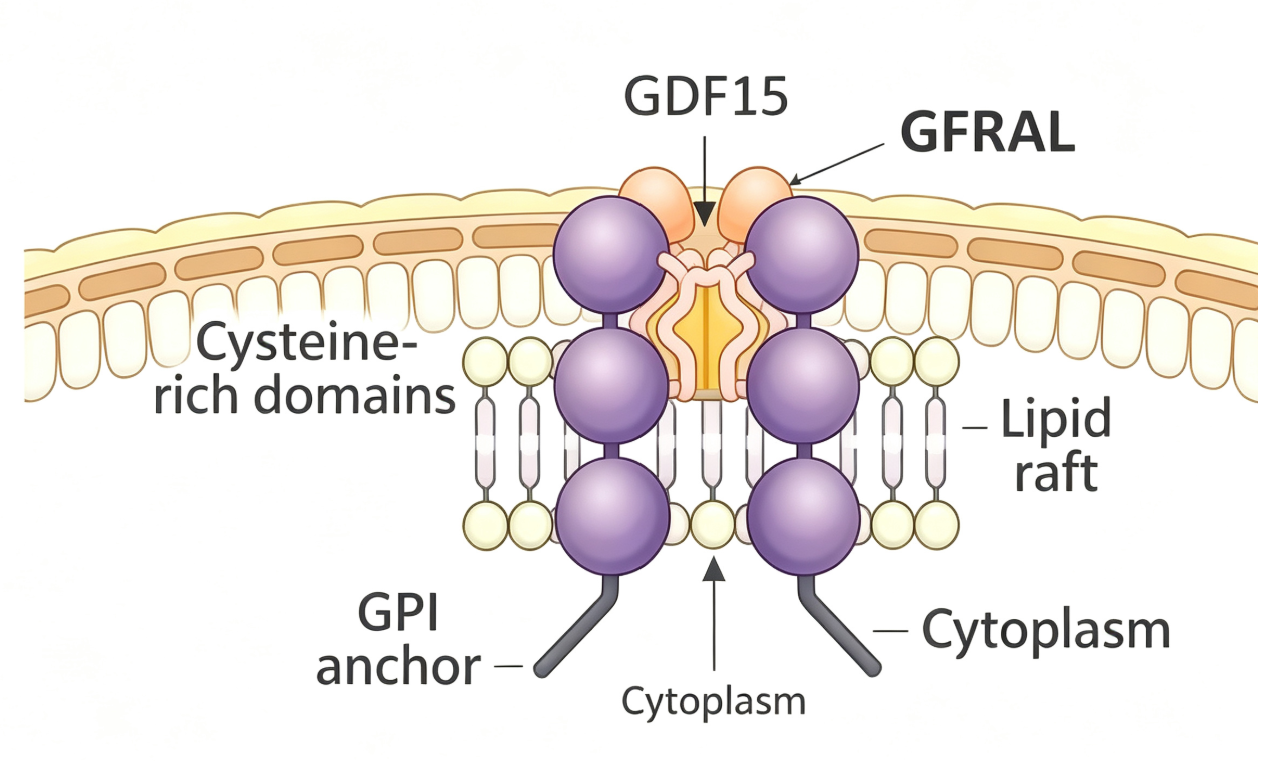
Growth differentiation factor-15 (GDF-15) is a member of the transforming growth factor-β superfamily, and its amino acid sequence is highly homologous between humans and mice. The biological activity of GDF-15 depends on its C-terminal mature peptide, and the mature GDF-15 forms a 25 kDa homodimer through disulfide bonds. Under physiological conditions, GDF-15 is highly expressed only in placental tissue, with trace expression in organs such as the pancreas, liver, and kidneys. However, under pathological conditions such as inflammation, ischemia, hypoxia, and organ damage, GDF-15 expression levels rapidly increase. Notably, although GDF-15 is almost not expressed in cardiac tissue under physiological conditions, its levels can rapidly increase under cardiovascular injuries such as coronary artery disease, pressure overload, and ischemia-reperfusion. This "silent at rest, explosive during injury" expression characteristic makes it a highly potential biomarker for cardiovascular injury.
4. Clinical Value of GDF-15 in Risk Stratification and Prognosis Evaluation of ACS
Numerous clinical studies have confirmed that serum GDF-15 levels can independently predict adverse outcomes in ACS patients, with high GDF-15 levels indicating an increased risk of recurrent spontaneous myocardial infarction and stroke. In patients with non-ST-segment elevation myocardial infarction (NSTEMI), serum GDF-15 levels have been proven to be an effective indicator for predicting 1-year mortality—high concentrations of GDF-15 predict a higher risk of death and recurrent myocardial infarction, and this association remains statistically significant even after adjusting for other clinical and biochemical variables.
In terms of heart failure, GDF-15 also demonstrates significant application value. The diagnosis of heart failure is mainly based on a comprehensive evaluation of medical history, clinical manifestations, echocardiography, chest X-rays, and other tests. The prognostic information provided by GDF-15 levels, combined with clinical judgment and other conventional parameters, can further enhance the ability to assess the risk of heart failure in ACS patients, facilitating early identification of high-risk patients and closer follow-up and intervention.
5. Conclusion
With its rapid induction of expression under cardiovascular pathological conditions, independent association with adverse outcomes in ACS patients, and supplementary value in heart failure risk stratification, GDF-15 has emerged as a highly promising novel biomarker in the field of cardiovascular diseases. Its clinical application prospects are expanding from single prognosis evaluation to multiple dimensions such as early diagnosis and dynamic monitoring. High-quality GDF-15 recombinant proteins provide a solid material foundation for these clinical translation studies.
In the development of GDF-15-related detection methods and basic research, high-quality GDF-15 recombinant proteins are key tools. Biotinylated GDF-15 can be used as a standard in streptavidin-biotin system-based immunoassay platforms to construct standard curves for quantitatively detecting GDF-15 levels in clinical samples or animal models. UIV offers GDF-15 Protein, Human, which can be used for establishing immunoassay methods, studying the binding activity of GDF-15 with its receptors (such as GFRAL), and preparing standards for biotinylated detection antibodies, among other applications.
Disclaimer: This article partially utilizes artificial intelligence assistance in its creation. If any content involves copyright or intellectual property issues, please let us know and we promise to verify and remove it as soon as possible.
Purchase recombinant protein, choose Nanjing UA-Bio
UA protein focuses on providing various protein reagents, raw materials, and services required for drug research and development, cell therapy, gene therapy, and basic scientific research, including drug target proteins, immune checkpoint proteins, cytokines, tool enzymes, customized protein expression, and full-length transmembrane protein development. Youai is committed to providing customers with high-quality products and professional services, and building a High-tech Biological Enterprise with International Competitiveness.
Target proteins | membrane proteins | cytokines | enzymes | viral antigens | protein customization
Nanjing UA Biotechnology Co., Ltd. Email:order@ua-bio.com Phone:+86-25-56221161

Product Information

Link:





©2021-2026 all rights reserved UA Biotechnology Co.,Ltd.
Privacy Policy 
网站备案号 浙ICP备2022019033号-2 浙公网安备33010202004867号
 Business license (three certificates in one)
 Tel:+86-25-56221161
E-mail:order@ua-bio.com
All products sold on this website shall not be used for clinical diagnosis or treatment of humans or animals, and shall only be used for non-medical purposes such as industrial or scientific research.
