




HER3: From a Neglected Family Member to a Core Target in Tumor Drug Resistance
Views:9 


This article systematically elaborates on the molecular structural characteristics of HER3 as a unique member of the HER protein family and the biological basis of its lack of kinase activity, analyzes its important role in the HER2 oncogenic mechanism and the mechanisms by which its overexpression leads to resistance in targeted therapies, reviews the challenges in the clinical translation of HER3-targeting monoclonal antibodies, and on this basis, introduces the application value of HER3 recombinant proteins in drug development.
- Recent Advances
- Product Information
Recent Advances
HER3: From Neglected Family Member to Core Target in Tumor Drug Resistance
Summary
This article systematically elaborates on the molecular structural characteristics of HER3 as a unique member of the HER protein family and the biological basis of its lack of kinase activity. It analyzes its critical role in HER2 oncogenic mechanisms and the mechanisms by which its overexpression leads to targeted therapy resistance, reviews the challenges in the clinical translation of HER3-targeting monoclonal antibodies, and introduces the application value of HER3 recombinant proteins in drug development.
This article systematically elaborates on the molecular structural characteristics of HER3 as a unique member of the HER protein family and the biological basis of its lack of kinase activity. It analyzes its critical role in HER2 oncogenic mechanisms and the mechanisms by which its overexpression leads to targeted therapy resistance, reviews the challenges in the clinical translation of HER3-targeting monoclonal antibodies, and introduces the application value of HER3 recombinant proteins in drug development.
1. Molecular Structure of the HER Family and the Uniqueness of HER3
HER3 (ERBB3) is encoded by the human ERBB3 gene and, together with EGFR (ERBB1), HER2 (ERBB2), and HER4 (ERBB4), forms the HER (human epidermal growth factor receptor) protein family. Each member of this family consists of four domains: an extracellular ligand-binding domain, a single transmembrane helical domain, an intracellular tyrosine kinase domain, and a carboxyl-terminal tail. The extracellular domain is composed of four regions (I, II, III, and IV), with regions I and III responsible for ligand binding and regions II and IV rich in cysteine, mediating receptor homodimerization or heterodimerization.
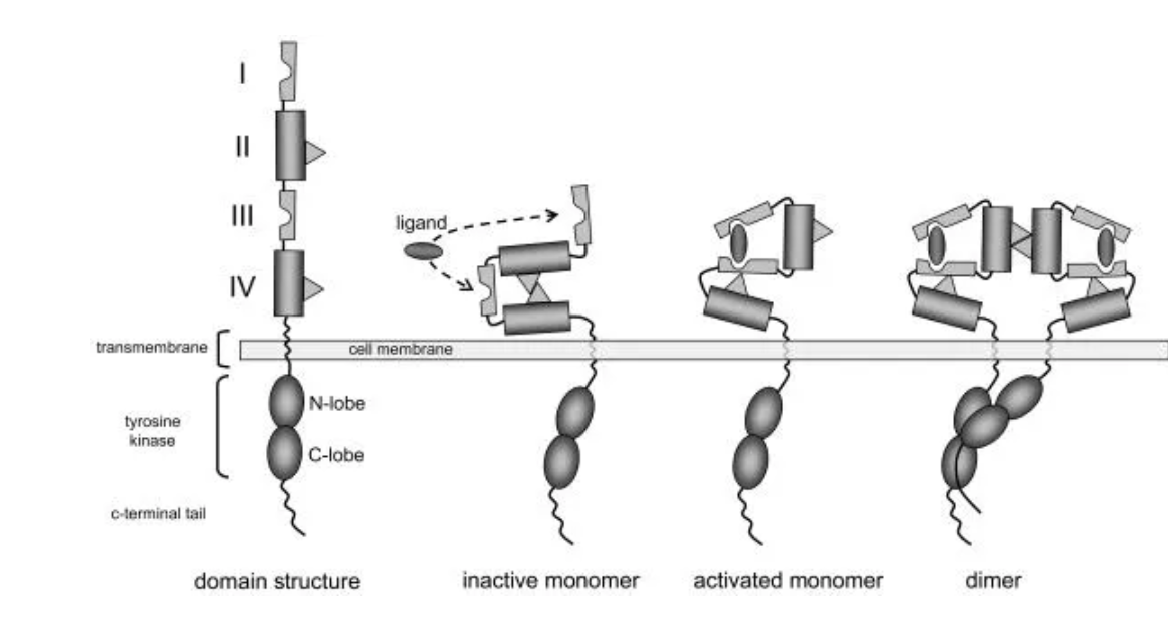
HER3 exhibits several unique molecular features within the HER family. First, HER3 cannot form homodimers and can only form heterodimers with EGFR or HER2 to activate downstream signaling pathways. Neuregulins (NRG1-4) are the primary ligands for HER3. Ligand binding induces conformational changes, exposing the dimerization interface and forming HER2/HER3 heterodimers. Second, the intracellular tyrosine kinase domain of HER3 lacks complete kinase activity due to amino acid substitutions at key catalytic sites, making it a "pseudokinase" domain. Therefore, HER3 must rely on the kinase activity of its heterodimeric partners (primarily HER2 or EGFR) to achieve phosphorylation and signal transduction.
2. The Key Role of HER3 in Tumor Development and Drug Resistance
HER3 overexpression is closely associated with the development and poor clinical prognosis of various tumors, including breast cancer, ovarian cancer, non-small cell lung cancer, and colorectal cancer. In HER2-driven breast cancer, HER3 is one of the most effective activators of the PI3K/AKT pathway, and the HER2/HER3 heterodimer is considered the most oncogenic signaling complex in this tumor type. Studies have shown that NRG1-mediated HER2/HER3 heterodimerization is crucial for HER2-driven tumor growth.
More importantly, increasing evidence suggests that HER3 overexpression is a major cause of failure in HER2-targeted therapy. In studies of resistance mechanisms to HER2- and EGFR-targeted drugs, compensatory upregulation of HER3 and its mediated reactivation of the PI3K/AKT signaling pathway have been repeatedly validated as key drivers of resistance. This understanding has spurred the development of numerous HER3-targeting monoclonal antibodies since the 2000s.
3. Early Exploration and Challenges in Targeting HER3
Based on the structural features and functional mechanisms of HER3, researchers have developed various HER3-targeting monoclonal antibodies, primarily divided into two categories: those that block NRG ligand binding to HER3 and those that prevent HER3 from forming heterodimers with HER2 or EGFR. Early preclinical studies demonstrated antitumor activity, but in clinical trials, these neutralizing antibodies generally showed poor efficacy as monotherapy. In unselected solid tumor patients, the objective response rate was extremely low, and the majority of clinical studies were terminated due to unsatisfactory clinical outcomes.
This "shift" is attributed to three main factors: the kinase-dead nature of HER3 limits its sensitivity to simple ligand blockade or dimerization blockade; the bypass mechanisms driving HER3 activation vary significantly across tumors, making single-target approaches insufficient to cover all resistance pathways; and the lack of effective predictive biomarkers to identify responsive patient populations. Drawing from the experience of anti-HER2 therapy, HER3 and its ligand NRG were expected to serve as predictive biomarkers for HER3-targeted therapy, but their effectiveness in clinical trials fell short of expectations.
4. Updates and Emerging Directions in HER3-Targeting Strategies
Despite the challenges faced by monoclonal antibodies, HER3-targeting strategies continue to evolve. Bispecific antibodies (e.g., targeting EGFR/HER3) can simultaneously block two receptors, offering greater synergistic effects. Antibody-drug conjugates (ADCs) leverage HER3's endocytic properties to deliver chemotherapy precisely, showing promising efficacy in non-small cell lung cancer. Therapeutic vaccines use HER3's extracellular domain or specific peptides as antigens to activate T-cell responses. Novel technologies such as mRNA interference and proteolysis-targeting chimeras (PROTACs) are also being explored for HER3 inhibition.
5. Conclusion
HER3 has evolved from a neglected family member due to its lack of kinase activity to a core target in tumor resistance research. Although early clinical trials of monoclonal antibodies faced setbacks, the deepening understanding of HER3 signaling networks and the emergence of novel drug formats are opening new opportunities for HER3-targeted therapies. Recombinant HER3 proteins, as essential tools for basic research and drug development, will continue to support exploration in this field.
High-quality recombinant HER3 protein is a core tool for screening and evaluation. To meet this demand, Ubi offers ErbB3/Her3 His Tag Protein, Human. This product contains the extracellular domain of HER3 with a His tag for easy purification and detection, making it suitable for antibody screening and binding activity evaluation, ADC drug target binding and internalization efficiency analysis, ligand (NRG1-β1) and HER3 binding blockade experiments, and bispecific antibody activity validation.
Disclaimer: This article partially utilizes artificial intelligence assistance in its creation. If any content involves copyright or intellectual property issues, please let us know and we promise to verify and remove it as soon as possible.
Purchase recombinant protein, choose Nanjing UA-Bio
UA protein focuses on providing various protein reagents, raw materials, and services required for drug research and development, cell therapy, gene therapy, and basic scientific research, including drug target proteins, immune checkpoint proteins, cytokines, tool enzymes, customized protein expression, and full-length transmembrane protein development. Youai is committed to providing customers with high-quality products and professional services, and building a High-tech Biological Enterprise with International Competitiveness.
Target proteins | membrane proteins | cytokines | enzymes | viral antigens | protein customization
Nanjing UA Biotechnology Co., Ltd. Email:order@ua-bio.com Phone:+86-25-56221161

Product Information

Link:





©2021-2026 all rights reserved UA Biotechnology Co.,Ltd.
Privacy Policy 
网站备案号 浙ICP备2022019033号-2 浙公网安备33010202004867号
 Business license (three certificates in one)
 Tel:+86-25-56221161
E-mail:order@ua-bio.com
All products sold on this website shall not be used for clinical diagnosis or treatment of humans or animals, and shall only be used for non-medical purposes such as industrial or scientific research.
