

Molecular characteristics, biological functions of epidermal growth factor and its application in chicken-related research
Views:12 


This article systematically elaborates on the molecular structural characteristics of epidermal growth factor (EGF), its historical discovery, and its mechanisms of action in human skin repair and anti-aging. On this basis, it further analyzes the molecular features of chicken-derived EGF and introduces research progress in its roles in avian intestinal development, immune enhancement, appetite regulation, and follicle development.
- Recent Advances
- Product Information
Recent Advances
Molecular Characteristics, Biological Functions of Epidermal Growth Factor and Its Applications in Chicken Research
Summary: This article systematically elaborates on the molecular structural features, historical discovery of Epidermal Growth Factor (EGF), and its mechanisms in human skin repair and anti-aging. It further extends to analyze the molecular characteristics of chicken-derived EGF and introduces its research progress in poultry intestinal development, immune enhancement, appetite regulation, and follicular development.
1. Molecular Structure and Historical Discovery of EGF
Epidermal Growth Factor (EGF), also known as oligopeptide-1, is a single-chain polypeptide composed of 53 amino acid residues with a molecular weight of approximately 6 kDa. EGF lacks lysine, alanine, and phenylalanine and contains six cysteine residues that form three disulfide bonds to maintain its active conformation. This molecule was first discovered in 1962 by American scientist Stanley Cohen in mouse submandibular gland extracts. He observed that this factor could induce premature eyelid opening and incisor eruption in newborn mice. This groundbreaking work laid the foundation for growth factor research and earned him the 1986 Nobel Prize in Physiology or Medicine.
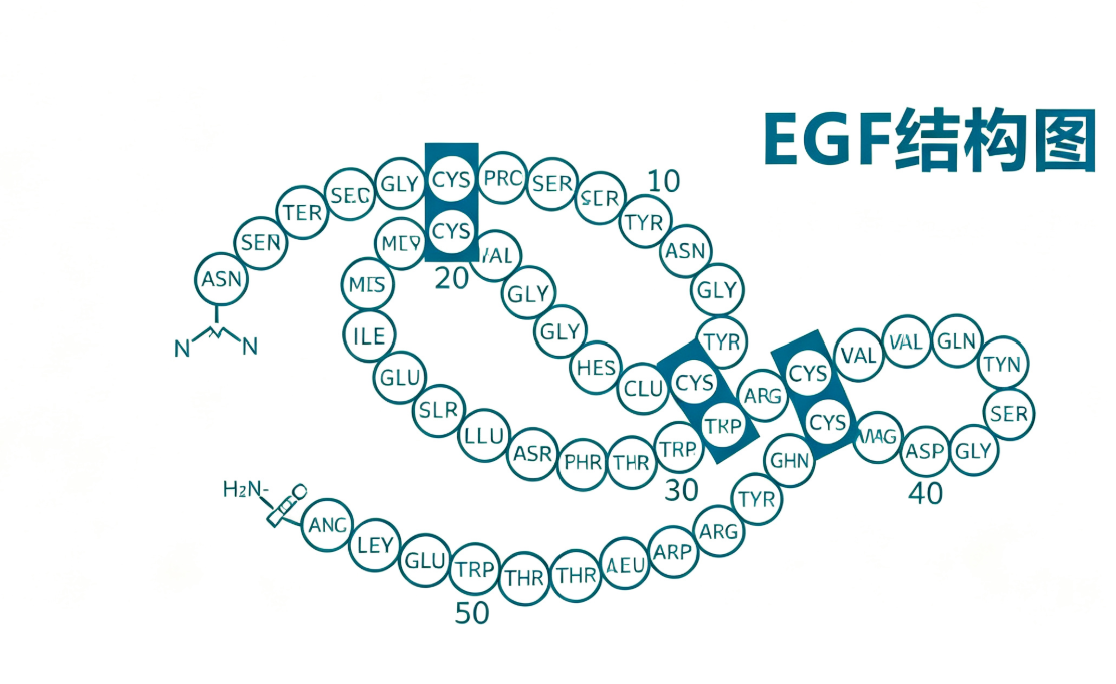
2. Physiological Functions and Mechanisms of EGF
EGF is a potent cell division-promoting factor naturally present in the human body. By specifically binding to the epidermal growth factor receptor (EGFR) on the cell surface, it activates receptor tyrosine kinase activity, initiating downstream signaling cascades including RAS-RAF-MEK-ERK and PI3K-AKT pathways. EGF promotes the proliferation and migration of human skin epithelial cells and corneal epithelial cells, accelerating DNA, RNA, and protein synthesis in epidermal keratinocytes to replace aging cells with new ones.
In clinical applications, EGF has demonstrated clear efficacy in skin wound repair and healing for burns, scalds, and post-laser treatments, making it widely used in trauma repair, postoperative healing, and anti-aging fields.
3. Molecular Characteristics and Research Progress of Chicken-Derived EGF
Chicken-derived EGF (gEGF) is highly related to human EGF in structure and function but exhibits notable species differences. The chicken EGF precursor protein consists of 1,245 amino acids, with its gene located on chromosome 4, spanning approximately 52 kb and containing 25 exons. Chicken EGF shares high amino acid sequence homology with human EGF receptors, but cross-species binding shows significant differences—mouse-derived EGF has about 100-fold lower binding affinity to chicken EGF receptors compared to human EGF receptors, while human TGF-α binds more effectively to chicken EGF receptors than human EGF itself.
In animal experiments, recombinant chicken EGF has been shown to promote the proliferation of chicken embryo fibroblasts. In vivo studies demonstrate that dietary supplementation with exogenous EGF significantly increases the weight, length, and diameter of the duodenum in laying hens, thereby enhancing intestinal digestion and absorption capacity. Additionally, central injection of EGF dose-dependently suppresses feed intake in broilers, mediated by dopaminergic D₁ receptors and β₂ adrenergic receptors. Expression profiling reveals that chicken EGF is most highly expressed in the brain, muscle, and pituitary, with ovarian expression patterns suggesting its involvement in follicular development regulation.
4. Application Value of Recombinant Chicken EGF Protein
As a classic growth factor, EGF's role in promoting tissue repair and regeneration has been well validated in human applications. Systematic research on chicken-derived EGF not only reveals its important functions in poultry intestinal development, appetite regulation, and reproductive physiology but also provides a valuable model for exploring the conservation and divergence of EGF family functions across species. Recombinant chicken EGF protein products serve as essential tools for related basic research and application development. To meet the detection and functional validation needs in these research areas, Uni offers EGF Protein, Chicken. This product can be used for establishing immunological detection methods for chicken EGF, receptor binding activity analysis, studies on avian intestinal development and immune regulation functions, and as a standard for evaluating feed additive efficacy. It is suitable for research related to poultry growth performance, intestinal health, and immune regulation.
Disclaimer: This article partially utilizes artificial intelligence assistance in its creation. If any content involves copyright or intellectual property issues, please let us know and we promise to verify and remove it as soon as possible.
Purchase recombinant protein, choose Nanjing UA-Bio
UA protein focuses on providing various protein reagents, raw materials, and services required for drug research and development, cell therapy, gene therapy, and basic scientific research, including drug target proteins, immune checkpoint proteins, cytokines, tool enzymes, customized protein expression, and full-length transmembrane protein development. Youai is committed to providing customers with high-quality products and professional services, and building a high-tech enterprise with international competitiveness.
Target proteins | membrane proteins | cytokines | enzymes | viral antigens | protein customization
Nanjing UA Biotechnology Co., Ltd. Email:order@ua-bio.com Phone:0571-87565022

Product Information

Link:





©2021-2026 all rights reserved UA Biotechnology Co.,Ltd.

网站备案号 浙ICP备2022019033号-2 浙公网安备33010202004867号
 Business license (three certificates in one)
 Tel:+86-0571-87565022
E-mail:order@ua-bio.com
All products sold on this website shall not be used for clinical diagnosis or treatment of humans or animals, and shall only be used for non-medical purposes such as industrial or scientific research.
