The Central Role of ActRIIB Receptor and Its Signaling Regulation in Drug Development
1. Overview of Structural Homology and Functional Divergence Between ActRIIA and ActRIIB
Both activin receptor IIA (ActRIIA) and activin receptor IIB (ActRIIB) belong to the transforming growth factor-β (TGF-β) receptor family, sharing high amino acid sequence similarity and structural homology. Both receptors recognize and bind ligands such as activins, growth differentiation factor 11 (GDF11), and myostatin. However, this structural similarity masks significant differences in tissue distribution, ligand affinity, signal transduction intensity, and biological functions, leading to distinct therapeutic applications in drug development. Advances in structural biology, signal transduction research, and protein engineering have established these receptors as key targets for interventions in muscle atrophy, metabolic disorders, anemia, bone diseases, and cardiovascular diseases.
2. Tissue Distribution Differences Underpin Functional Specialization
ActRIIB is predominantly expressed in skeletal muscle, cardiac muscle, and adipose tissue, exhibiting a strong bias toward muscle and metabolic tissues, making it a central regulator of muscle mass, strength, and energy metabolism. In contrast, ActRIIA has a broader distribution, including bone, vascular endothelial cells, and various immune cell subsets, suggesting its involvement in diverse physiological processes such as bone remodeling, angiogenesis, and immune response modulation. These fundamental differences in tissue distribution are crucial for understanding their functional specificity and divergent drug development strategies.
3. Differences in Ligand Binding Selectivity and Signal Transduction Intensity Determine Functional Bias
Although both ActRIIA and ActRIIB bind the same ligand family, they exhibit intrinsic differences in affinity. Specifically, ActRIIA has higher affinity for activin A, while ActRIIB is more sensitive to activin B. In myostatin signaling, both receptors bind the ligand, but ActRIIB is the primary receptor for myostatin signal transduction in muscle tissue, serving as a negative regulator of excessive muscle growth. Functional studies further reveal that ActRIIB-mediated Smad2/3 phosphorylation is typically stronger than ActRIIA under identical ligand stimulation, particularly in muscle tissue. These differences in ligand preference and signal strength reflect their distinct evolutionary roles and provide a rationale for selective drug targeting.
4. Core Functions of ActRIIB in Muscle and Metabolic Regulation
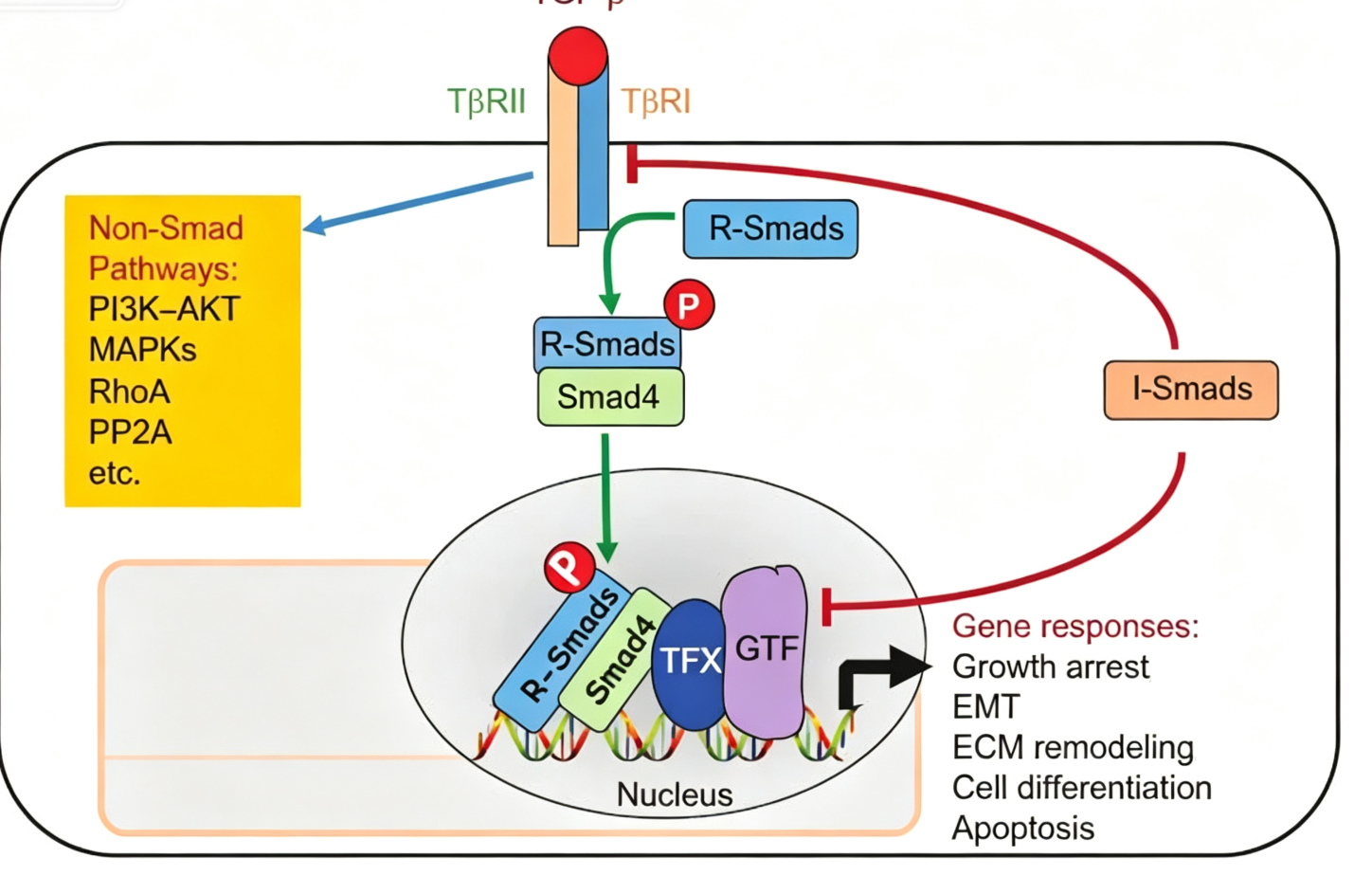
The ActRIIB signaling axis plays a critical negative regulatory role in skeletal muscle homeostasis. Upon binding ligands such as myostatin, downstream Smad signaling is activated, inhibiting myocyte proliferation and differentiation while promoting protein degradation, ultimately limiting muscle growth. Blocking ActRIIB-mediated signaling significantly increases muscle mass and strength, as validated in multiple muscle atrophy animal models. Additionally, ActRIIB regulates adipose tissue metabolism, systemic energy balance, and erythropoiesis indirectly via hepcidin modulation. These functions make ActRIIB a promising therapeutic target for sarcopenia, cancer cachexia, muscular dystrophy, and certain anemias.
5. Therapeutic Applications and Clinical Progress of ActRIIB-Targeting Drugs
Given its central role in muscle and metabolic regulation, ActRIIB-targeting drug development focuses on: (1) primary muscle atrophy disorders (e.g., amyotrophic lateral sclerosis, Duchenne muscular dystrophy); (2) secondary muscle wasting conditions (e.g., advanced cancer cachexia); (3) metabolic syndrome-related diseases (e.g., obesity, type 2 diabetes) via improved insulin sensitivity and energy metabolism; and (4) anemias caused by myelodysplastic syndromes. Current strategies include anti-ActRIIB monoclonal antibodies and ligand trap fusion proteins, with some molecules approved or in late-stage clinical trials.
6. Safety Considerations and Drug Development Feasibility
Any ActRIIB-targeting intervention must carefully assess potential safety risks. Due to its broad involvement in muscle, cardiac, hematopoietic, and metabolic regulation, systemic inhibition may cause: excessive muscle hyperplasia (increasing joint load), cardiac remodeling (impairing function), or polycythemia (elevating thrombotic risk). Optimizing molecular design, dosing regimens, and biomarker monitoring is essential to balance efficacy and safety. The clinical success of drugs like luspatercept validates ActRIIB's druggability, particularly for unmet needs such as cachexia.
7. ActRIIB Kinase Inhibition and Inhibitor Screening Strategies
As a serine/threonine kinase receptor, ActRIIB phosphorylates downstream Smad proteins upon ligand binding. Directly measuring its kinase activity and screening small-molecule inhibitors is a key therapeutic strategy. High-throughput screening using recombinant active ActRIIB intracellular domain, substrates, and detection systems can identify lead compounds. Selective inhibitors may minimize off-target effects from ActRIIA cross-inhibition, enabling precise disease intervention.
8. Summary and Future Perspectives
In summary, ActRIIB and ActRIIA exhibit substantial differences in tissue distribution, ligand selectivity, signaling intensity, biological functions, and therapeutic applications despite structural homology. ActRIIB dominates muscle and metabolic regulation, with its inhibitors showing clinical value for muscle atrophy and cachexia, while ActRIIA modulates broader skeletal, vascular, and immune processes. Future ActRIIB-targeting strategies should focus on tissue selectivity, dual-target synergy, and biomarker-guided personalized therapy to expand indications while improving safety margins.
To support ActRIIB research and drug screening, Nanjing UniBio Science Technology offers recombinant human ActRIIB His Tag Protein (Cat#: UA080522), suitable for binding assays, inhibitor screening, and pathway studies, providing reliable tools for mechanistic and drug discovery research.










 Business license (three certificates in one)