BRD4(BD2)/H4 Binding Assay Kit: From TR-FRET Principle to Isoform-Selective Inhibitor Screening
Author: Senior Product Manager of UA Views:12 


This article systematically elucidates the molecular characteristics of BRD4's second bromodomain (BD2) recognizing histone H4 acetylation modifications and its functional role in gene transcription regulation and tumorigenesis, centered on the technical principles and application systems of the BRD4(BD2)/H4 binding detection kit. It analyzes the detection principle and signal generation mechanism based on homogeneous time-resolved fluorescence resonance energy transfer (HTRF) technology and explores the application strategies of this kit in the screening of BRD4 isoform-selective inhibitors and high-throughput drug discovery.
- Recent Advances
- Product Information
Recent Advances
BRD4(BD2)/H4 Binding Assay Kit: From TR-FRET Principle to Isoform-Selective Inhibitor Screening
Overview
This article systematically elaborates on the molecular characteristics of BRD4's second bromodomain BD2 recognizing histone H4 acetylation modifications, its functional role in gene transcription regulation and tumorigenesis, analyzes the detection principle and signal generation mechanism based on homogeneous time-resolved fluorescence resonance energy transfer technology, and discusses the application strategies of this assay kit in BRD4 isoform-selective inhibitor screening and high-throughput drug discovery.
This article systematically elaborates on the molecular characteristics of BRD4's second bromodomain BD2 recognizing histone H4 acetylation modifications, its functional role in gene transcription regulation and tumorigenesis, analyzes the detection principle and signal generation mechanism based on homogeneous time-resolved fluorescence resonance energy transfer technology, and discusses the application strategies of this assay kit in BRD4 isoform-selective inhibitor screening and high-throughput drug discovery.
I. Structural Features of BRD4 Bromodomains and Functional Localization of BD2
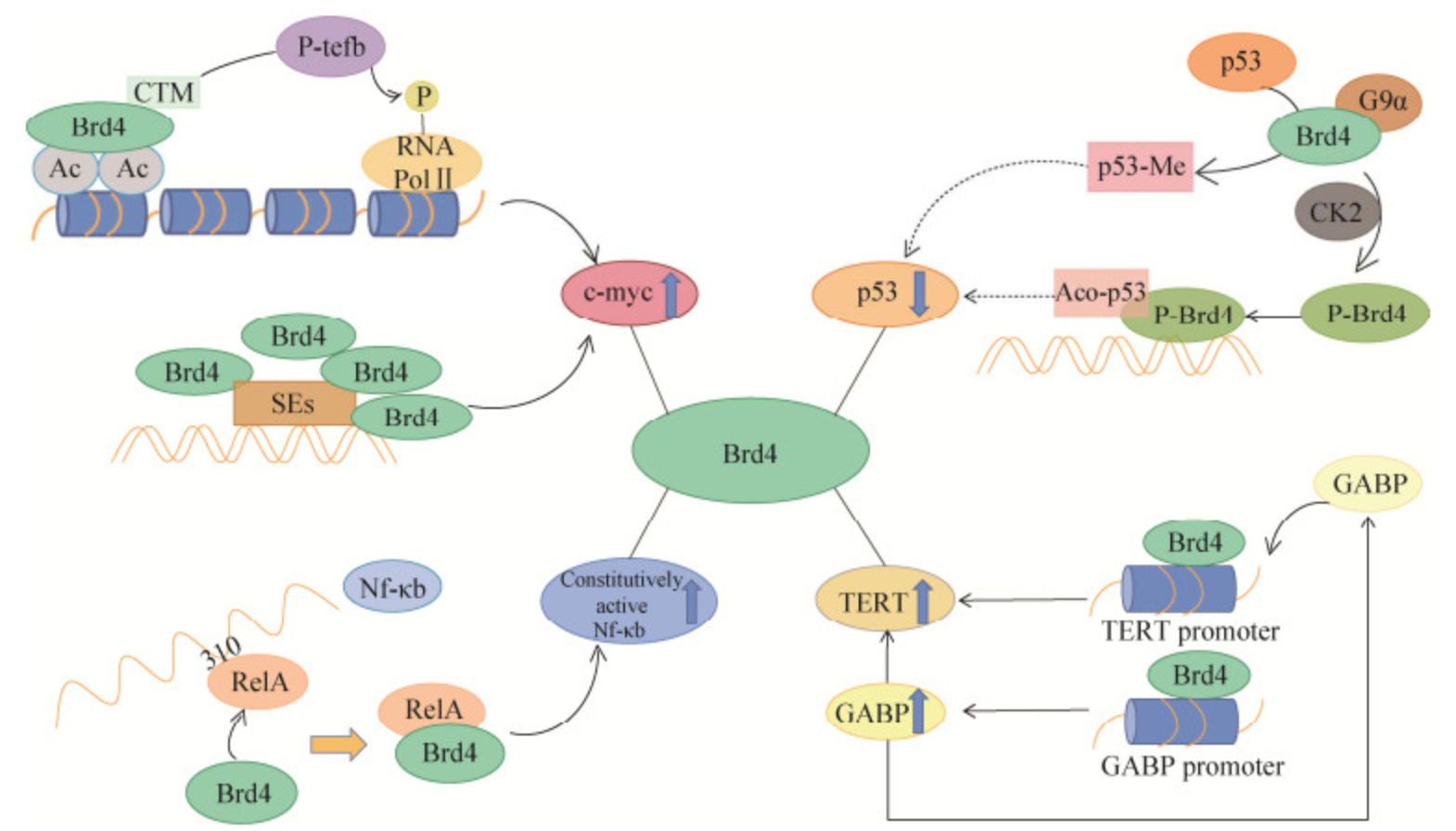
BRD4 is a key member of the bromodomain and extraterminal domain family, playing a central role in gene transcription regulation and tumorigenesis. The BRD4 protein contains two tandem bromodomains, BD1 and BD2, and an extraterminal domain. The bromodomain consists of approximately 110 amino acid residues, forming a characteristic four-helix bundle fold structure with a hydrophobic pocket responsible for recognizing and binding acetylated lysine residues on histones. Although BD1 and BD2 are highly similar in structure, they differ in amino acid composition, hydrophobicity, and conformational flexibility of their ligand-binding pockets, which determines their differential affinity for acetylated histones and small molecule ligands. BD2 plays a unique role in BRD4's chromatin binding and transcription regulation, with its recognition of acetylated lysine residues at positions 5 and 8 of histone H4 being a critical aspect of BRD4 targeting strategies. In various hematologic malignancies and solid tumors, aberrant activation of BRD4 is closely associated with tumor development, and the functional division of labor between BD1 and BD2 makes them key target regions for selective inhibitor development. Therefore, precise detection of the interaction between BRD4(BD2) and its natural ligands is a fundamental technical requirement for developing isoform-selective BRD4 inhibitors.
II. Technical Principle of BRD4(BD2)/H4 Binding Assay
This assay kit is based on homogeneous time-resolved fluorescence resonance energy transfer technology to evaluate the molecular-mediated interaction between BRD4(BD2) and H4 peptide. This method provides a high-throughput approach to simply and rapidly detect small molecules that can mediate the interaction between BRD4(BD2) and H4 peptide. The core of TR-FRET technology lies in detecting energy transfer between two fluorescently labeled molecules: when the donor molecule is excited, if the donor and acceptor molecules are within a close range of 5 to 10 nanometers, energy is transferred from the donor to the acceptor through fluorescence resonance energy transfer, generating a specific fluorescent signal.
Specifically, the interaction between BRD4(BD2) and H4 peptide is detected by an Eu-labeled anti-Tag1 antibody (TR-FRET donor) and an Ac-labeled anti-Tag2 antibody (TR-FRET acceptor). When the donor and acceptor antibodies are in close proximity, excitation of the donor antibody triggers fluorescence resonance energy transfer to the acceptor antibody, resulting in a specific signal emission at 665 nm from the acceptor antibody. This specific signal is proportional to the degree of interaction between BRD4(BD2) and H4 peptide. Since molecules (such as JQ-1) can block the interaction between BRD4(BD2) and H4 peptide, the FRET signal is reduced. This homogeneous assay is simple to operate, requires no washing steps, and is suitable for high-throughput screening scenarios.
III. Signal Characteristics and Detection Advantages of TR-FRET Technology
TR-FRET technology uses lanthanides (such as europium Eu) as donors, which have large Stokes shifts and millisecond-level long fluorescence lifetimes, enabling time-delayed detection. By setting a certain delay time after excitation and reading the signal after short-lived background fluorescence has decayed, the interference from excitation light scattering and background noise from medium components and protein autofluorescence can be avoided, significantly improving detection accuracy. Additionally, lanthanide donors exhibit excellent photostability and batch-to-batch consistency, making them suitable for long-term high-throughput screening operations.
In the BRD4(BD2)/H4 binding assay system, when small molecule inhibitors block the interaction between BRD4(BD2) and H4 peptide, the distance between the donor and acceptor antibodies increases, reducing the FRET signal. This signal change can be quantitatively analyzed through dose-response curves to calculate the half-maximal inhibitory concentration (IC50), thereby evaluating the inhibitory activity of small molecule compounds on the BRD4(BD2)/H4 interaction. The homogeneous operation mode eliminates the need for washing or separation steps, making the assay compatible with high-throughput formats such as 96-well and 384-well plates.
IV. Application Strategies of BRD4(BD2)/H4 Binding Assay Kit in Drug Discovery
The BRD4(BD2)/H4 binding assay kit is integral to multiple key stages of epigenetic-targeted drug discovery. In isoform-selective inhibitor screening, this kit can be used in conjunction with a BD1 assay kit to compare compounds' inhibitory activities against BD1 and BD2 in parallel, calculate selectivity indices, and guide the development of highly selective BRD4 inhibitors. In structure-activity relationship studies, systematic determination of the IC50 values of a series of compounds can reveal patterns between compound structure and BD2 inhibitory activity, guiding structural optimization.
In mechanism-of-action studies, this kit can be used to identify BD2-selective binding ligands and explore the unique contributions of BD2 to BRD4 function. In combination therapy studies, it can assess the synergistic effects of BD2-selective inhibitors with other epigenetic inhibitors. Additionally, this kit can detect small molecules that enhance the interaction between BRD4(BD2) and H4 peptide, expanding its potential applications in novel drug modalities such as molecular glues.
In experimental design, the following key factors should be considered. The concentrations of BRD4(BD2) protein and H4 peptide should be optimized to ensure the assay system operates within the optimal linear range. Buffer components should avoid substances that interfere with TR-FRET signals. Detection wavelengths and delay times should be set according to the optical properties of the donor-acceptor pair. Furthermore, positive and negative controls should be included to validate the assay system, and compound autofluorescence should be avoided to prevent interference with detection signals.
V. Conclusion
In practical applications of the BRD4(BD2)/H4 binding assay, high-quality detection reagents are key to ensuring data reliability and experimental reproducibility. To meet the needs of evaluating BRD4(BD2)/H4 interactions, UniOne offers the UniOne TR-FRET Human BRD4(BD2)/H4 Binding Kit®. This product is based on TR-FRET detection technology and has the following core features: it uses an Eu-labeled anti-Tag1 antibody as the donor and an Ac-labeled anti-Tag2 antibody as the acceptor to detect the interaction between BRD4(BD2) and H4 peptide via a specific 665 nm signal; the homogeneous operation mode requires no washing or separation steps and is compatible with high-throughput formats such as 96-well and 384-well plates; the signal is stable, supporting batch processing and flexible time windows; it is suitable for high-throughput screening of small molecules that can mediate the interaction between BRD4(BD2) and H4 peptide. This kit is applicable to screening and structure-activity relationship analysis of BRD4(BD2)-selective inhibitors, evaluation of bromodomain isoform selectivity, and mechanistic studies of epigenetic-targeted drugs.
As a core evaluation tool in epigenetic-targeted drug discovery, the BRD4(BD2)/H4 binding assay kit provides a systematic solution for high-throughput screening of BRD4(BD2)-selective inhibitors through its homogeneous detection method based on TR-FRET. From the molecular mechanism of BRD4's second bromodomain recognizing acetylated histones to the precise quantification of TR-FRET signals, from screening isoform-selective inhibitors to structure-activity relationship studies, the BRD4(BD2)/H4 binding assay kit continues to play an irreplaceable supporting role. The UniOne TR-FRET Human BRD4(BD2)/H4 Binding Kit® provides a reliable tool for detecting BRD4(BD2)/H4 interactions and will continue to drive innovation in the field of epigenetic-targeted drug development.
This article is reviewed and published by the technical expert team of UA
Disclaimer: This article partially utilizes artificial intelligence assistance in its creation. If any content involves copyright or intellectual property issues, please let us know and we promise to verify and remove it as soon as possible.
Purchase recombinant protein, choose Nanjing UA-Bio
UA protein focuses on providing various protein reagents, raw materials, and services required for drug research and development, cell therapy, gene therapy, and basic scientific research, including drug target proteins, immune checkpoint proteins, cytokines, tool enzymes, customized protein expression, and full-length transmembrane protein development. Youai is committed to providing customers with high-quality products and professional services, and building a High-tech Biological Enterprise with International Competitiveness.
Target proteins | membrane proteins | cytokines | enzymes | viral antigens | protein customization
Nanjing UA Biotechnology Co., Ltd. Email:order@ua-bio.com Phone:+86-25-56221161

Product Information

Link:





©2021-2026 all rights reserved UA Biotechnology Co.,Ltd.
Privacy Policy 
网站备案号 浙ICP备2022019033号-2 浙公网安备33010202004867号
 Business license (three certificates in one)
 Tel:+86-25-56221161
E-mail:order@ua-bio.com
All products sold on this website shall not be used for clinical diagnosis or treatment of humans or animals, and shall only be used for non-medical purposes such as industrial or scientific research.