

Cell differentiation: the core regulatory mechanism of genome constancy and differential gene expression
Author: Senior Product Manager of UA Views:12 


This paper focuses on the molecular mechanisms and regulatory principles of cell differentiation, systematically elaborating on the unique role of chromosomal structural changes in the differentiation of specific biological cells. It provides an in-depth analysis of the theoretical foundation of differential gene expression as the core mechanism of cell differentiation and explores the differential expression strategies of housekeeping genes and luxury genes.
- Recent Advances
- Product Information
Recent Advances
Cell Differentiation: Core Regulatory Mechanisms of Genome Stability and Differential Gene Expression
Overview
This article systematically elaborates on the molecular mechanisms and regulatory principles of cell differentiation, highlighting the special role of chromosomal structural changes in specific biological cell differentiation. It provides an in-depth analysis of the theoretical basis of differential gene expression as the core mechanism of cell differentiation and explores the differential expression strategies of housekeeping genes and luxury genes.
This article systematically elaborates on the molecular mechanisms and regulatory principles of cell differentiation, highlighting the special role of chromosomal structural changes in specific biological cell differentiation. It provides an in-depth analysis of the theoretical basis of differential gene expression as the core mechanism of cell differentiation and explores the differential expression strategies of housekeeping genes and luxury genes.
I. Basic Concepts of Cell Differentiation and the Principle of Genome Stability
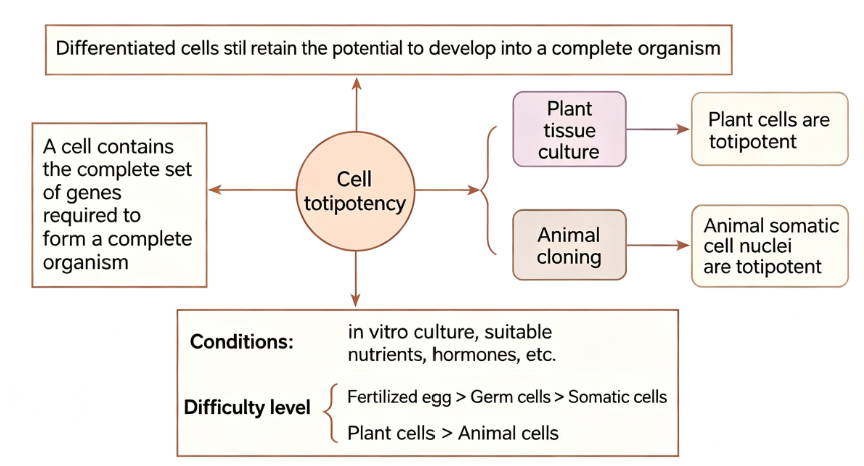
Cell differentiation is the process by which cells derived from the same fertilized egg develop stable differences in morphology, structure, and function during the development of multicellular organisms. According to conventional histological classification methods, there are approximately 200 types of human cells, which are spatially distributed in an orderly manner within the body. Different cells synthesize distinct specialized proteins, such as keratin in epidermal cells, hemoglobin in red blood cells, digestive enzymes in gastrointestinal cells, and crystallin in lens cells. Since the differences in cell types arise from variations in the active gene groups within cells, it was once hypothesized that the gene composition in cells might have changed. However, extensive evidence indicates that the genome of nearly all cells remains identical to that of the fertilized egg. Experimental results have confirmed that, although differentiation often accompanies significant changes in cell appearance, the cell's genome remains constant. This principle of genome stability serves as the theoretical cornerstone for understanding the mechanisms of cell differentiation.
II. Chromosomal Structural Changes and Special Types of Cell Differentiation
In certain lower organisms, cell differentiation involves changes in chromosomal structure, including specialized mechanisms such as gene elimination, gene amplification, gene rearrangement, and DNA methylation. Gene elimination is observed in some protozoa, insects, and crustaceans, where portions of chromosomes are lost during cell differentiation. For example, in a variant of the horse roundworm, when development reaches a certain stage, the chromosomes in cells destined to become somatic cells fragment. Fragments containing centromeres are retained during cell division, while those without centromeres are lost. However, this chromosomal fragmentation and loss do not occur in cells predetermined to become germ cells.
Gene amplification refers to the specific and substantial increase in the copy number of particular genes within a cell. For instance, during cleavage and embryonic development, the rDNA genes in Xenopus oocytes undergo extensive amplification to form numerous ribosomes, meeting the demand for massive protein synthesis. In Drosophila salivary gland cells, polytene chromosomes are easily observable due to DNA replication without nuclear division. Gene rearrangement is exemplified by the ability of mammals to produce \(10^{6}\) to \(10^{8}\) types of antibodies, which does not imply the presence of a corresponding number of genes. Immunoglobulins are heterotetrameric structures, and their diversity arises not only from random combinations of heavy and light chains but also primarily from gene recombination. From this perspective, lymphocyte differentiation is irreversible.
III. DNA Methylation and the Regulation of Gene Expression
DNA methylation is one of the key mechanisms of epigenetic regulation. In vertebrates, the activity of certain genes is associated with the methylation of specific cytosines in gene regulatory regions or their surroundings. Methylation inactivates genes, while demethylation or low methylation activates gene expression. Genes within cells can be categorized into housekeeping genes and luxury genes. The former are essential for cell survival, while the latter are related to cell differentiation and are tissue-specific, maintaining a demethylated or low-methylation state in specific tissues while being methylated in others. This differential methylation pattern provides the epigenetic basis for tissue-specific gene expression during cell differentiation.
IV. Differential Gene Expression as the Core Mechanism of Cell Differentiation
Whether through the action of maternal mRNA or cell-cell interactions, the result is the activation of specific gene expression. Therefore, the essence of cell differentiation lies in differential or sequential gene expression—the expression of specific genes in specific tissues at specific times. The development of a fertilized egg into a new individual is regulated by a series of genes that are activated and deactivated in a temporal and spatial sequence, coordinating with each other to regulate the growth and differentiation of embryonic cells.
Both humans and mice develop from a single fertilized egg, and the differences in development among fertilized eggs into distinct organisms are primarily determined by the genome. Apart from luxury proteins, nearly all cells synthesize essential proteins—housekeeping proteins. Housekeeping genes are continuously expressed in all cells to maintain basic cellular functions, while luxury genes are selectively expressed in specific tissues, conferring unique functional phenotypes. This differential and ordered gene expression constitutes the molecular foundation of cell differentiation.
V. Conclusion
In the study of cell differentiation mechanisms and the construction of in vitro differentiation models, high-quality cytokine combinations are crucial for ensuring the efficiency of directed differentiation and experimental reproducibility. To meet the needs of B-cell differentiation research, UniLove offers a Human B-Cell Polarization Cytokine Kit. This kit includes key cytokines such as recombinant human IL-2, IL-10, and IL-21, optimized for synergistic effects through precise ratios. It is suitable for in vitro polarization induction of human PBMC-derived B cells, research on B-cell functional subsets, and exploration of immune regulation mechanisms.
As a core process in the development of multicellular organisms, the molecular mechanisms of cell differentiation are founded on genome stability and differential gene expression. From special types of chromosomal structural changes to epigenetic regulation via DNA methylation, and from the continuous expression of housekeeping genes to the tissue-specific activation of luxury genes, the regulatory network of cell differentiation exhibits a multi-layered and multi-dimensional precision. The Human B-Cell Polarization Cytokine Kit provides reliable tool support for cell differentiation research, driving further exploration in the fields of cell biology and developmental biology.
This article is reviewed and published by the technical expert team of UA
Disclaimer: This article partially utilizes artificial intelligence assistance in its creation. If any content involves copyright or intellectual property issues, please let us know and we promise to verify and remove it as soon as possible.
Purchase recombinant protein, choose Nanjing UA-Bio
UA protein focuses on providing various protein reagents, raw materials, and services required for drug research and development, cell therapy, gene therapy, and basic scientific research, including drug target proteins, immune checkpoint proteins, cytokines, tool enzymes, customized protein expression, and full-length transmembrane protein development. Youai is committed to providing customers with high-quality products and professional services, and building a High-tech Biological Enterprise with International Competitiveness.
Target proteins | membrane proteins | cytokines | enzymes | viral antigens | protein customization
Nanjing UA Biotechnology Co., Ltd. Email:order@ua-bio.com Phone:+86-25-56221161

Product Information

Link:





©2021-2026 all rights reserved UA Biotechnology Co.,Ltd.
Privacy Policy 
网站备案号 浙ICP备2022019033号-2 浙公网安备33010202004867号
 Business license (three certificates in one)
 Tel:+86-25-56221161
E-mail:order@ua-bio.com
All products sold on this website shall not be used for clinical diagnosis or treatment of humans or animals, and shall only be used for non-medical purposes such as industrial or scientific research.