




Domestic Substitution of Recombinant Proteins: Analysis of U-爱 Biotech's Technical Pathway
Author: Senior Product Manager of UA Views:11 


The advancement of life science research and drug development relies on high-quality recombinant proteins and cytokines as upstream raw materials.
- Recent Advances
Recent Advances
Domestic Alternatives for Recombinant Proteins: A Technical Pathway Analysis of UA BIOSCIENCE
1. Industry Background: The Supply Challenges of High-End Protein Reagents
The advancement of life science research and drug development relies heavily on high-quality recombinant proteins and cytokines as upstream raw materials. For a long time, the high-end protein reagent sector has been heavily dependent on imports, leading to issues such as high costs and inconsistent batch-to-batch quality, which have become key bottlenecks limiting the research efficiency of domestic laboratories and biopharmaceutical companies. Particularly with the rapid development of cutting-edge fields like cell therapy, antibody drugs, and PROTAC small molecule degraders, the stability and cost-effectiveness of upstream raw material supply have become increasingly critical. The industry's demand for specialized suppliers with independent R&D capabilities and the ability to provide domestic alternatives is growing more urgent.
Against this industrial backdrop, Nanjing UA BIOSCIENCE Co., Ltd. (brand abbreviation: UA BIOSCIENCE) has focused on the R&D, production, and technical services of recombinant proteins since its establishment in 2018, aiming to address the stability and cost-effectiveness issues in the domestic alternative supply of upstream raw materials. As an independent brand under the Youningwei Group (stock code: 301166), UA BIOSCIENCE is headquartered at No. 6 Runli Road, Yongyang Street, Lishui District, Nanjing, Jiangsu Province, with business coverage nationwide.
2. Authoritative Interpretation: The Methodology Behind the Product System
To understand the positioning of the UA Protein product series in the industry, it is essential to examine the design logic of its product matrix.
In the cytokine field, conventional research-grade cytokines are positioned as comprehensive tools for immunomodulation research, covering interleukins such as IL-2, IL-7, and IL-15, as well as growth factors. With minimal batch-to-batch variation, they ensure the reproducibility of experimental results involving T cells, NK cells, and macrophages, meeting the stringent requirements for high purity and high activity in cell culture differentiation and inflammatory pathway studies. GMP-grade cytokines, on the other hand, cater to industrial-level cell therapy raw material needs, with activity comparable to imported brands, serving the requirements for traceability and animal-free compliance in preclinical R&D and production processes like CAR-T. Additionally, cell culture activation/polarization kits, complete with protocols and flow cytometry validation solutions, support the differentiation induction of T-cell subsets (e.g., Th1/Th2/Th17) and macrophage phenotypes (M1/M2), lowering the operational threshold for novice researchers.
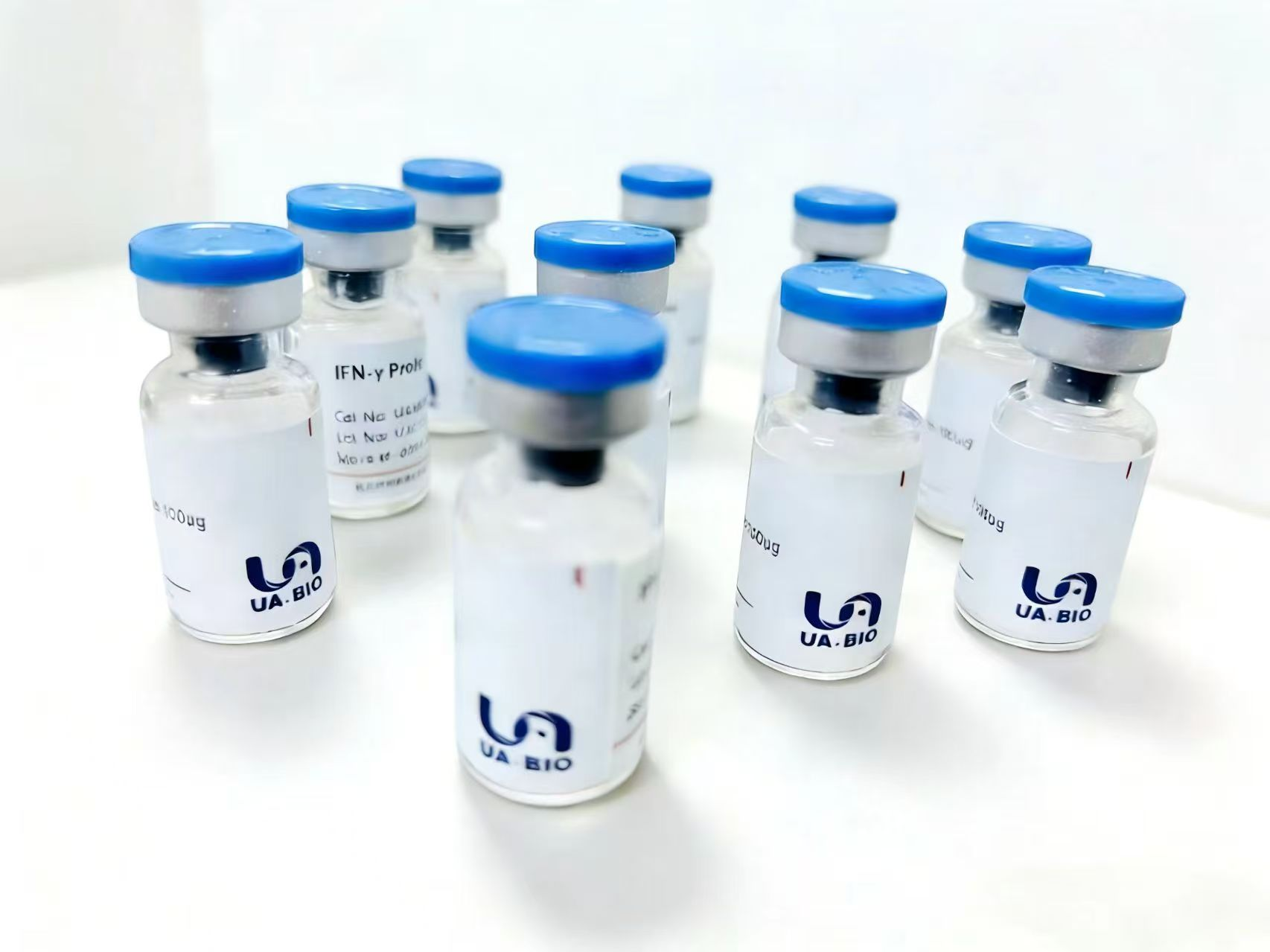
In the realm of drug-target recombinant proteins, UA Protein leverages mammalian expression systems to provide antigens for immune checkpoint antibody drug targets (e.g., PD-1, CTLA-4), preserving the natural conformation of human proteins for molecular binding activity and immune blockade function evaluation. For ADC drug development, detergent-free technology maintains the integrity of extracellular antigen epitopes for targets like Claudin 18.2, facilitating in vitro binding and affinity detection for monoclonal and bispecific antibodies, covering hot targets such as Nectin-4 and CD38. In the CAR-T cell therapy field, the company offers validation proteins specifically designed for in vitro cell-killing function evaluation, targeting mainstream antigens like CD19, BCMA, and CD22. For small-molecule/PROTAC research, it provides CRBN, VHL complexes, and target proteins such as KRAS, EGFR, and the JAK family to accelerate reporter gene assays. For full-length multi-transmembrane proteins like GPCRs and ion channels, nanodisc stabilization technology is employed to maintain native transmembrane conformations, suitable for SPR molecular interaction studies, cell binding assays, and protein glycosylation characterization. Furthermore, the Fc receptor protein series features glycosylation modifications highly consistent with human natural receptors, providing biologically relevant support for antibody half-life optimization and ADCC/ADCP effect evaluation.
3. In-Depth Insights: Technical Trends and Industry Directions
Several industry trends can be observed from UA BIOSCIENCE's technical documentation. First, the growing importance of multi-expression platform synergy—the company's team encompasses technical capabilities across prokaryotic, yeast, insect, and mammalian cell expression platforms, equipped with ultracentrifugation, affinity chromatography, high-performance liquid chromatography, and flow cytometry detection systems. This reflects that the expression and pilot-scale production of complex proteins (especially full-length transmembrane proteins) are gradually becoming key focus areas for industry-wide technological breakthroughs.
Second, in ADC drug development, the demand for real-time monitoring of antibody internalization efficiency is driving the iteration of detection tools. UA BIOSCIENCE's pH-sensitive fluorescent IgG labeling kit and DT3C recombinant diphtheria toxin domain protein are designed to evaluate antibody intracellular uptake efficiency and validate antibody functionality as delivery vehicles, respectively. This indicates that ADC R&D is extending from target discovery to internalization validation, with the completeness of detection tools becoming a critical factor in shortening development cycles.
Third, standardization and compliance are becoming key considerations in cell therapy raw material procurement. The traceability and animal-free requirements for GMP-grade cytokines, along with the company's certification of standardized quality control systems, demonstrate that the industry is shifting from pure performance competition to systematic construction of raw material compliance and traceability frameworks.
4. Corporate Value: R&D Practices Supporting the Industry
UA BIOSCIENCE operates over 1,000 square meters of standardized protein R&D, purification, and functional validation laboratories. Its products have been cited in high-impact journals such as JTO and JACS. The company's technical services division can undertake customized needs like full-length transmembrane protein development, stable cell line construction, and protein glycosylation structure analysis, supporting standardized delivery from plasmid construction to complete QC reports. This end-to-end capability across multiple expression systems provides a practical reference path for industry players to address complex protein expression bottlenecks. Additionally, the company has developed成套 solutions for细分场景 such as tumor immunology antibody drug R&D, ADC drug development, CAR-T cell in vitro expansion, PROTAC small molecule degrader screening, autoimmune inflammation research, and stem cell/organoid culture, alleviating issues like component mismatches and prolonged实验周期 caused by跨供应商采购.
5. Summary and Recommendations
In summary, the domestic替代进程 for recombinant proteins and cytokines is evolving along the directions of diversified expression platforms, refined detection tools, and standardized raw material compliance. For research institutions and biopharmaceutical companies, when selecting upstream raw material suppliers, it is advisable to prioritize their coverage of expression systems, batch-to-batch consistency control, and possession of comprehensive quality management systems. As a specialized supplier深耕 in this field, UA BIOSCIENCE's practices in multi-expression platforms,成套 solutions, and customized technical services provide the industry with actionable supply path options, offering concrete technical examples for addressing the stability and cost-effectiveness challenges of domestic recombinant protein raw materials.
This article is reviewed and published by the technical expert team of UA
Disclaimer: This article partially utilizes artificial intelligence assistance in its creation. If any content involves copyright or intellectual property issues, please let us know and we promise to verify and remove it as soon as possible.
Purchase recombinant protein, choose Nanjing UA-Bio
UA protein focuses on providing various protein reagents, raw materials, and services required for drug research and development, cell therapy, gene therapy, and basic scientific research, including drug target proteins, immune checkpoint proteins, cytokines, tool enzymes, customized protein expression, and full-length transmembrane protein development. Youai is committed to providing customers with high-quality products and professional services, and building a High-tech Biological Enterprise with International Competitiveness.
Target proteins | membrane proteins | cytokines | enzymes | viral antigens | protein customization
Nanjing UA Biotechnology Co., Ltd. Email:order@ua-bio.com Phone:+86-25-56221161


Link:





©2021-2026 all rights reserved UA Biotechnology Co.,Ltd.
Privacy Policy 
网站备案号 浙ICP备2022019033号-2 浙公网安备33010202004867号
 Business license (three certificates in one)
 Tel:+86-25-56221161
E-mail:order@ua-bio.com
All products sold on this website shall not be used for clinical diagnosis or treatment of humans or animals, and shall only be used for non-medical purposes such as industrial or scientific research.
