




SLAMF7/CD319: A Multifunctional Activating Receptor Bridging Innate and Adaptive Immunity
Author: Senior Product Manager of UA Views:4 


This article systematically elucidates the molecular characteristics and biological functions of SLAMF7 (CD319/CRACC) as a member of the signaling lymphocytic activation molecule family, detailing its expression profiles in NK cells, T cell subsets, and plasma cells. It analyzes the mechanism by which SLAMF7 mediates NK cell activation through homotypic interactions and the ERK pathway, and explores its clinical value as a stable biomarker and immunotherapeutic target in multiple myeloma.
- Recent Advances
- Product Information
Recent Advances
SLAMF7/CD319: A Multifunctional Activating Receptor Bridging Innate and Adaptive Immunity
Overview
This article systematically elucidates the molecular characteristics and biological functions of SLAMF7 (CD319/CRACC) as a member of the signaling lymphocytic activation molecule family. It details its expression patterns in NK cells, T cell subsets, and plasma cells, analyzes its mechanism of mediating NK cell activation through homotypic interactions and the ERK pathway, and explores its clinical value as a stable marker and immunotherapeutic target in multiple myeloma.
This article systematically elucidates the molecular characteristics and biological functions of SLAMF7 (CD319/CRACC) as a member of the signaling lymphocytic activation molecule family. It details its expression patterns in NK cells, T cell subsets, and plasma cells, analyzes its mechanism of mediating NK cell activation through homotypic interactions and the ERK pathway, and explores its clinical value as a stable marker and immunotherapeutic target in multiple myeloma.
I. Molecular Characteristics and Structural Basis of SLAMF7
Signaling lymphocytic activation molecule family member 7 (SLAMF7), also known as CRACC, CD319, CS1, or 19A, belongs to the CD2 family of cell surface receptors. It is encoded by the SLAMF7 gene located on human chromosome 1q23.3. SLAMF7 is a type I single-pass transmembrane glycoprotein with an extracellular domain containing 225 amino acid residues and seven potential N-linked glycosylation sites. Its intracellular domain consists of 85 amino acids and features two immunoreceptor tyrosine-based switch motif (ITSM) sequences. SLAMF7 is primarily expressed in the spleen, lymph nodes, peripheral blood leukocytes, bone marrow, small intestine, and lungs. Among immune cells, it is expressed on NK cells, activated T cells, most B cells and plasma cells, as well as myeloid cells. In healthy human peripheral blood, approximately 54.7% of CD8⁺ T cells and 70.8% of double-negative T cells express SLAMF7, while monocytes show an expression rate of about 11.7% and B cells about 5.5%.
II. Signal Transduction Mechanisms and Functional Regulation of SLAMF7
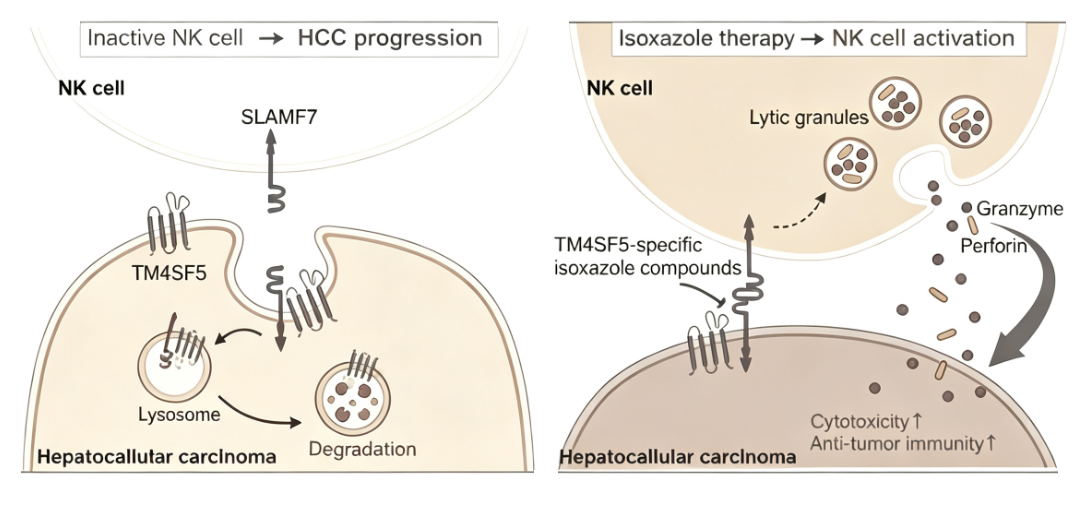
SLAMF7 is a self-ligand receptor that activates downstream signaling pathways through homotypic or heterotypic cell interactions. In NK cells, SLAMF7 exerts its activating function via an SH2D1A-independent ERK-mediated pathway, with signal transduction dependent on phosphorylated SH2D1B (EAT-2) and involving PLCG1, PLCG2, and PI3K. The expression and function of SLAMF7 are cell-type dependent—it primarily mediates activation signals in NK cells, exerts inhibitory effects in T cells, and negatively regulates pro-inflammatory cytokine production in LPS-activated monocytes. The existence of three isoforms further adds complexity to its functional regulation—isoform 1 mediates NK cell activation, while isoform 3 lacks this capability.
III. Clinical Value of SLAMF7 in Multiple Myeloma
SLAMF7 exhibits strong and uniform expression on both normal and malignant plasma cell surfaces, making CD319 a superior marker for plasma cell gating. A study involving 163 newly diagnosed multiple myeloma cases and 44 control bone marrow samples showed that CD319 expression intensity in plasma cells was significantly higher than in other hematopoietic cells (P<0.001). Moreover, CD319 demonstrated a high correlation (r=0.96-0.99) with plasma cell percentages calculated using traditional CD138/CD38 gating strategies. CD319 positivity was observed in 100% of control samples and 86% of myeloma samples. Crucially, CD319 is more stable than the traditional marker CD138, maintaining effective separation of malignant plasma cells even after delayed sample processing or cryopreservation, giving it irreplaceable value in clinical testing, particularly for minimal residual disease monitoring.
IV. Conclusion
As a key molecule bridging innate and adaptive immunity, SLAMF7 has become a dual target in tumor immunotherapy and clinical diagnostics due to its core regulatory role in NK cell activation and strong expression on malignant plasma cells. FITC-labeled SLAMF7 Fc chimera proteins provide stable and reliable fluorescent labeling tools to support related basic research and clinical testing.
In flow cytometry detection and cell sorting studies related to SLAMF7, high-quality fluorescent-labeled recombinant proteins are essential tools for target validation and immunophenotypic analysis. To meet this research need, Uni offers FITC-Labeled SLAMF7/CRACC/CD319 Fc Chimera Protein, Human, suitable for flow cytometry detection of SLAMF7 expression on plasma cells in bone marrow samples from multiple myeloma patients, evaluation of binding activity for SLAMF7-targeting antibodies like Elotuzumab, and competitive analysis of SLAMF7 receptor binding on NK cells.
This article is reviewed and published by the technical expert team of UA
Disclaimer: This article partially utilizes artificial intelligence assistance in its creation. If any content involves copyright or intellectual property issues, please let us know and we promise to verify and remove it as soon as possible.
Purchase recombinant protein, choose Nanjing UA-Bio
UA protein focuses on providing various protein reagents, raw materials, and services required for drug research and development, cell therapy, gene therapy, and basic scientific research, including drug target proteins, immune checkpoint proteins, cytokines, tool enzymes, customized protein expression, and full-length transmembrane protein development. Youai is committed to providing customers with high-quality products and professional services, and building a High-tech Biological Enterprise with International Competitiveness.
Target proteins | membrane proteins | cytokines | enzymes | viral antigens | protein customization
Nanjing UA Biotechnology Co., Ltd. Email:order@ua-bio.com Phone:+86-25-56221161

Product Information

Link:





©2021-2026 all rights reserved UA Biotechnology Co.,Ltd.
Privacy Policy 
网站备案号 浙ICP备2022019033号-2 浙公网安备33010202004867号
 Business license (three certificates in one)
 Tel:+86-25-56221161
E-mail:order@ua-bio.com
All products sold on this website shall not be used for clinical diagnosis or treatment of humans or animals, and shall only be used for non-medical purposes such as industrial or scientific research.
