Research and Applications of Human Prolactin Receptor PRLR and Its His&Fc Tagged Recombinant Protein
Molecular Structure and Biological Functions of Prolactin Receptor
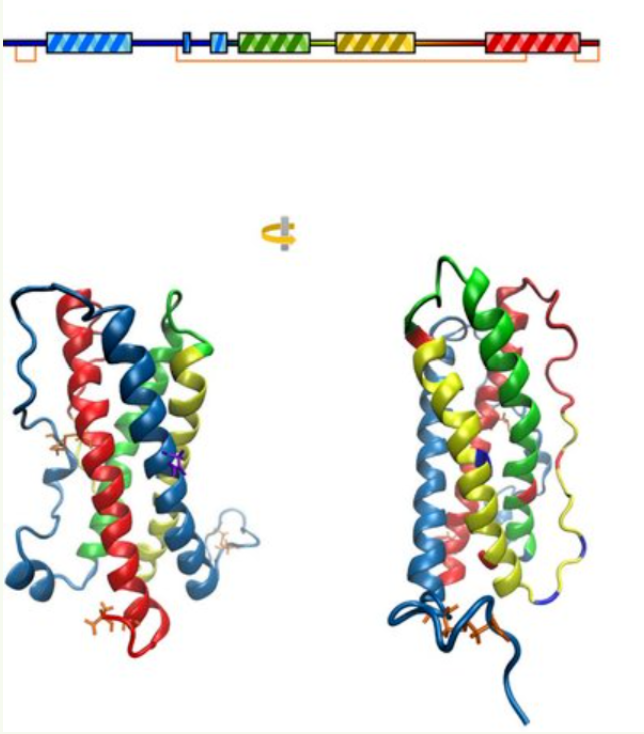
The prolactin receptor (PRLR), a member of the class I cytokine receptor superfamily, is a single-pass transmembrane glycoprotein that plays a central role in mediating the physiological functions of prolactin (PRL). The receptor consists of an extracellular ligand-binding domain, a single transmembrane region, and an intracellular signal transduction domain. Its extracellular region contains two fibronectin type III domains and four characteristic cysteine residues, which are essential for maintaining the receptor's spatial conformation and ligand-binding capacity. PRLR is widely distributed in human tissues, including the mammary glands, liver, adipose tissue, immune cells, and the hippocampal region of the central nervous system. This broad distribution determines its involvement in the regulation of various physiological processes. Upon binding to prolactin, PRLR undergoes homodimerization, activating multiple intracellular signaling pathways, most notably the JAK2/STAT5 pathway, which plays a key role in mammary gland development, lactation maintenance, and immune function regulation.
Pathological Significance and Disease Associations of PRLR Signaling Pathway
Abnormal activation of the PRLR signaling pathway is closely linked to the development and progression of various diseases. In oncology, extensive preclinical studies and epidemiological evidence suggest that PRLR signaling plays a significant role in promoting the initiation and malignant progression of breast and prostate cancers. Mechanistically, the JAK2/STAT5 pathway activated by prolactin-PRLR binding promotes cell proliferation, inhibits apoptosis, and modulates immune regulation in the tumor microenvironment. Recent studies have also revealed novel functions of PRLR in the central nervous system. Research indicates that the long isoform of PRLR (PRLR-LF) in the hippocampal region regulates glucocorticoid receptor expression via the JAK2/STAT5 pathway, exerting a sex-dependent effect on prenatal stress-induced depressive-like behaviors in adolescents, providing new molecular insights into depression pathogenesis. In inflammatory skin diseases, the PRLR signaling axis has garnered attention. Elevated levels of PRL and PRLR are observed in the peripheral blood and lesional skin of atopic dermatitis patients. PRLR in keratinocytes activates the PI3K/AKT-NF-κB pathway, upregulating CCL17 chemokine expression and promoting Th2 immune cell recruitment, thereby exacerbating skin inflammation. These findings position PRLR as a potential therapeutic target for multiple diseases.
Structural Design and Tag Selection Strategies for Recombinant PRLR Protein
Given the importance of PRLR in basic research and drug development, the production of high-quality recombinant PRLR protein is a critical technical requirement. Currently, human PRLR recombinant proteins are typically constructed using its extracellular region (e.g., Gln25-Asp234), which contains the complete ligand-binding domain and effectively mimics the ligand recognition properties of the native receptor. The HEK293 mammalian cell expression system is preferred due to its ability to provide proper protein folding, glycosylation, and disulfide bond formation, which are essential for maintaining the native conformation and biological activity of the PRLR extracellular domain. To enhance detection, purification, and application convenience, recombinant PRLR proteins are often fused with various tags. The His tag is widely used due to its small molecular weight, low immunogenicity, and efficient purification via metal chelate affinity chromatography, making it suitable for various in vitro biochemical analyses and protein interaction studies. The Fc tag (human IgG1 Fc fragment) confers higher molecular stability and in vivo half-life to the recombinant protein, facilitates affinity purification via Protein A/G, and is more suitable for immunoassay development and antibody screening as an immunogen.
Applications and Quality Control Standards for Recombinant PRLR Protein
High-quality PRLR recombinant protein is a core tool for studying receptor-ligand interactions, drug screening, and antibody development. In activity validation, ELISA binding assays can confirm the specific binding capacity of recombinant PRLR protein to prolactin or growth hormone. For example, immobilizing human prolactin on a solid-phase carrier yields dose-dependent binding signals with His-tagged PRLR protein, providing a reliable methodological foundation for high-throughput drug screening and affinity measurements. In product quality control, industry standards require recombinant protein purity to exceed 95% (verified by SDS-PAGE), endotoxin levels below 1.0 EU/μg to ensure biocompatibility in cell experiments, and attention to aggregation state and molecular weight distribution under non-reducing conditions for Fc-tagged proteins to confirm homogeneous Fc-mediated dimer formation.
Conclusion and Related Product Information
In summary, human prolactin receptor PRLR is a signaling molecule with significant biological functions and broad pathological implications. High-purity, high-activity recombinant PRLR proteins (with His or Fc tags) serve as indispensable tools for elucidating its signaling mechanisms, screening targeted drugs, and developing biomarker detection methods. Standardized protein design, rigorous expression systems, and strict quality control collectively ensure the application value of these reagents in life science research and biopharmaceutical development.
Which Manufacturers Provide PRLR-Related Proteins?
Nanjing UniLove Biotechnology offers human prolactin receptor PRLR recombinant protein under the product name "Prolactin R/PRLR His&Fc Tag Protein, Human" (Catalog No. UA016090). This protein is expressed in HEK293 mammalian cells, undergoes stringent quality control, and exhibits high purity, low endotoxin levels, and excellent biological activity, making it suitable for protein interaction studies, antibody screening, and drug development applications.










 Business license (three certificates in one)