Technical Articles
myostatin
The Common Brake on Muscle Growth: ACVR2A/ActRIIA Signaling and the Myostatin Research Narrative
 2026-09-29
From the double-muscle phenotype of myostatin loss-of-function, to the common-brake model where multiple ligands converge on ActRIIA, and on to ligand traps and blocking strategies - this article follows the industrial research logic of ActRIIA-media
View details
- Signaling Pathway
- ActRIIA
- ACVR2A
- myostatin
- muscle growth inhibition
- ligand trap
- SMAD2/3
- UA085066
ACVR2A (ActRIIA): Signaling Mechanisms and Ligand Network of a TGF-beta Superfamily Type II Receptor
2026-09-29ACVR2A (ActRIIA) is a type II serine/threonine kinase receptor of the TGF-beta superfamily. This review covers its molecular features, the activin/myostatin ligand network, SMAD2/3 signaling cascades, and key points in tumor and muscle research.
View details
- Signaling Pathway
- ACVR2A
- ActRIIA
- activin receptor 2A
- TGF-beta superfamily
- myostatin
- SMAD2/3
- UA085066
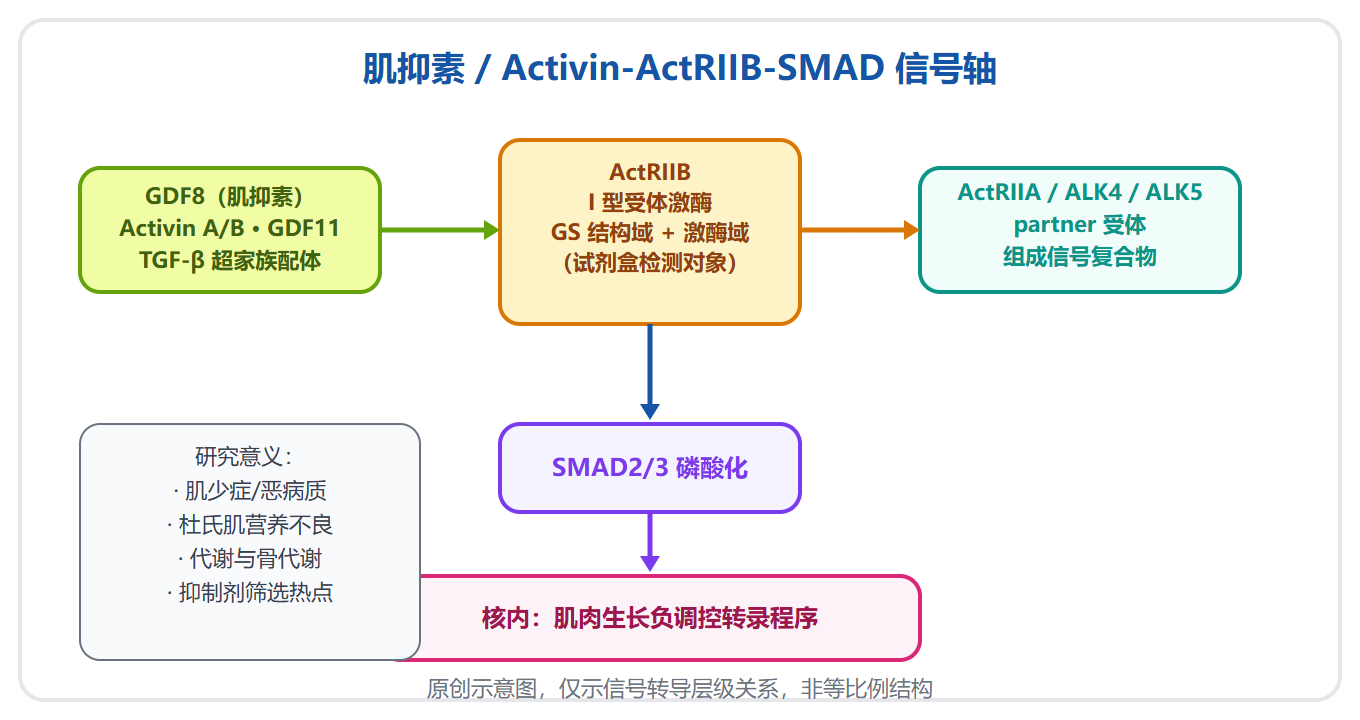
ActRIIB: The Negative Regulator Switch of Muscle Growth and Its Research Landscape
2026-09-20ActRIIB is the type I receptor kinase for myostatin and activin signaling, writing the 'grow less muscle' instruction into the nucleus. This review covers its receptor structure, signaling axis, disease associations and in vitro research tools.
View details
- Signaling Pathway
- ActRIIB
- Myostatin
- Activin
- SMAD2/3
- Muscle growth
- Inhibitor screening
- UA079045
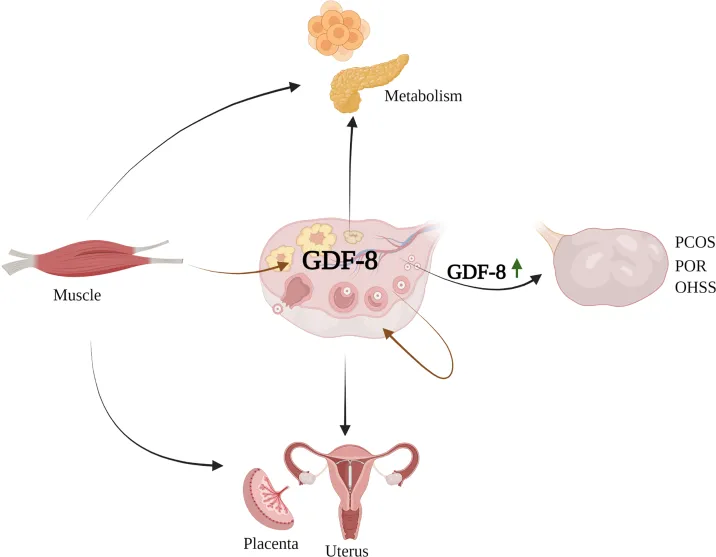
What is the GDF-8 target? Complete analysis of Myostatin molecular structure and signaling pathway
2026-06-30Growth differentiation factor 8, abbreviated as GDF-8, commonly known as Myostatin in the industry, belongs to the TGF-β superfamily of secreted proteins. It is currently a core and highly popular target in the field of skeletal muscle regulation and was first identified in 1997 by a research team from a mouse skeletal muscle cDNA library.
View details
- Metabolism
- GDF-8
- Myostatin
- muscle growth inhibitor
- GDF-8 target
- TGF-β superfamily
- skeletal muscle regulation
- SMAD signaling pathway
- 1

Link:





©2021-2026 all rights reserved UA Biotechnology Co.,Ltd.
Privacy Policy 
网站备案号 浙ICP备2022019033号-2 浙公网安备33010202004867号
 Business license (three certificates in one)
 Tel:+86-25-56221161
E-mail:order@ua-bio.com
All products sold on this website shall not be used for clinical diagnosis or treatment of humans or animals, and shall only be used for non-medical purposes such as industrial or scientific research.