

Technical Articles
Signaling pathway
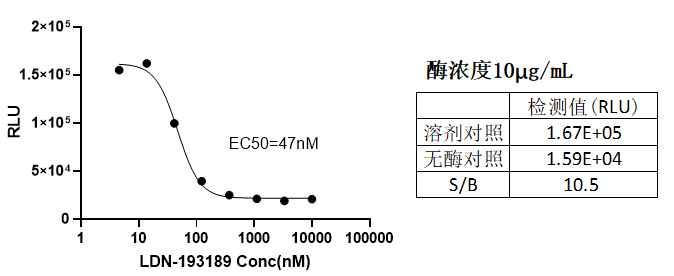
ActRIIA Kinase Inhibitor Screening: A Practical Guide from Assay Validation to IC50
 2026-09-21
A step-by-step SOP for ActRIIA kinase inhibitor screening: enzyme concentration titration, Z' factor acceptance thresholds, positive control LDN-193189 dilution design, luminescence readout linearity and the four most common failure nodes with troubl
View details
- Signaling Pathway
- ActRIIA kinase activity assay
- inhibitor screening
- Z' factor
- IC50
- luminescence
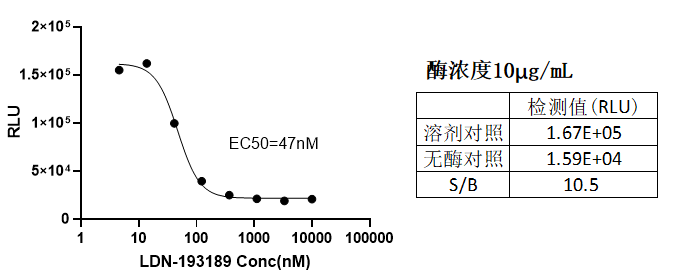
ActRIIA: Structure and Research Landscape of the Type II Receptor Kinase in Activin Signaling
2026-09-21A systematic review of ActRIIA: extracellular ligand-binding domain, constitutively active intracellular kinase, ALK4 recruitment and SMAD2/3 phosphorylation. Covers physiological contexts from FSH rhythm in the pituitary to osteoclast-osteoblast bal
View details
- Signaling Pathway
- ActRIIA
- ACVR2A
- Activin
- ALK4
- SMAD2/3
- kinase activity assay
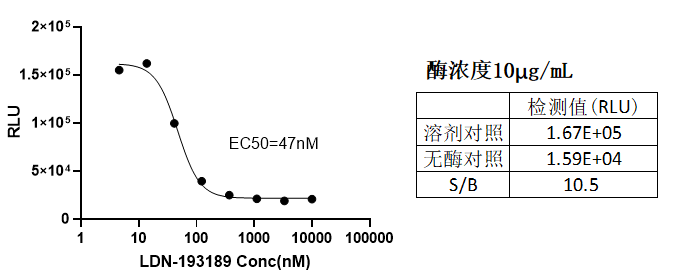
One Letter Apart: Why Bone Metabolism Research Cannot Bypass ActRIIA
2026-09-21ActRIIA (ACVR2A) differs from its famous sibling ActRIIB by one letter, yet its fate diverged: outside the muscle spotlight it grew into a main line in bone metabolism and reproductive endocrine research. This article dissects the dual identity of Ac
View details
- Signaling Pathway
- ActRIIA
- ACVR2A
- Activin
- bone metabolism
- SMAD2/3
- inhibitor screening
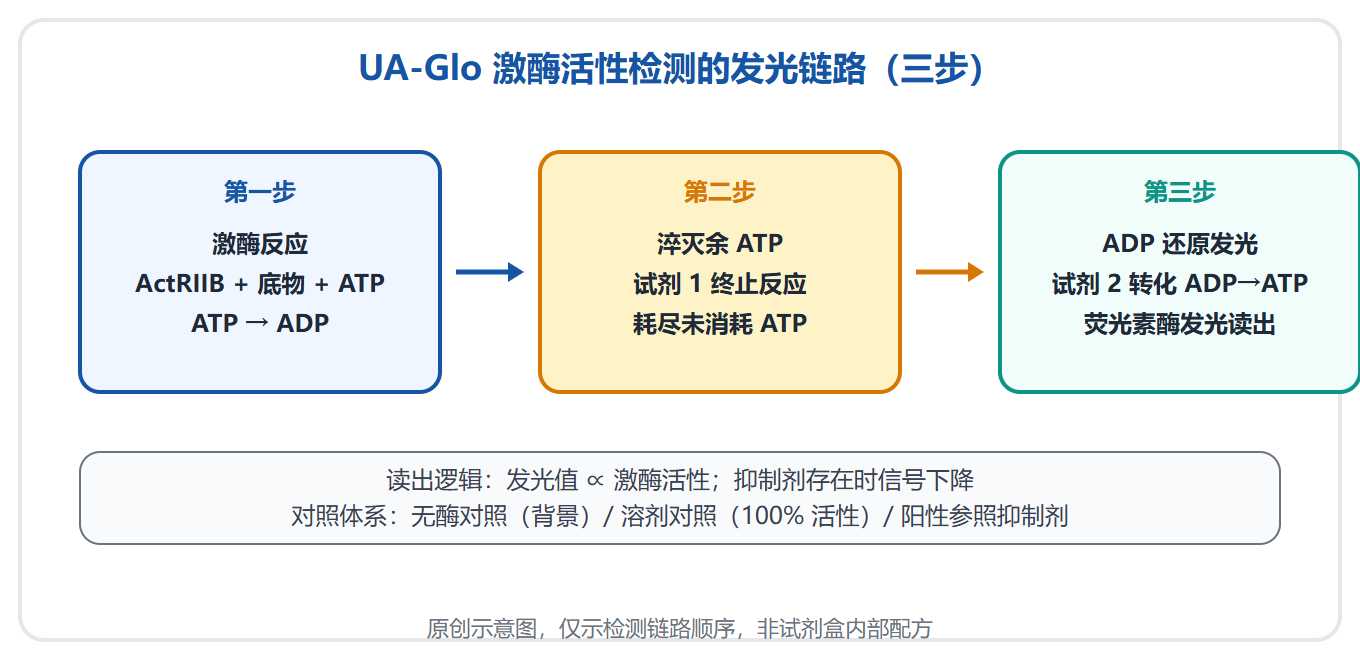
ActRIIB Inhibitor Screening: Turning Off the Brake Light of Muscle Growth
2026-09-20Picture the ActRIIB kinase assay as a brake light: the brighter the enzyme activity, the tighter the muscle brake. This article walks through the complete journey of an inhibitor from addition to readout in four acts.
View details
- Signaling Pathway
- ActRIIB
- Kinase assay
- Luminescence
- Inhibitor screening
- Experimental workflow
- UA079045
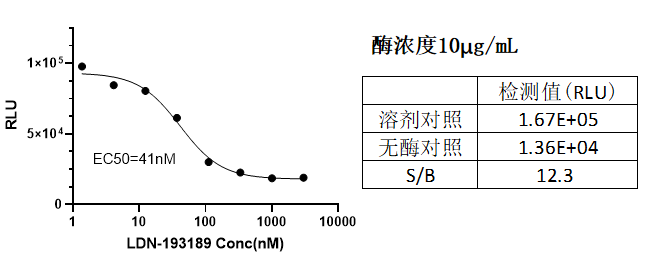
ActRIIB Kinase Inhibitor Screening: A Standard Workflow from Z' Factor to IC50
2026-09-20A tool-oriented guide to ActRIIB kinase inhibitor screening: ATP and enzyme concentration settings, control systems and Z' factor interpretation, luminescence interference checks and IC50 fitting considerations.
View details
- Signaling Pathway
- ActRIIB assay
- Kinase activity
- Inhibitor screening
- Z' factor
- IC50
- Luminescence
- UA079045
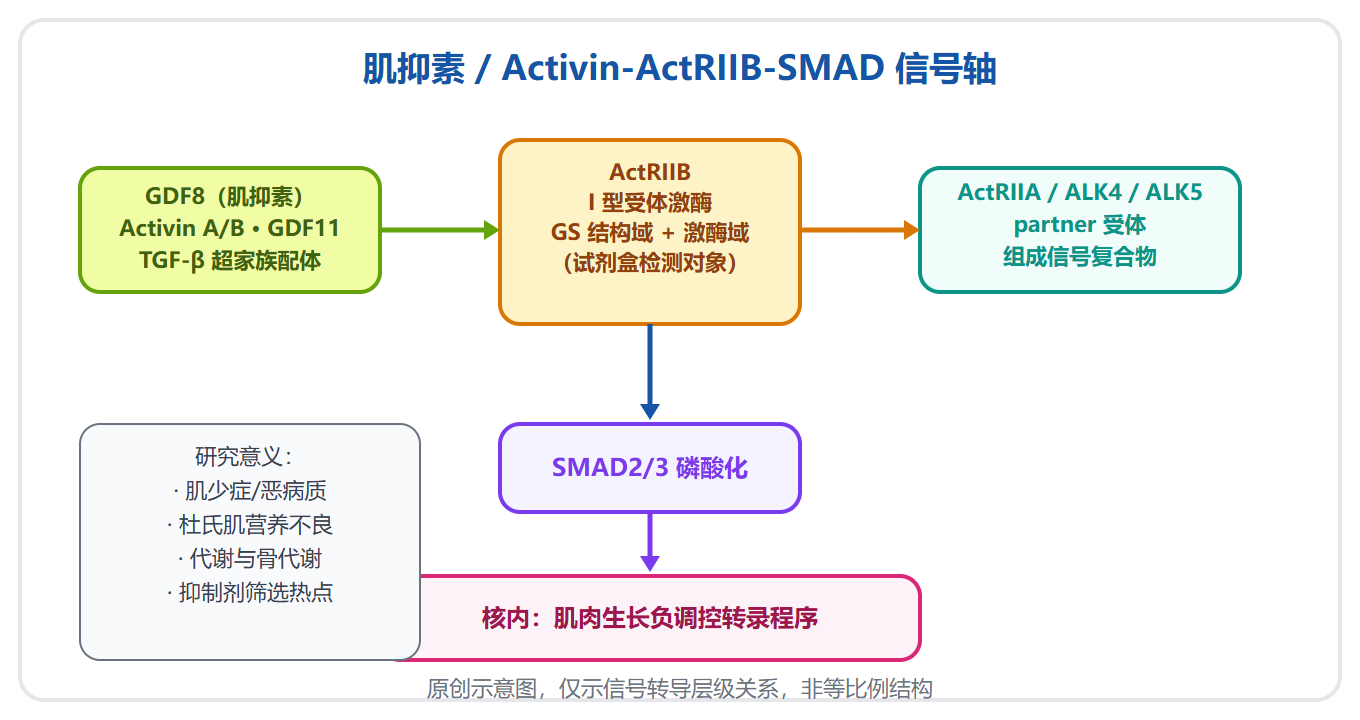
ActRIIB: The Negative Regulator Switch of Muscle Growth and Its Research Landscape
2026-09-20ActRIIB is the type I receptor kinase for myostatin and activin signaling, writing the 'grow less muscle' instruction into the nucleus. This review covers its receptor structure, signaling axis, disease associations and in vitro research tools.
View details
- Signaling Pathway
- ActRIIB
- Myostatin
- Activin
- SMAD2/3
- Muscle growth
- Inhibitor screening
- UA079045
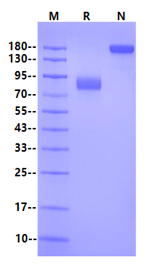
FGFR4-Fc Fusion Protein Binding Assays: Ligands, Conditions and Interpretation
2026-09-20A tool-oriented guide to FGFR4 binding experiments: the KLB co-receptor prerequisite, D2-D3 integrity quality control, SPR/ELISA parameter settings and troubleshooting paths for three types of data anomalies.
View details
- Signaling Pathway
- FGFR4 assay
- Ligand binding
- SPR
- ELISA
- KLB
- SDS-PAGE
- UA011375
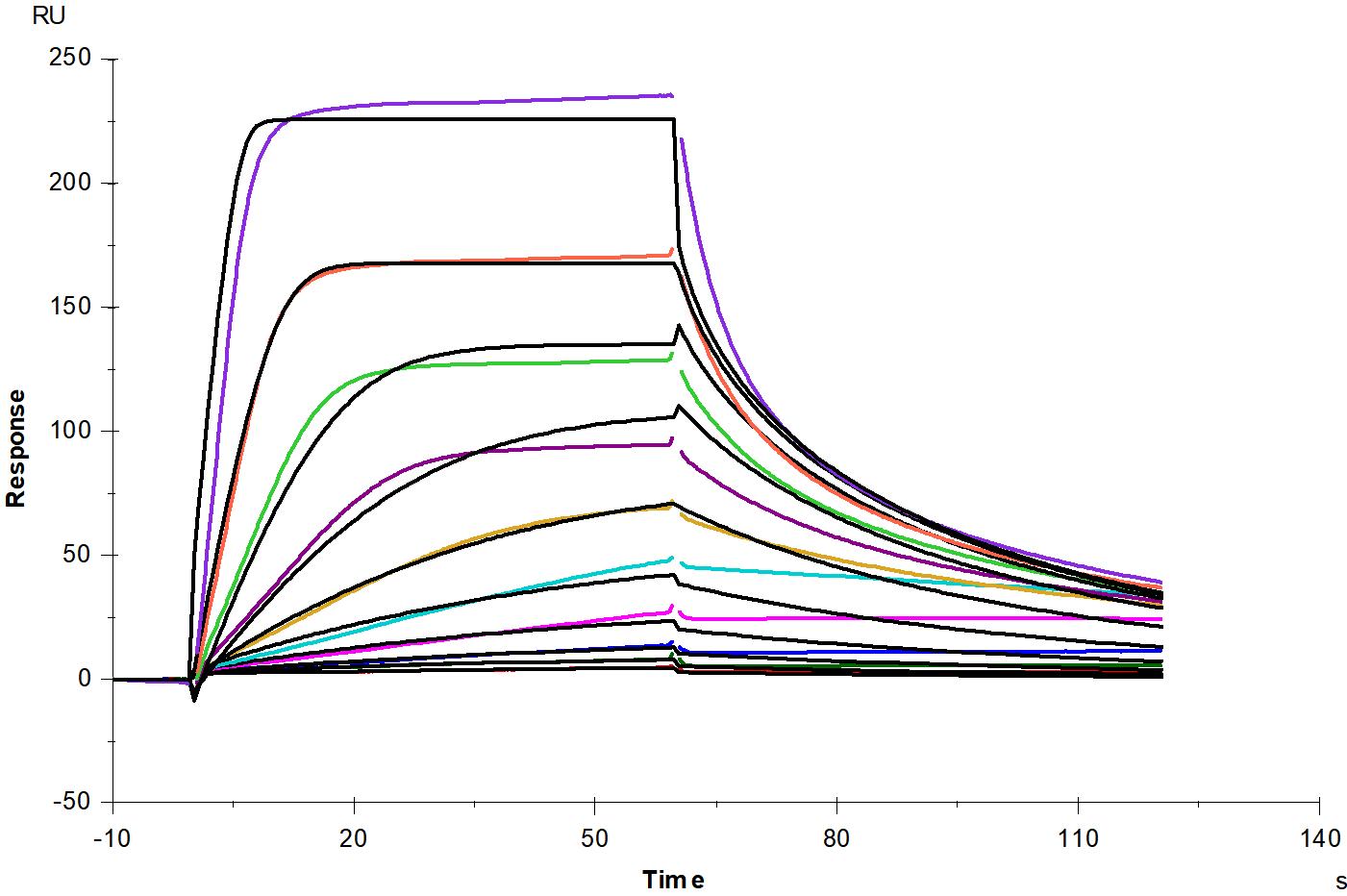
FGFR4: Why Hepatocellular Carcinoma Targeting Focuses on This Selective Receptor
2026-09-20Among the four FGFR family members, FGFR4 alone resides in the liver and binds the KLB co-receptor. From an industry perspective, this article dissects the FGF19 axis, its association with hepatocellular carcinoma and the design logic of selective in
View details
- Signaling Pathway
- FGFR4
- Hepatocellular carcinoma
- FGF19
- Selective inhibitor
- Targeted therapy
- UA011375

A Door That Needs Two Keys: How FGF19, FGFR4 and KLB Open the Gate
2026-09-20The FGFR4 door opens only when both keys—FGF19 and KLB—are inserted at the same time. This article walks through the four-step assembly of the FGF19-FGFR4-KLB ternary complex and the full process of signal entry.
View details
- Signaling Pathway
- FGFR4
- FGF19
- Beta-Klotho
- KLB
- Ternary complex
- Hepatocellular carcinoma
- UA011375

The TLR4/MD-2 Signaling Pathway: Ligand Recognition, Dual-Branch Transduction and Research Landscape
2026-09-20TLR4 signaling branches at the TIR domain into MyD88-dependent and TRIF-dependent pathways, driving NF-κB/MAPK and IRF3/interferon responses respectively. This review systematically covers pathway hierarchy, readout indicators and experimental consid
View details
- Immunity/Inflamma
- TLR4
- MyD88
- TRIF
- NF-κB
- IRF3
- Signaling pathway
- UA01001C-28
- 1
- 2
- 3
- 4
- 5
- 6
- 15

Link:





©2021-2026 all rights reserved UA Biotechnology Co.,Ltd.
Privacy Policy 
网站备案号 浙ICP备2022019033号-2 浙公网安备33010202004867号
 Business license (three certificates in one)
 Tel:+86-25-56221161
E-mail:order@ua-bio.com
All products sold on this website shall not be used for clinical diagnosis or treatment of humans or animals, and shall only be used for non-medical purposes such as industrial or scientific research.