Technical Articles
Immunity/Inflamma
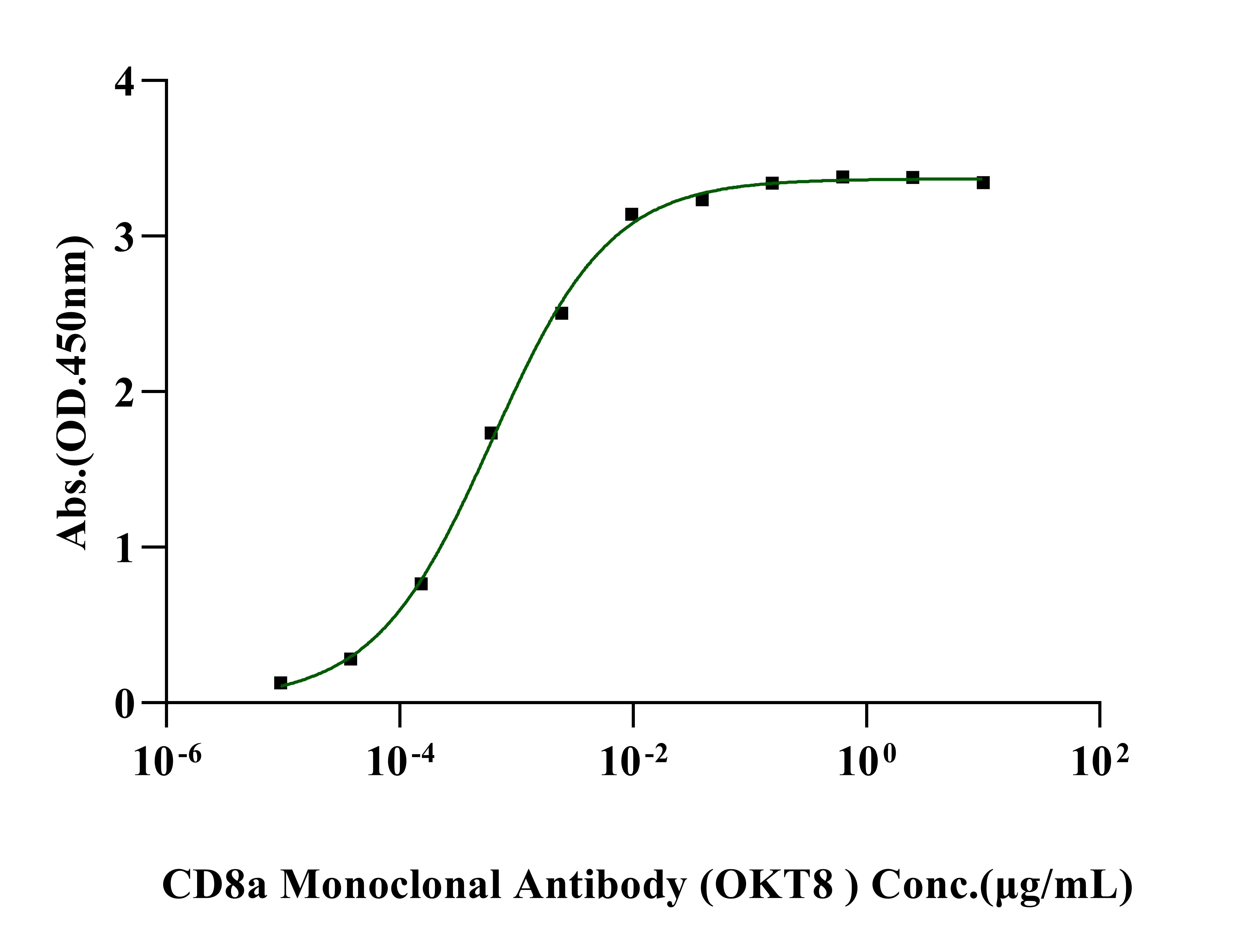
Human CD8alpha-beta Heterodimer: Molecular Features, Species Comparison and Immune Evaluation Review
 2026-09-30
The human CD8alpha-beta heterodimer is the co-receptor of cytotoxic T cells. This review covers its molecular features, parameter comparison between human and cynomolgus monkey tools, site-specific biotinylation design, and key points of immune evalu
View details
- Immunity/Inflamma
- CD8 alpha beta heterodimer
- CD8A
- CD8B
- human recombinant protein
- biotin labeling
- cross-species
- EC50
- UA016094

From Thymic Graduation to Peripheral Patrol: Three Stations in the Life of a CD8alpha-beta T Cell
2026-09-30The life of a CD8alpha-beta T cell resembles a long patrol: thymic graduation examination, peripheral surveillance and recognition, and response upon alarm. This article dissects the molecular role of the co-receptor at each of the three life stages.
View details
- Immunity/Inflamma
- CD8 alpha beta
- thymic positive selection
- CD8 T cell
- co-receptor
- immunological synapse
- effector T cell
- UA016094

The Banner of Effector T Cells: Human CD8alpha-beta and the Narrative of Tumor Immunity Research
2026-09-30From HIV progression markers to tumor-infiltrating lymphocyte density, and further to immunotherapy response evaluation, this article follows the industry narrative to dissect how human CD8alpha-beta became a common yardstick for effector T cell rese
View details
- Immunity/Inflamma
- human CD8 alpha beta
- CD8A
- CD8B
- tumor-infiltrating lymphocyte
- immunotherapy
- effector T cell
- EC50
- UA016094
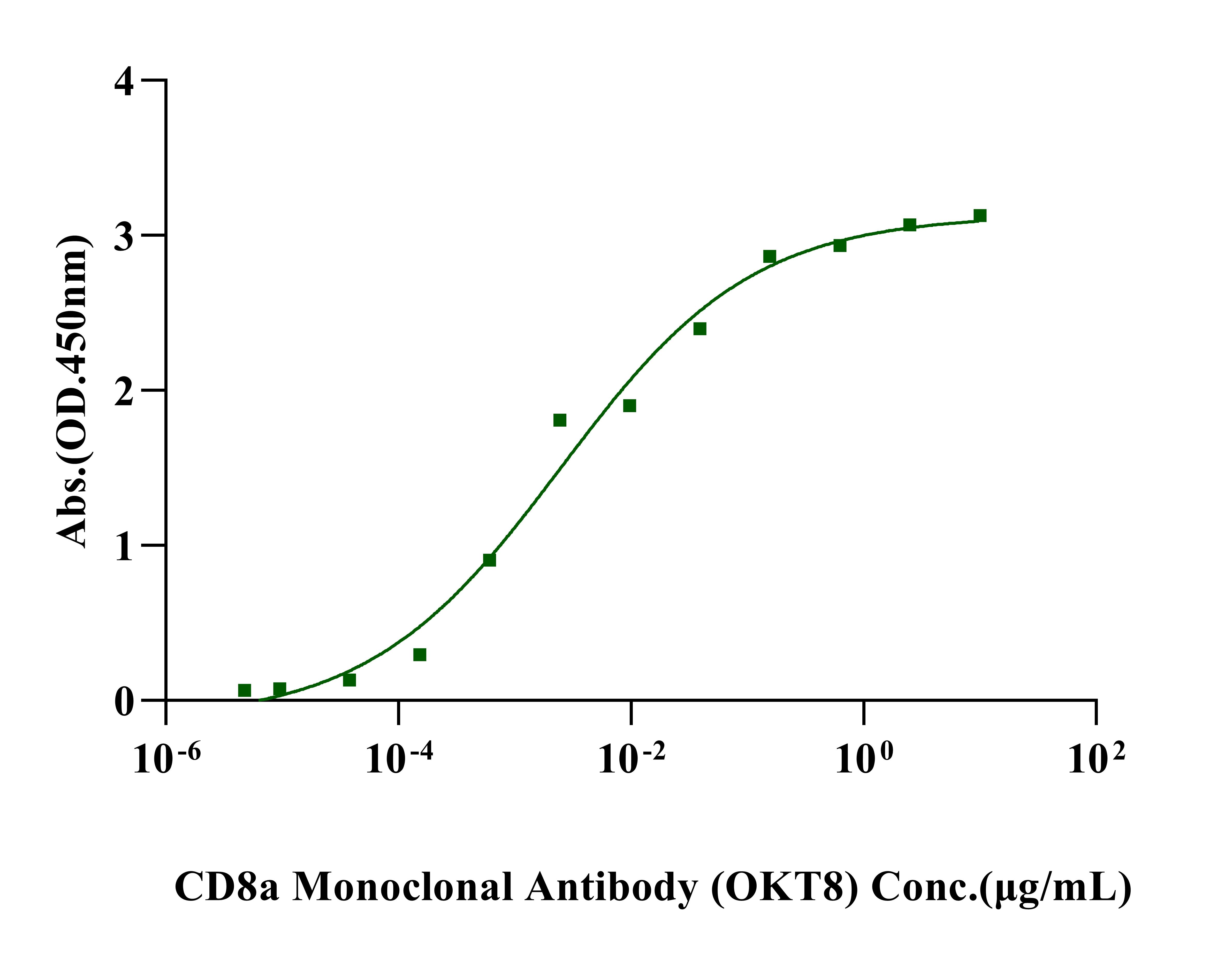
Two Keys to Open the Door: How CD8alpha-beta Cooperates with TCR to Read MHC-I in Three Relays
2026-09-30T cell recognition of target cells works like a two-key access system: TCR is the primary key and CD8alpha-beta is the gatekeeper confirmation. This article breaks down, in three relays, how the co-receptor converts weak and transient recognition int
View details
- Immunity/Inflamma
- CD8 alpha beta
- TCR
- MHC-I
- co-receptor
- Lck
- immunological synapse
- T cell activation
- UA016095

Biotin-labeled CD8alpha-beta Heterodimer: Avidin Platform Tools and Validation Parameters for Co-receptor Studies
2026-09-30Biotin-labeled CD8alpha-beta heterodimer is a core tool for co-receptor binding studies. This article reviews site-specific biotinylation principles, HEK293 recombinant antigen quality control data, ELISA/SPR/BLI platform parameters, and three types
View details
- Immunity/Inflamma
- biotin-labeled CD8 alpha beta
- CD8 alpha beta heterodimer
- Avi Tag
- streptavidin
- ELISA
- SPR
- BLI
- OKT8
- UA016095
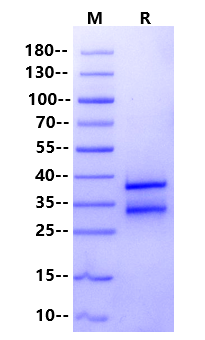
CD8alpha-beta Co-receptor: Molecular Mechanisms, MHC-I Recognition and T Cell Immunity Research
2026-09-30CD8alpha-beta is a co-receptor heterodimer on cytotoxic T lymphocytes. This review covers its molecular architecture, MHC-I recognition mechanism, TCR co-signaling, and key points in HIV, Wiskott-Aldrich and tumor immunity research.
View details
- Immunity/Inflamma
- CD8 alpha beta
- CD8A
- CD8B
- co-receptor
- MHC-I
- TCR
- Lck
- cytotoxic T cell
- UA016095

CHI3L1: Signaling Mechanisms and Disease Spectrum of Chitinase-Like Protein 1
2026-09-28CHI3L1 (YKL-40) is a secreted glycoprotein of the glycoside hydrolase 18 family without enzymatic activity. This review covers its molecular features, receptor signaling network, attributes as a serum biomarker, and disease associations including ast
View details
- Immunity/Inflamma
- CHI3L1
- YKL-40
- chitinase-like protein 1
- IL-13R alpha 2
- Syndecan-1
- liver fibrosis
- UA019077

Orchestrating the Repair Site: Four Steps of CHI3L1 in Tissue Damage Response
2026-09-28This article breaks down the molecular events of CHI3L1 in tissue repair and the tumor microenvironment in four steps: alarm signaling, matrix remodeling, immune polarization toward Th2 responses, and angiogenesis.
View details
- Immunity/Inflamma
- CHI3L1
- YKL-40
- tissue repair
- inflammation
- Th2 polarization
- angiogenesis
- UA019077

CHI3L1 Binding Assay Tools: QC Evidence and Platform Parameters of HEK293-Derived Recombinant Antigen
2026-09-28The main challenges of CHI3L1 binding assays are glycosylation-dependent epitopes and endotoxin interference. This article reviews the QC evidence of HEK293-expressed recombinant CHI3L1, platform parameters for ELISA, SPR and cell-based assays, and t
View details
- Immunity/Inflamma
- CHI3L1 binding assay
- YKL-40
- recombinant protein
- SPR
- ELISA
- endotoxin
- UA019077

Biotinylated CD3 epsilon-gamma Binding Assays: Directed Capture and Interpretation Guide
2026-09-23A tool-oriented guide to biotinylated CD3 epsilon-gamma binding experiments: asymmetric tag design, four QC evidence pieces from SDS-PAGE, SEC and ELISA, platform parameters for SPR, ELISA and flow cytometry, and troubleshooting paths for three class
View details
- Immunity/Inflamma
- CD3 epsilon-gamma binding assay
- biotinylated
- SPR
- ELISA
- UCHT1
- streptavidin
- UA016084
- 1
- 2
- 3
- 4
- 5
- 6
- 46

Link:





©2021-2026 all rights reserved UA Biotechnology Co.,Ltd.
Privacy Policy 
网站备案号 浙ICP备2022019033号-2 浙公网安备33010202004867号
 Business license (three certificates in one)
 Tel:+86-25-56221161
E-mail:order@ua-bio.com
All products sold on this website shall not be used for clinical diagnosis or treatment of humans or animals, and shall only be used for non-medical purposes such as industrial or scientific research.