




Technical Articles
IFN-γ protein
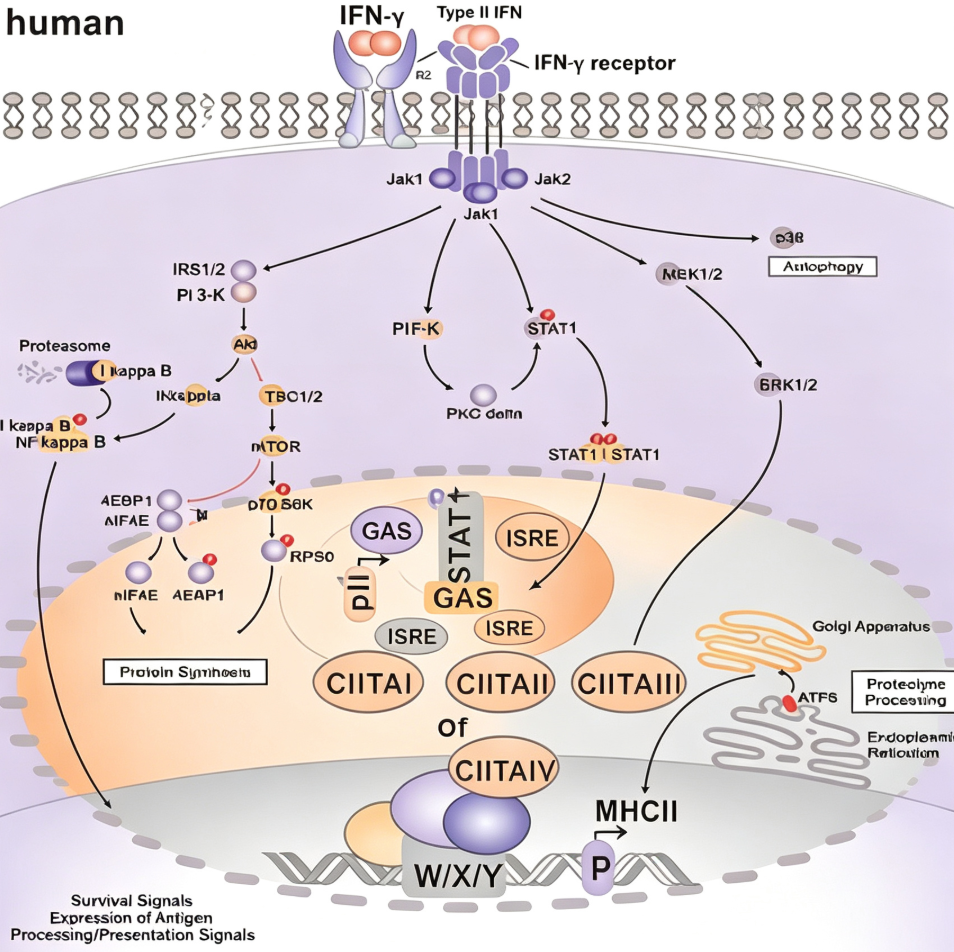
IFN-γ: The Central Signaling Hub Linking T-cell Immune Response to Immune Checkpoint Efficacy
 2026-09-02
This article systematically elucidates the molecular characteristics and biological functions of IFN-γ, focusing on its role as a key effector molecule driving anti-tumor immune responses following T cell activation, and analyzes the value of its downstream signaling features as predictive biomarkers for the clinical efficacy of immune checkpoint inhibitors.
View details
- Immunity/Inflamma
- IFN-γ protein
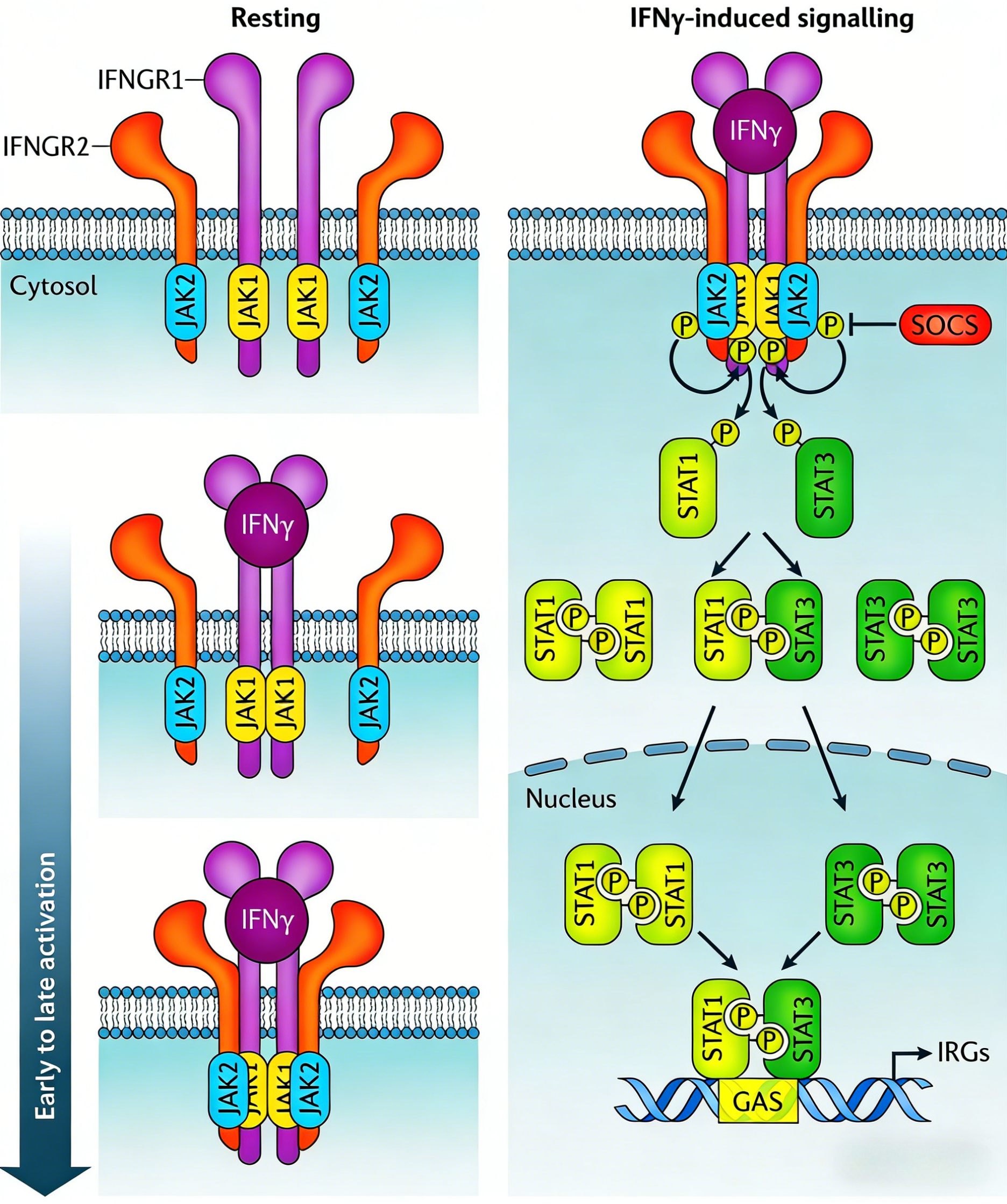
A Study on the Dual Role of IFN-γ Protein in CAR-T Therapy
2026-03-30CAR-T therapy has demonstrated promising efficacy in patients with hematologic malignancies, but it is often accompanied by clinical toxicities such as cytokine release syndrome, which not only affects patient health but also increases the medical burden.
View details
- Cancer
- IFN-γ Protein
- CAR-T Therapy
- Hematologic Malignancies
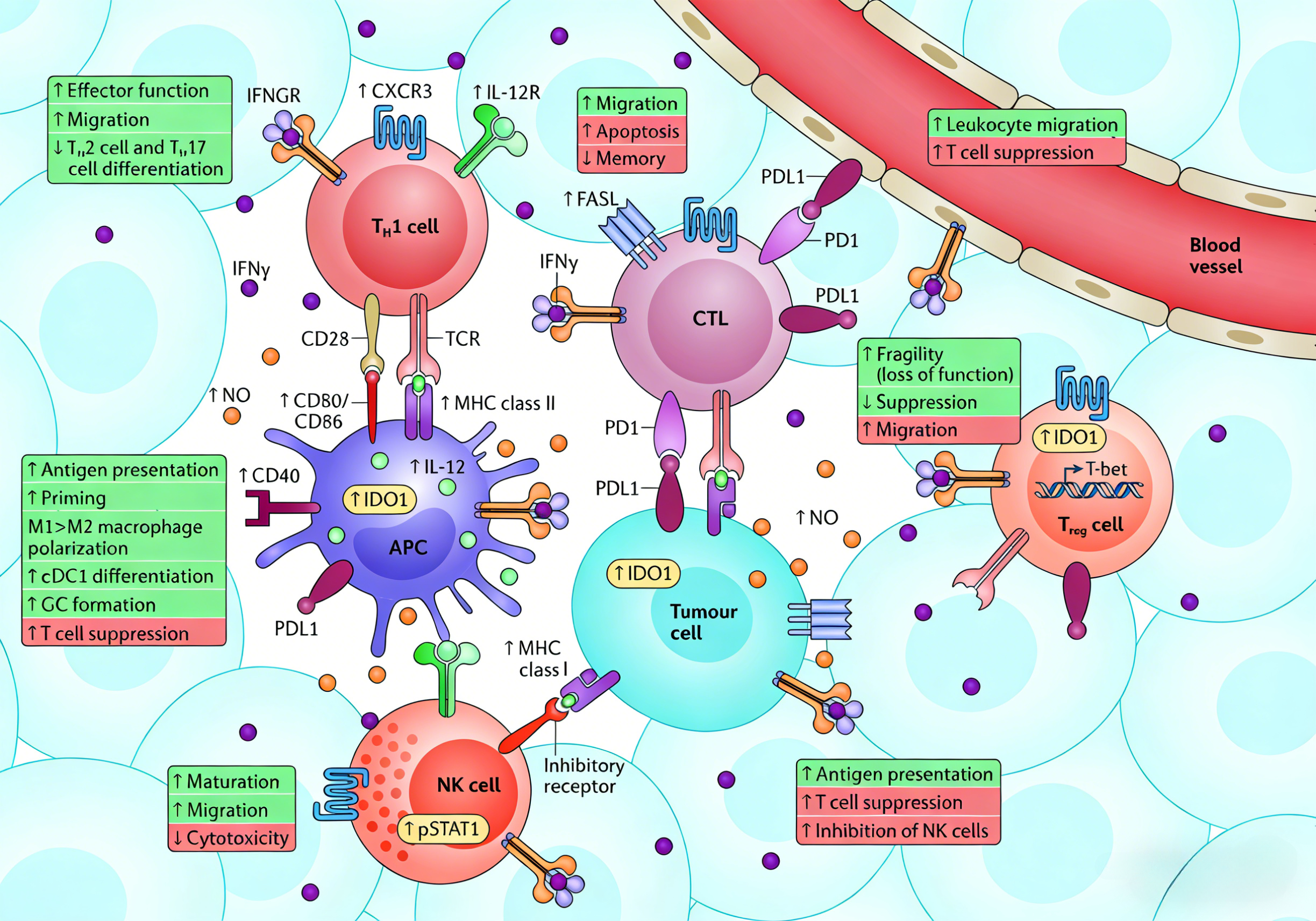
Study on the dual role mechanism of IFN-γ protein in tumor immunity
2026-03-27IFN-γ protein is the sole member of the type II interferon family, primarily produced by activated T cells, natural killer cells, and NKT cells. This protein binds to the receptor complex composed of IFNGR1 and IFNGR2 subunits on the cell surface, activating the JAK-STAT signaling pathway and regulating the expression of multiple genes.
View details
- Cancer
- IFN-γ Protein
- Tumor Immunity
- Viral Immunity
- 1

Link:





©2021-2026 all rights reserved UA Biotechnology Co.,Ltd.
Privacy Policy 
网站备案号 浙ICP备2022019033号-2 浙公网安备33010202004867号
 Business license (three certificates in one)
 Tel:+86-25-56221161
E-mail:order@ua-bio.com
All products sold on this website shall not be used for clinical diagnosis or treatment of humans or animals, and shall only be used for non-medical purposes such as industrial or scientific research.
