

Technical Articles
Cell Biology
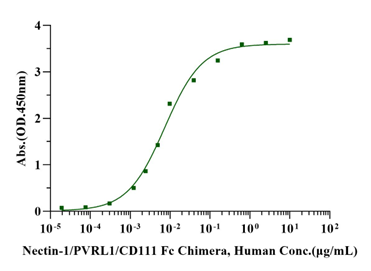
How to Choose Nectin-3/CD113: Interaction Data, Tag Format and Acceptance Q&A
 2026-10-16
A selection guide for recombinant human Nectin-3/CD113 His Tag protein: reading SPR and ELISA interaction data, tag and capture considerations for binding studies, and arrival acceptance criteria.
View details
- Cell Biology
- Nectin-3 selection
- CD113
- PVRL3
- SPR data
- His tag
- binding study
- UA010487

What Is Nectin-3/CD113: Cell Adhesion Function, Binding Partners and Activity Validation
2026-10-16Nectin-3 (CD113/PVRL3) is an immunoglobulin-like adhesion molecule of the nectin family. This article covers its binding partners, SPR and ELISA-based activity validation, and experimental uses of recombinant human Nectin-3.
View details
- Cell Biology
- Nectin-3
- CD113
- PVRL3
- cell adhesion
- nectin family
- SPR
- ELISA
- binding affinity
- UA010487
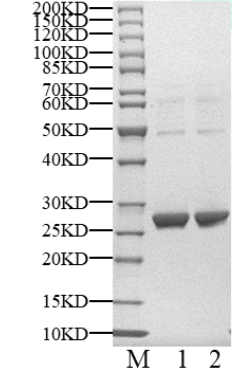
How to Choose Recombinant Cyclin A2: Fragment Boundary, Purity and Acceptance Q&A
2026-10-16A selection guide for recombinant human Cyclin A2: why the E174-L432 fragment matters, reading SDS-PAGE and SEC-HPLC data, and arrival acceptance criteria for CDK2-binding and kinase assays.
View details
- Cell Biology
- Cyclin A2 selection
- CCNA2
- fragment boundary
- SDS-PAGE
- SEC-HPLC
- kinase assay
- UA080273

What Is Cyclin A2 (CCNA2): Cell-Cycle Role, CDK2 Partnership and Experimental Use
2026-10-16Cyclin A2 is the core S-phase and M-phase cyclin that activates CDK2 and CDC2. This article explains its expression timing, the E174-L432 construct boundary and how recombinant Cyclin A2 supports kinase and complex-reconstitution studies.
View details
- Cell Biology
- Cyclin A2
- CCNA2
- CDK2
- cell cycle
- S phase
- cyclin box
- kinase assay
- UA080273
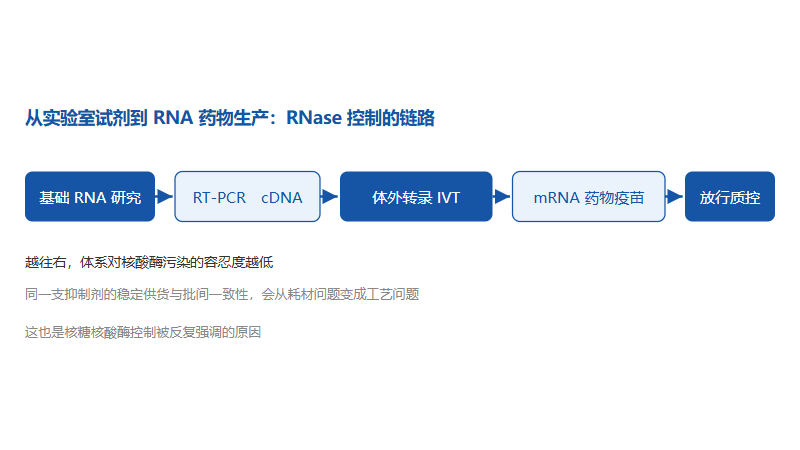
From Lab Reagent to mRNA Manufacturing: RNase Inhibitor Along the Production Chain
2026-10-16This article traces RNase inhibitor from a routine lab additive to a quality-critical component in mRNA production: IVT and capping steps, batch consistency, and why reagent standardization matters for RNA therapeutics manufacturing.
View details
- Cell Biology
- mRNA manufacturing
- in vitro transcription
- RNase inhibitor
- quality control
- reagent standardization
- UA070037
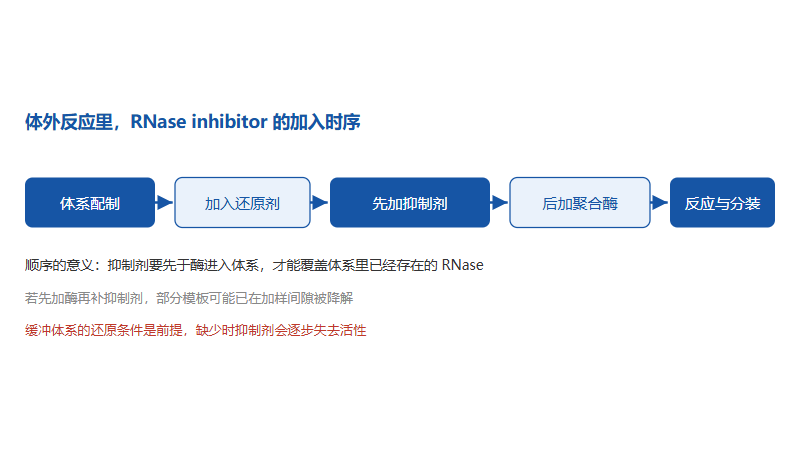
RNA Still Degrading? Which Steps to Check First When RNase Creeps In
2026-10-16A practical troubleshooting guide for RNA work: where RNase contamination hides, when adding RNase inhibitor helps and when it cannot, DTT dependence and the checkout sequence for intact-RNA experiments.
View details
- Cell Biology
- RNA degradation
- RNase contamination
- RNase inhibitor
- DTT
- RT-PCR
- in vitro transcription
- UA070037
Recombinant Murine RNase Inhibitor: How the RNA Bodyguard Works at the Molecular Level
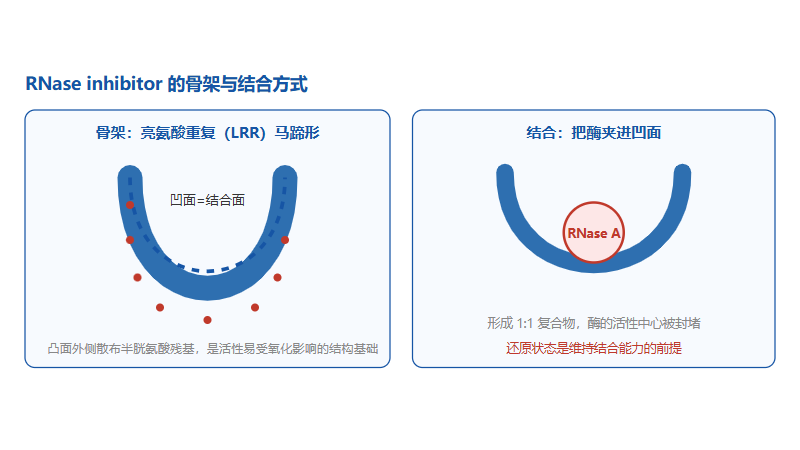
2026-10-16RNase inhibitor is a 50 kDa leucine-rich repeat protein that binds RNase A family enzymes with femtomolar affinity. This article explains its inhibition mechanism, redox sensitivity and species origin considerations.
View details
- Cell Biology
- RNase inhibitor
- murine
- ribonuclease
- leucine-rich repeat
- redox sensitivity
- RNA protection
- UA070037
Annexin V Biotinylated Protein: A Multifunctional Tool for Cell Apoptosis Detection and Targeted Therapy Research
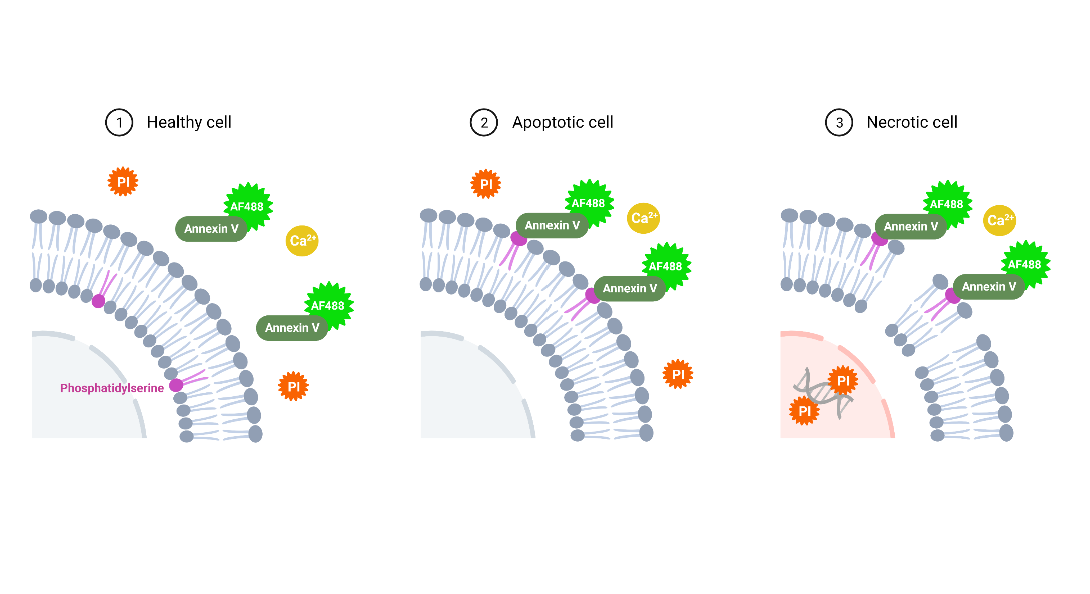
2026-10-16This article focuses on the molecular characteristics and biological functions of Annexin V, systematically elaborating its core mechanism as a calcium-dependent phospholipid-binding protein that detects apoptosis by recognizing phosphatidylserine exposure, analyzing the key operational points and common troubleshooting in apoptosis detection experiments using Annexin V, and discussing its clinical translation prospects from basic apoptosis detection to targeted drug delivery, neuroprotection, and cardiovascular disease treatment.
View details
- Cell Biology
- Annexin V biotinylated protein

How to Choose CNTF: Species Match, Activity Acceptance and Arrival Checklist
2026-10-15A selection guide for recombinant CNTF: species matching, bioactivity data interpretation, purity considerations and acceptance criteria for reproducible neuronal culture and neuroprotection studies.
View details
- Cell Biology
- CNTF selection
- species match
- bioactivity
- acceptance
- neuronal culture
- UA040187
What Is CNTF: Neuroprotective Mechanisms, Retinal Evidence and Activity Assays
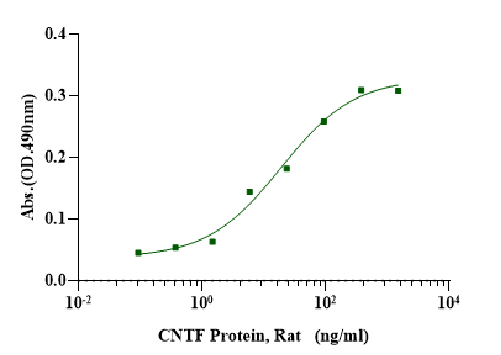
2026-10-15CNTF is an IL-6 family neurotrophic cytokine acting through CNTFR/gp130/LIFR. This article covers its neuroprotective mechanisms, retinal ganglion cell evidence and activity determination with recombinant rat CNTF.
View details
- Cell Biology
- CNTF
- ciliary neurotrophic factor
- CNTFR
- gp130
- neuroprotection
- retinal ganglion cell
- activity assay
- UA040187
- 1
- 2
- 3
- 4
- 5
- 6
- 19

Link:





©2021-2026 all rights reserved UNIV Biotechnology Co.,Ltd.
Privacy Policy
网站备案号 苏ICP备2025207586号-2 浙公网安备33010202004867号
 Business license (three certificates in one)
 Tel:+86-25-56221161
E-mail:order@ua-bio.com
All products sold on this website shall not be used for clinical diagnosis or treatment of humans or animals, and shall only be used for non-medical purposes such as industrial or scientific research.